SAGE

Journal of Applied Biomaterials & Functional Materials Template

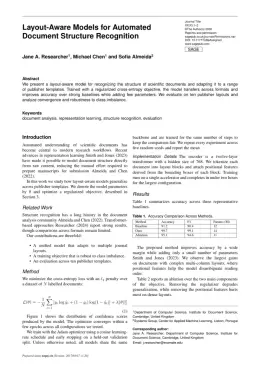
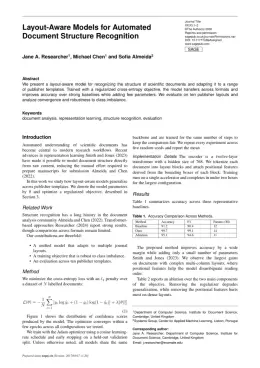
Write in a clean editor, then format for Journal of Applied Biomaterials & Functional Materials in one click — DocuGuru applies the official SAGE template with author–year references and exports a submission-ready PDF plus the editable LaTeX source. Free to start.

About the Journal of Applied Biomaterials & Functional Materials format

Journal of Applied Biomaterials & Functional Materials is a peer-reviewed journal published by SAGE, covering Bone Tissue Engineering Materials, Dental materials and restorations, Endodontics and Root Canal Treatments.

PublisherSAGE
Reference styleAuthor–year (Harvard)
Author–year — (Smith, 2023) in the text
Smith, A., Jones, B. and Lee, C. (2023) 'A representative article title', Journal of Applied Biomaterials & Functional Materials, 12(3), pp. 45–58.

Formats any DOI in Journal of Applied Biomaterials & Functional Materials style. No sign-up.

Publishes research inBone Tissue Engineering Materials Dental materials and restorations Endodontics and Root Canal Treatments Dental Erosion and Treatment Dental Implant Techniques and Outcomes
ISSN2280-8000
Citation impact (2-yr)1.68
h-index44
i10-index289
Total citations10,271
Article processing charge$1,500
Open accessYes
Top institutions publishing herePolitecnico di Milano
Journal websiteus.sagepub.com
You getA submission-ready PDF and the editable LaTeX source — ready to submit.

Papers published in Journal of Applied Biomaterials & Functional Materials per year

36
2014
52
2015
74
2016
59
2017
44
2018
40
2019
43
2020
34
2021
45
2022
28
2023
40
2024
44
2025

Citation impact of Journal of Applied Biomaterials & Functional Materials by publication year

659
2014
1.4K
2015
1.4K
2016
1.6K
2017
935
2018
1.2K
2019
586
2020
527
2021
451
2022
193
2023
129
2024
53
2025

Citations each year’s papers have accumulated so far — the most recent years are still building up.

Most-cited papers in Journal of Applied Biomaterials & Functional Materials

Calcium Silicate and Calcium Hydroxide Materials for Pulp Capping: Biointeractivity, Porosity, Solubility and Bioactivity of Current Formulations

Maria Giovanna Gandolfi, Francesco Siboni, Tatiana M. Botero et al. · 1 Jan 2015

AIM: The chemical-physical properties of novel and long-standing calcium silicate cements versus conventional pulp capping calcium hydroxide biomaterials were compared. METHODS: Calcium hydroxide-based (Calxyl, Dycal, Life, Lime-Lite) and calcium silicate-based (ProRoot MTA, MTA Angelus, MTA Plus, Biodentine, Tech Biosealer capping, TheraCal) biomaterials were examined. Calcium and hydroxyl ion release, water sorption, interconnected open pores, apparent…

Additive manufacturing of titanium alloys in the biomedical field: processes, properties and applications

Francesco Trevisan, Flaviana Calignano, Alberta Aversa et al. · 25 Sep 2017

The mechanical properties and biocompatibility of titanium alloy medical devices and implants produced by additive manufacturing (AM) technologies - in particular, selective laser melting (SLM), electron beam melting (EBM) and laser metal deposition (LMD) - have been investigated by several researchers demonstrating how these innovative processes are able to fulfil medical requirements for clinical applications.…

3D printing processes for photocurable polymeric materials: technologies, materials, and future trends

Gabriele Taormina, Corrado Sciancalepore, Massimo Messori et al. · 2 Apr 2018

The aim of this review is a faithful report of the panorama of solutions adopted to fabricate a component using vat photopolymerization (VP) processes. A general overview on additive manufacturing and on the different technologies available for polymers is given. A comparison between stereolithography and digital light processing is also presented, with attention to different…

The Effect of Scaffold Pore Size in Cartilage Tissue Engineering

Michele M. Nava, Lorenza Draghi, Carmen Giordano et al. · 1 Jul 2016

INTRODUCTION: The effect of scaffold pore size and interconnectivity is undoubtedly a crucial factor for most tissue engineering applications. The aim of this study was to examine the effect of pore size and porosity on cartilage construct development in different scaffolds seeded with articular chondrocytes. METHODS: We fabricated poly-L-lactide-co-trimethylene carbonate scaffolds with different pore sizes,…

Corrosion of Titanium: Part 1: Aggressive Environments and Main Forms of Degradation

Davide Prando, Andrea Brenna, Maria Vittoria Diamanti et al. · 1 Jan 2017

Titanium has outstanding corrosion resistance due to the external natural oxide protective layer formed when it is exposed to an aerated environment. Despite this, titanium may suffer different forms of corrosion in severe environments: uniform corrosion, pitting and crevice corrosion, hydrogen embrittlement, stress-corrosion cracking, fretting corrosion and erosion. In this first review, forms of corrosion…

Journal of Applied Biomaterials & Functional Materials template — frequently asked questions

How do I write a paper in the Journal of Applied Biomaterials & Functional Materials format?
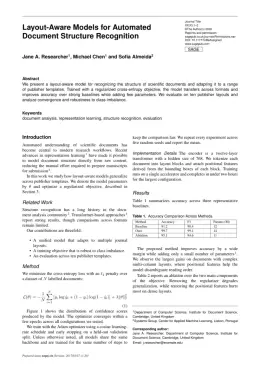
In DocuGuru you write your manuscript in a normal editor — no LaTeX setup required — and select the Journal of Applied Biomaterials & Functional Materials template. When you export, DocuGuru compiles the paper into the official SAGE format and hands you a submission-ready PDF along with the editable LaTeX source.
What reference style does Journal of Applied Biomaterials & Functional Materials use?
Journal of Applied Biomaterials & Functional Materials uses Author–year (Harvard) references, shown as author–year markers such as (Smith, 2023) in the text. DocuGuru formats every in-text citation and the reference list in this exact style automatically. A reference appears like this: Smith, A., Jones, B. and Lee, C. (2023) 'A representative article title', Journal of Applied Biomaterials & Functional Materials, 12(3), pp. 45–58.
Do I need to know LaTeX to submit to Journal of Applied Biomaterials & Functional Materials?
No. DocuGuru generates the sagej LaTeX class and compiles the PDF for you in the background, so you get a SAGE-ready Journal of Applied Biomaterials & Functional Materials document without writing any LaTeX. If you do want it, the LaTeX source is included in the export.
Can I import an existing draft into the Journal of Applied Biomaterials & Functional Materials template?
Yes. Paste or upload your current manuscript — Word, LaTeX, Markdown, or plain text — and DocuGuru reflows it into the Journal of Applied Biomaterials & Functional Materials format with correct headings, figures, tables, and author–year citations.
Who publishes Journal of Applied Biomaterials & Functional Materials?
Journal of Applied Biomaterials & Functional Materials is a multidisciplinary journal published by SAGE. DocuGuru's Journal of Applied Biomaterials & Functional Materials template matches SAGE's official submission format.
Can I export a submission-ready Journal of Applied Biomaterials & Functional Materials PDF?
Yes — DocuGuru produces a PDF built with the official Journal of Applied Biomaterials & Functional Materials template (the sagej class) that is ready to submit to SAGE, together with the matching LaTeX source files.
How much does the Journal of Applied Biomaterials & Functional Materials template cost?
You can start writing in the Journal of Applied Biomaterials & Functional Materials template for free. Exporting the final submission-ready Journal of Applied Biomaterials & Functional Materials PDF and LaTeX source is part of DocuGuru's paid plans — see the app for current pricing.
Use the Journal of Applied Biomaterials & Functional Materials template