SAGE

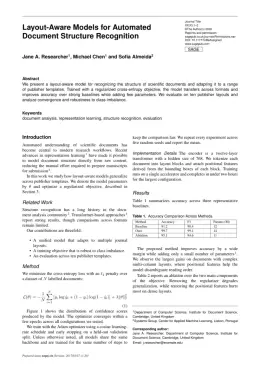
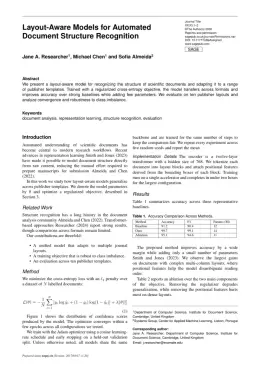
FACE Template

Write in a clean editor, then format for FACE in one click — DocuGuru applies the official SAGE template with author–year references and exports a submission-ready PDF plus the editable LaTeX source. Free to start.

About the FACE format

FACE is a peer-reviewed journal published by SAGE, covering Cleft Lip and Palate Research, Craniofacial Disorders and Treatments, Facial Trauma and Fracture Management.

PublisherSAGE
Reference styleAuthor–year (Harvard)
Author–year — (Smith, 2023) in the text
Smith, A., Jones, B. and Lee, C. (2023) 'A representative article title', FACE, 12(3), pp. 45–58.

Formats any DOI in FACE style. No sign-up.

Publishes research inCleft Lip and Palate Research Craniofacial Disorders and Treatments Facial Trauma and Fracture Management Tracheal and airway disorders Reconstructive Surgery and Microvascular Techniques
ISSN2732-5016
Citation impact (2-yr)0.37
h-index9
i10-index5
Total citations553
Top institutions publishing hereJohns Hopkins University
Journal websiteus.sagepub.com
You getA submission-ready PDF and the editable LaTeX source — ready to submit.

Papers published in FACE per year

1
1998
1
2000
1
2008
32
2020
79
2021
78
2022
88
2023
98
2024
112
2025

Citation impact of FACE by publication year

0
1998
1
2000
0
2008
70
2020
137
2021
121
2022
116
2023
61
2024
29
2025

Citations each year’s papers have accumulated so far — the most recent years are still building up.

Most-cited papers in FACE

Impacts of Skeletal Anterior Open Bite Malocclusion on Speech

Mary Morgan Bitler Keyser, Hillary Lathrop, Samantha Jhingree et al. · 14 Mar 2022

Introduction: Articulation problems are seen in 80-90% of dentofacial deformity (DFD) subjects compared with 5% of the general population, impacting communication and quality of life, but the causal link is unclear. We hypothesize there are both qualitative (perceptual) and quantitative (spectral) differences in properties of stop (/t/ or /k/), fricative (/s/ or /∫/), and affricate…

3D Infant Orthopedic Nasal Molding System for Improved Outcomes in Cleft Nasal Deformity

Martha Mejía, Juan Pablo Gómez, Savannah L. Moon et al. · 20 Mar 2023

The cleft nasal deformity is a hallmark feature in infants with cleft lip and palate and includes deviation of the caudal septum, slumping of the ipsilateral lower lateral cartilage, and obstructed nasal breathing. Presurgical orthopedic protocols have been developed and refined over several decades now, with limited evidence supporting their long-term efficacy, particularly with respect…

Impact of COVID-19 on Cleft Surgical Care

Andrew M. Ferry, Han Zhuang Beh, Rami P. Dibbs et al. · 21 Feb 2021

Background: Coronavirus disease 2019 (COVID-19) has greatly impacted pediatric healthcare facilities throughout the United States due to widespread case rescheduling and the implementation of supplementary COVID-19 perioperative protocols. To our knowledge, no studies have investigated the impact of COVID-19 on case volume, surgical timing, or operational aspects of cleft surgical procedures. The aim of this…

Filling the Void: Use of the Interpositional Buccal Fat Pad to Decrease Palatal Contraction and Fistula Formation

Todd E. Thurston, James Vargo, Katelyn G. Bennett et al. · 1 Jul 2020

Objective: The objective of this study was to evaluate the ability of the buccal fat pad flap (BFPF) to fill the void remaining after muscle transposition and study its effect on durability, fistula rate, palatal shortening/contraction, and relapse of muscle positioning in wide and challenging cleft repairs. Design: A retrospective chart review was performed. Charts…

Immediate Mandibular Reconstruction Using a Cellular Bone Allograft Following Tumor Resection in a Pediatric Patient

David M. Alfi, Abdullahi Hassan, S East et al. · 10 Nov 2021

Reconstruction of large segmental mandibular defects presents a challenge for oral and maxillofacial surgeons, particularly in the skeletally immature pediatric patient. Autogenous bone graft is historically preferred; however, harvest of autograft requires a second surgical site, risking donor-site complications as well as the potential for long-term complications in the growing child. Here, we present the…

FACE template — frequently asked questions

How do I write a paper in the FACE format?
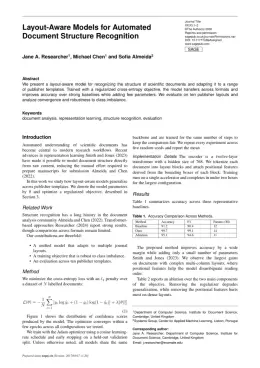
In DocuGuru you write your manuscript in a normal editor — no LaTeX setup required — and select the FACE template. When you export, DocuGuru compiles the paper into the official SAGE format and hands you a submission-ready PDF along with the editable LaTeX source.
What reference style does FACE use?
FACE uses Author–year (Harvard) references, shown as author–year markers such as (Smith, 2023) in the text. DocuGuru formats every in-text citation and the reference list in this exact style automatically. A reference appears like this: Smith, A., Jones, B. and Lee, C. (2023) 'A representative article title', FACE, 12(3), pp. 45–58.
Do I need to know LaTeX to submit to FACE?
No. DocuGuru generates the sagej LaTeX class and compiles the PDF for you in the background, so you get a SAGE-ready FACE document without writing any LaTeX. If you do want it, the LaTeX source is included in the export.
Can I import an existing draft into the FACE template?
Yes. Paste or upload your current manuscript — Word, LaTeX, Markdown, or plain text — and DocuGuru reflows it into the FACE format with correct headings, figures, tables, and author–year citations.
Who publishes FACE?
FACE is a multidisciplinary journal published by SAGE. DocuGuru's FACE template matches SAGE's official submission format.
Can I export a submission-ready FACE PDF?
Yes — DocuGuru produces a PDF built with the official FACE template (the sagej class) that is ready to submit to SAGE, together with the matching LaTeX source files.
How much does the FACE template cost?
You can start writing in the FACE template for free. Exporting the final submission-ready FACE PDF and LaTeX source is part of DocuGuru's paid plans — see the app for current pricing.
Use the FACE template