SAGE

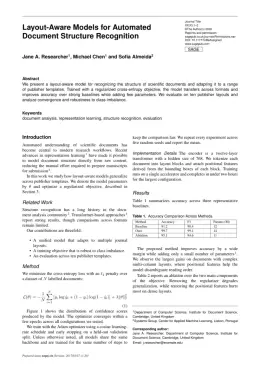
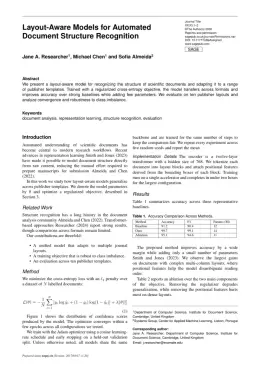
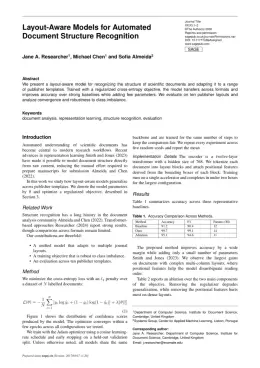
Cultures of Science Template

Write in a clean editor, then format for Cultures of Science in one click — DocuGuru applies the official SAGE template with author–year references and exports a submission-ready PDF plus the editable LaTeX source. Free to start.

About the Cultures of Science format

Cultures of Science is a peer-reviewed journal published by SAGE, covering Climate Change Communication and Perception, Science Education and Perceptions, Chinese history and philosophy.

PublisherSAGE
Reference styleAuthor–year (Harvard)
Author–year — (Smith, 2023) in the text
Smith, A., Jones, B. and Lee, C. (2023) 'A representative article title', Cultures of Science, 12(3), pp. 45–58.

Formats any DOI in Cultures of Science style. No sign-up.

Publishes research inClimate Change Communication and Perception Science Education and Perceptions Chinese history and philosophy Museums and Cultural Heritage Animal and Plant Science Education
ISSN2096-6083
Citation impact (2-yr)0.61
h-index13
i10-index16
Total citations695
Open accessYes
Top institutions publishing hereInnovation Team (China)
Journal websiteus.sagepub.com
You getA submission-ready PDF and the editable LaTeX source — ready to submit.

Papers published in Cultures of Science per year

14
2018
29
2019
25
2020
28
2021
25
2022
34
2023
35
2024
42
2025

Citation impact of Cultures of Science by publication year

41
2018
165
2019
72
2020
237
2021
70
2022
50
2023
41
2024
10
2025

Citations each year’s papers have accumulated so far — the most recent years are still building up.

Most-cited papers in Cultures of Science

Digital leadership: State governance in the era of digital technology

Bo Peng · 1 Feb 2021

The rise of digital technology, as represented by artificial intelligence, blockchain technology, cloud computing, big data, edge computing and 5G, is not only leading a new round of economic and industrial transformation, but also reshaping society and fundamentally transforming state governance. In retrospect, almost every recent catastrophe in China has been followed by substantial advances…

The Potential for Anthropomorphism in Communicating Science: Inspiration from Japan

Matthew Wood · 1 Mar 2019

Anthropomorphism—the attribution of human characteristics to non-human animals or inanimate objects—is commonplace in many cultures around the world, but is particularly prominent and pervasive in Japan. Talking furniture on children's TV, vegetable mascots for city governments, an animated letter ‘e’ to promote online tax returns—there seems to be no limit to what can be anthropomorphized,…

Misinformation and disinformation in science: Examining the social diffusion of rumours about GMOs

Sujia Jiang, Wei Fang · 1 Dec 2019

Genetically modified organisms (GMOs) have caused considerable controversy in China in recent years. Uncertainty about the technology, ineffective channels for releasing official information and a lack of sufficient public trust in the government and scientists have led to rampant rumours about genetic modification technology, making it hard for the public to acquire scientific knowledge about…

Emotional thinking as the foundation of consciousness in artificial intelligence

Zhenhua Zhou · 1 Sep 2021

Current theories of artificial intelligence (AI) generally exclude human emotions. The idea at the core of such theories could be described as ‘cognition is computing’; that is, that human psychological and symbolic representations and the operations involved in structuring such representations in human thinking and intelligence can be converted by AI into a series of…

Cultures of Science template — frequently asked questions

How do I write a paper in the Cultures of Science format?
In DocuGuru you write your manuscript in a normal editor — no LaTeX setup required — and select the Cultures of Science template. When you export, DocuGuru compiles the paper into the official SAGE format and hands you a submission-ready PDF along with the editable LaTeX source.
What reference style does Cultures of Science use?
Cultures of Science uses Author–year (Harvard) references, shown as author–year markers such as (Smith, 2023) in the text. DocuGuru formats every in-text citation and the reference list in this exact style automatically. A reference appears like this: Smith, A., Jones, B. and Lee, C. (2023) 'A representative article title', Cultures of Science, 12(3), pp. 45–58.
Do I need to know LaTeX to submit to Cultures of Science?
No. DocuGuru generates the sagej LaTeX class and compiles the PDF for you in the background, so you get a SAGE-ready Cultures of Science document without writing any LaTeX. If you do want it, the LaTeX source is included in the export.
Can I import an existing draft into the Cultures of Science template?
Yes. Paste or upload your current manuscript — Word, LaTeX, Markdown, or plain text — and DocuGuru reflows it into the Cultures of Science format with correct headings, figures, tables, and author–year citations.
Who publishes Cultures of Science?
Cultures of Science is a multidisciplinary journal published by SAGE. DocuGuru's Cultures of Science template matches SAGE's official submission format.
Can I export a submission-ready Cultures of Science PDF?
Yes — DocuGuru produces a PDF built with the official Cultures of Science template (the sagej class) that is ready to submit to SAGE, together with the matching LaTeX source files.
How much does the Cultures of Science template cost?
You can start writing in the Cultures of Science template for free. Exporting the final submission-ready Cultures of Science PDF and LaTeX source is part of DocuGuru's paid plans — see the app for current pricing.

Use the Cultures of Science template