SAGE

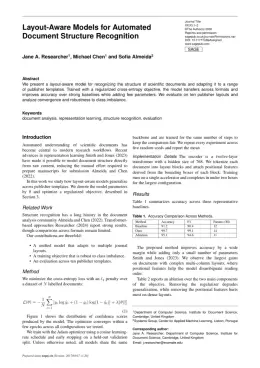
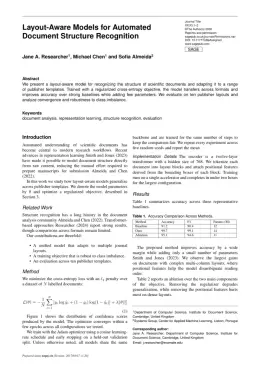
Cross-Cultural Research Template

Write in a clean editor, then format for Cross-Cultural Research in one click — DocuGuru applies the official SAGE template with author–year references and exports a submission-ready PDF plus the editable LaTeX source. Free to start.

About the Cross-Cultural Research format

Cross-Cultural Research is a peer-reviewed journal published by SAGE, covering Cultural Differences and Values, Social and Intergroup Psychology, Evolutionary Psychology and Human Behavior.

PublisherSAGE
Reference styleAuthor–year (Harvard)
Author–year — (Smith, 2023) in the text
Smith, A., Jones, B. and Lee, C. (2023) 'A representative article title', Cross-Cultural Research, 12(3), pp. 45–58.

Formats any DOI in Cross-Cultural Research style. No sign-up.

Publishes research inCultural Differences and Values Social and Intergroup Psychology Evolutionary Psychology and Human Behavior Culture, Economy, and Development Studies Child and Adolescent Psychosocial and Emotional Development
ISSN1069-3971
Citation impact (2-yr)3.53
h-index70
i10-index389
Total citations23,687
Top institutions publishing hereNational Research University Higher School of Economics
Journal websiteccr.sagepub.com
You getA submission-ready PDF and the editable LaTeX source — ready to submit.

Papers published in Cross-Cultural Research per year

34
2014
11
2015
18
2016
38
2017
23
2018
11
2019
14
2020
17
2021
20
2022
17
2023
27
2024
19
2025

Citation impact of Cross-Cultural Research by publication year

649
2014
290
2015
584
2016
1.2K
2017
541
2018
140
2019
326
2020
270
2021
227
2022
94
2023
96
2024
82
2025

Citations each year’s papers have accumulated so far — the most recent years are still building up.

Most-cited papers in Cross-Cultural Research

Horizontal and Vertical Dimensions of Individualism and Collectivism: A Theoretical and Measurement Refinement

Theodore M. Singelis, Harry C. Triandis, Dharm P. S. Bhawuk et al. · 1 Aug 1995

In developing a new scale, this article makes theoretical and measurement distinctions between vertical and horizontal individualism and collectivism. Vertical collectivism includes perceiving the selfas a part (or an aspect) of a collective and accepting inequalities within the collective. Horizontal collectivism includes perceiving the self as a part of the collective, but seeing all members…

2,292 citations Cite SaveGo to paper →
Personality and Culture Revisited: Linking Traits and Dimensions of Culture

Geert Hofstede, Robert R. McCrae · 1 Feb 2004

“Culture and personality” was a focus of anthropology and psychology in the first half of the 20th century. It was concerned with traditional and preliterate societies and drew many of its constructs from psychoanalysis. In this article, we note that taxonomies of personality traits and cultural values developed independently since 1980 have created new possibilities…

1,393 citations Cite SaveGo to paper →
Collectivism and Individualism as Cultural Syndromes

Harry C. Triandis · 1 Aug 1993

A cultural syndrome can be identified when shared attitudes, be liefs, norms, roles, values, and other such elements of subjective cul ture, identified among those who share a language, historic period, and geographic location, (a) are organized around a theme, (b) there is evidence that the within-culture variance of these constructs is small relative to…

Cooperation and Commune Longevity: A Test of the Costly Signaling Theory of Religion

Richard Sosis, Eric R. Bressler · 1 May 2003

The costly signaling theory of religion posits that religious rituals and taboos can promote intragroup cooperation, which is argued to be the primary adaptive benefit of religion. To test this theory, the authors collected historical data on the constraints and ritual requirements that eighty-three 19th-century U.S. communes imposed on their members. All communes must solve…

Being Driven to Work Excessively Hard

Wilmar B. Schaufeli, Akihito Shimazu, Toon W. Taris · 19 May 2009

Based on a conceptual analysis, a two-dimensional self-report questionnaire for assessing workaholism (work addiction) is proposed, including (1) working excessively hard and (2) working compulsively. Using independent explorative and confirmative samples that include employees from The Netherlands ( N = 7,594) and Japan ( N = 3,311), a questionnaire is developed and psychometrically evaluated. Results…

Cross-Cultural Research template — frequently asked questions

How do I write a paper in the Cross-Cultural Research format?
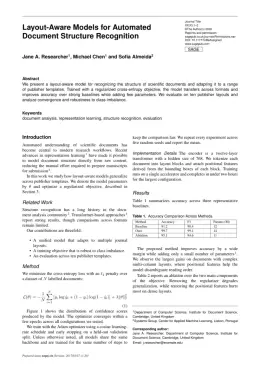
In DocuGuru you write your manuscript in a normal editor — no LaTeX setup required — and select the Cross-Cultural Research template. When you export, DocuGuru compiles the paper into the official SAGE format and hands you a submission-ready PDF along with the editable LaTeX source.
What reference style does Cross-Cultural Research use?
Cross-Cultural Research uses Author–year (Harvard) references, shown as author–year markers such as (Smith, 2023) in the text. DocuGuru formats every in-text citation and the reference list in this exact style automatically. A reference appears like this: Smith, A., Jones, B. and Lee, C. (2023) 'A representative article title', Cross-Cultural Research, 12(3), pp. 45–58.
Do I need to know LaTeX to submit to Cross-Cultural Research?
No. DocuGuru generates the sagej LaTeX class and compiles the PDF for you in the background, so you get a SAGE-ready Cross-Cultural Research document without writing any LaTeX. If you do want it, the LaTeX source is included in the export.
Can I import an existing draft into the Cross-Cultural Research template?
Yes. Paste or upload your current manuscript — Word, LaTeX, Markdown, or plain text — and DocuGuru reflows it into the Cross-Cultural Research format with correct headings, figures, tables, and author–year citations.
Who publishes Cross-Cultural Research?
Cross-Cultural Research is a multidisciplinary journal published by SAGE. DocuGuru's Cross-Cultural Research template matches SAGE's official submission format.
Can I export a submission-ready Cross-Cultural Research PDF?
Yes — DocuGuru produces a PDF built with the official Cross-Cultural Research template (the sagej class) that is ready to submit to SAGE, together with the matching LaTeX source files.
How much does the Cross-Cultural Research template cost?
You can start writing in the Cross-Cultural Research template for free. Exporting the final submission-ready Cross-Cultural Research PDF and LaTeX source is part of DocuGuru's paid plans — see the app for current pricing.
Use the Cross-Cultural Research template