SAGE

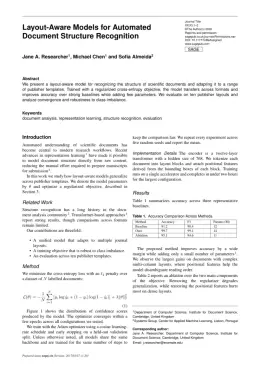
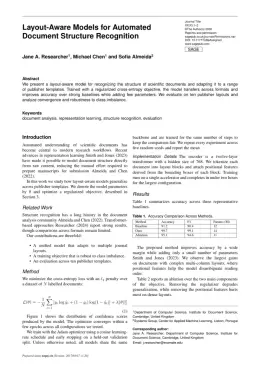
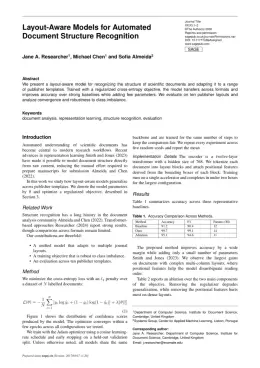
Comprehensive Psychology Template

Write in a clean editor, then format for Comprehensive Psychology in one click — DocuGuru applies the official SAGE template with author–year references and exports a submission-ready PDF plus the editable LaTeX source. Free to start.

About the Comprehensive Psychology format

Comprehensive Psychology is a peer-reviewed journal published by SAGE, covering Social and Intergroup Psychology, Behavioral Health and Interventions, Psychometric Methodologies and Testing.

PublisherSAGE
Reference styleAuthor–year (Harvard)
Author–year — (Smith, 2023) in the text
Smith, A., Jones, B. and Lee, C. (2023) 'A representative article title', Comprehensive Psychology, 12(3), pp. 45–58.

Formats any DOI in Comprehensive Psychology style. No sign-up.

Publishes research inSocial and Intergroup Psychology Behavioral Health and Interventions Psychometric Methodologies and Testing Sport Psychology and Performance Motor Control and Adaptation
ISSN2165-2228
h-index22
i10-index40
Total citations2,755
Top institutions publishing hereOklahoma State University Oklahoma City
Journal websitewww.amsciepub.com
You getA submission-ready PDF and the editable LaTeX source — ready to submit.

Papers published in Comprehensive Psychology per year

34
2012
14
2013
28
2014
31
2015
17
2016

Citation impact of Comprehensive Psychology by publication year

332
2012
220
2013
1.6K
2014
449
2015
163
2016

Citations each year’s papers have accumulated so far — the most recent years are still building up.

Most-cited papers in Comprehensive Psychology

The Simple Difference Formula: An Approach to Teaching Nonparametric Correlation

Dave S. Kerby · 1 Jan 2014

Although teaching effect sizes is important, many statistics texts omit the topic for the Mann-Whitney U test and the Wilcoxon signed-rank test. To address this omission, this paper introduces the simple difference formula. The formula states that the correlation equals the simple difference between the proportion of favorable and unfavorable evidence; in symbols this is…

Achieving Saturation in Thematic Analysis: Development and Refinement of a Codebook

Hikari Ando, Rosanna Cousins, Carolyn Young · 1 Jan 2014

Reaching a saturation point in thematic analysis is important to validity in qualitative studies, yet the process of achieving saturation is often left ambiguous. The lack of information about the process creates uncertainty in the timing of recruitment closure. This exploratory study was conducted to demonstrate a rigorous approach to reaching saturation through two-stage establishment…

Use of online social network sites for personal purposes at work: does it impair self-reported performance?<sup>1</sup>

Cecilie Schou Andreassen, Torbjørn Torsheim, Ståle Pallesen · 1 Jan 2014

Online social network sites are often used for personal purposes during working hours. Whether or not such use interferes with and impairs work performance is obviously of organizational and economical interest. This impairment hypothesis was empirically tested by the current study. A total of 11,018 (5,656 male) employees participated in a web-based cross-sectional survey distributed…

Determining statistical signifi cance (alpha) and reporting statistical trends: controversies, issues, and facts<sup>1</sup>

Walter R. Schumm, Kariga K. Pratt, Jaimee L. Hartenstein et al. · 1 Jan 2013

Some scholars have argued for fixed standards for null hypothesis significance testing, using only .05 as the criterion for assessing or reporting statistical significance. One might get an impression that no credible scholars have ever succeeded in publishing results in high-impact factor, peer-reviewed journals using any other criteria. Here, we point out that not only…

Comprehensive Psychology template — frequently asked questions

How do I write a paper in the Comprehensive Psychology format?
In DocuGuru you write your manuscript in a normal editor — no LaTeX setup required — and select the Comprehensive Psychology template. When you export, DocuGuru compiles the paper into the official SAGE format and hands you a submission-ready PDF along with the editable LaTeX source.
What reference style does Comprehensive Psychology use?
Comprehensive Psychology uses Author–year (Harvard) references, shown as author–year markers such as (Smith, 2023) in the text. DocuGuru formats every in-text citation and the reference list in this exact style automatically. A reference appears like this: Smith, A., Jones, B. and Lee, C. (2023) 'A representative article title', Comprehensive Psychology, 12(3), pp. 45–58.
Do I need to know LaTeX to submit to Comprehensive Psychology?
No. DocuGuru generates the sagej LaTeX class and compiles the PDF for you in the background, so you get a SAGE-ready Comprehensive Psychology document without writing any LaTeX. If you do want it, the LaTeX source is included in the export.
Can I import an existing draft into the Comprehensive Psychology template?
Yes. Paste or upload your current manuscript — Word, LaTeX, Markdown, or plain text — and DocuGuru reflows it into the Comprehensive Psychology format with correct headings, figures, tables, and author–year citations.
Who publishes Comprehensive Psychology?
Comprehensive Psychology is a multidisciplinary journal published by SAGE. DocuGuru's Comprehensive Psychology template matches SAGE's official submission format.
Can I export a submission-ready Comprehensive Psychology PDF?
Yes — DocuGuru produces a PDF built with the official Comprehensive Psychology template (the sagej class) that is ready to submit to SAGE, together with the matching LaTeX source files.
How much does the Comprehensive Psychology template cost?
You can start writing in the Comprehensive Psychology template for free. Exporting the final submission-ready Comprehensive Psychology PDF and LaTeX source is part of DocuGuru's paid plans — see the app for current pricing.

Use the Comprehensive Psychology template