SAGE

Clinical Ethics Template

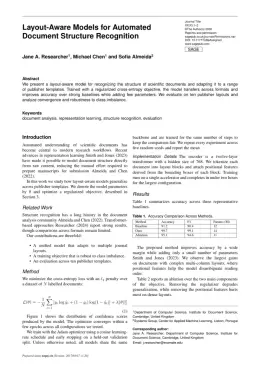
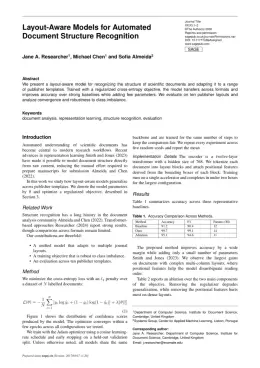
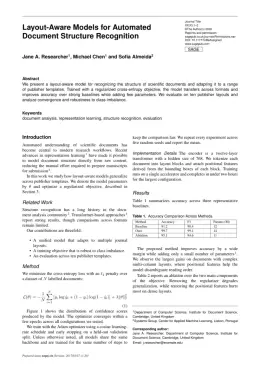
Write in a clean editor, then format for Clinical Ethics in one click — DocuGuru applies the official SAGE template with author–year references and exports a submission-ready PDF plus the editable LaTeX source. Free to start.

About the Clinical Ethics format

Clinical Ethics is a peer-reviewed journal published by SAGE, covering Ethics in medical practice, Ethics and Legal Issues in Pediatric Healthcare, Palliative Care and End-of-Life Issues.

PublisherSAGE
Reference styleAuthor–year (Harvard)
Author–year — (Smith, 2023) in the text
Smith, A., Jones, B. and Lee, C. (2023) 'A representative article title', Clinical Ethics, 12(3), pp. 45–58.

Formats any DOI in Clinical Ethics style. No sign-up.

Publishes research inEthics in medical practice Ethics and Legal Issues in Pediatric Healthcare Palliative Care and End-of-Life Issues Patient Dignity and Privacy Ethics in Clinical Research
ISSN1477-7509
Citation impact (2-yr)1.33
h-index30
i10-index149
Total citations5,482
Top institutions publishing hereKing's College London
Journal websiteus.sagepub.com
You getA submission-ready PDF and the editable LaTeX source — ready to submit.

Papers published in Clinical Ethics per year

17
2014
21
2015
31
2016
25
2017
23
2018
34
2019
68
2020
81
2021
77
2022
49
2023
19
2024
17
2025

Citation impact of Clinical Ethics by publication year

122
2014
360
2015
308
2016
399
2017
112
2018
322
2019
457
2020
339
2021
144
2022
206
2023
34
2024
22
2025

Citations each year’s papers have accumulated so far — the most recent years are still building up.

Most-cited papers in Clinical Ethics

The zone of parental discretion: An ethical tool for dealing with disagreement between parents and doctors about medical treatment for a child

Lynn Gillam · 18 Dec 2015

Dealing with situations where parents’ views about treatment for their child are strongly opposed to doctors’ views is one major area of ethical challenge in paediatric health care. The traditional approach focuses on the child’s best interests, but this is problematic for a number of reasons. The Harm Principle test is regarded by many ethicists…

Beyond individualism: Is there a place for relational autonomy in clinical practice and research?

Edward S. Dove, Susan Kelly, Federica Lucivero et al. · 13 Apr 2017

The dominant, individualistic understanding of autonomy that features in clinical practice and research is underpinned by the idea that people are, in their ideal form, independent, self-interested and rational gain-maximising decision-makers. In recent decades, this paradigm has been challenged from various disciplinary and intellectual directions. Proponents of 'relational autonomy' in particular have argued that people's…

Disability: a welfarist approach

Julian Savulescu, Guy Kahane · 1 Mar 2011

In this paper, we offer a new account of disability. According to our account, some state of a person's biology or psychology is a disability if that state makes it more likely that a person's life will get worse, in terms of his or her own wellbeing, in a given set of social and environmental…

Truth-telling in the doctor-patient relationship: a case analysis

Daniel Sokol · 1 Sep 2006

Using a real-life case involving an accidental discovery of misattributed paternity as a springboard for discussion, I reflect on several practical and theoretical issues surrounding truth-telling in the doctor-patient relationship. I present the moral dilemma and identify arguments in favour of and against disclosure. I then examine the theoretical difficulties in balancing conflicting reasons and…

Hope and terminal illness: false hope versus absolute hope

Eve Garrard, Anthony Wrigley · 17 Feb 2009

Sustaining hope in patients is an important element of health care, allowing improvement in patient welfare and quality of life. However in the palliative care context, with patients who are terminally ill, it might seem that in order to maintain hope the palliative care practitioner would sometimes have to deceive the patient about the full…

Clinical Ethics template — frequently asked questions

How do I write a paper in the Clinical Ethics format?
In DocuGuru you write your manuscript in a normal editor — no LaTeX setup required — and select the Clinical Ethics template. When you export, DocuGuru compiles the paper into the official SAGE format and hands you a submission-ready PDF along with the editable LaTeX source.
What reference style does Clinical Ethics use?
Clinical Ethics uses Author–year (Harvard) references, shown as author–year markers such as (Smith, 2023) in the text. DocuGuru formats every in-text citation and the reference list in this exact style automatically. A reference appears like this: Smith, A., Jones, B. and Lee, C. (2023) 'A representative article title', Clinical Ethics, 12(3), pp. 45–58.
Do I need to know LaTeX to submit to Clinical Ethics?
No. DocuGuru generates the sagej LaTeX class and compiles the PDF for you in the background, so you get a SAGE-ready Clinical Ethics document without writing any LaTeX. If you do want it, the LaTeX source is included in the export.
Can I import an existing draft into the Clinical Ethics template?
Yes. Paste or upload your current manuscript — Word, LaTeX, Markdown, or plain text — and DocuGuru reflows it into the Clinical Ethics format with correct headings, figures, tables, and author–year citations.
Who publishes Clinical Ethics?
Clinical Ethics is a multidisciplinary journal published by SAGE. DocuGuru's Clinical Ethics template matches SAGE's official submission format.
Can I export a submission-ready Clinical Ethics PDF?
Yes — DocuGuru produces a PDF built with the official Clinical Ethics template (the sagej class) that is ready to submit to SAGE, together with the matching LaTeX source files.
How much does the Clinical Ethics template cost?
You can start writing in the Clinical Ethics template for free. Exporting the final submission-ready Clinical Ethics PDF and LaTeX source is part of DocuGuru's paid plans — see the app for current pricing.

Use the Clinical Ethics template