SAGE

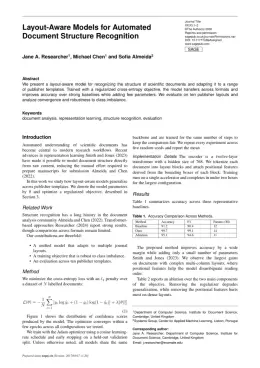
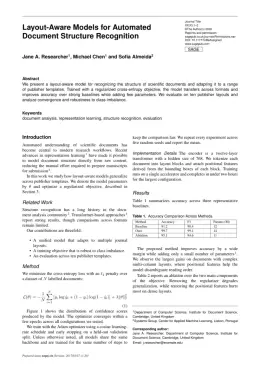
Clinical Electroencephalography Template

Write in a clean editor, then format for Clinical Electroencephalography in one click — DocuGuru applies the official SAGE template with author–year references and exports a submission-ready PDF plus the editable LaTeX source. Free to start.

About the Clinical Electroencephalography format

Clinical Electroencephalography is a peer-reviewed journal published by SAGE, covering EEG and Brain-Computer Interfaces, Epilepsy research and treatment, Functional Brain Connectivity Studies.

PublisherSAGE
Reference styleAuthor–year (Harvard)
Author–year — (Smith, 2023) in the text
Smith, A., Jones, B. and Lee, C. (2023) 'A representative article title', Clinical Electroencephalography, 12(3), pp. 45–58.

Formats any DOI in Clinical Electroencephalography style. No sign-up.

Publishes research inEEG and Brain-Computer Interfaces Epilepsy research and treatment Functional Brain Connectivity Studies Neuroscience and Neuropharmacology Research Neural dynamics and brain function
ISSN0009-9155
h-index51
i10-index452
Total citations15,739
Top institutions publishing hereUniversity of Illinois Chicago
You getA submission-ready PDF and the editable LaTeX source — ready to submit.

Papers published in Clinical Electroencephalography per year

45
1992
48
1993
42
1994
43
1995
33
1996
46
1997
47
1998
42
1999
44
2000
44
2001
41
2002
38
2003

Citation impact of Clinical Electroencephalography by publication year

326
1992
472
1993
762
1994
740
1995
785
1996
722
1997
857
1998
854
1999
1.5K
2000
663
2001
499
2002
760
2003

Citations each year’s papers have accumulated so far — the most recent years are still building up.

Most-cited papers in Clinical Electroencephalography

Basic Concepts and Clinical Findings in the Treatment of Seizure Disorders with EEG Operant Conditioning

M. B. Sterman · 1 Jan 2000

Two issues concerning sensorimotor EEG operant conditioning, or biofeedback, as a therapeutic modality for the treatment of seizure disorders are the focus of this review. The first relates to the question of whether relevant physiological changes are associated with this procedure. This question is addressed through review of an extensive neurophysiological literature that is likely…

3D Statistical Parametric Mapping of EEG Source Spectra by Means of Variable Resolution Electromagnetic Tomography (VARETA)

Jorge Bosch‐Bayard, Pedro A. Valdés‐Sosa, Trinidad Virues‐Alba et al. · 1 Apr 2001

This article describes a new method for 3D QEEG tomography in the frequency domain. A variant of Statistical Parametric Mapping is presented for source log spectra. Sources are estimated by means of a Discrete Spline EEG inverse solution known as Variable Resolution Electromagnetic Tomography (VARETA). Anatomical constraints are incorporated by the use of the Montreal…

Replication and Extension of P50 Findings in Schizophrenia

Nashaat N. Boutros, George Zouridakis, John E. Overall · 1 Jan 1991

In a paired click "conditioning (S1), Testing (S2)" paradigm the amplitudes of responses to (S1) as well as the degree of attenuation of S2 as compared to S1 (S2/S1) were studied in two schizophrenic groups. Thirteen undifferentiated/disorganized (US) and thirteen paranoid (PS) patients were compared to thirteen age and sex matched normal volunteers. The US…

A Review of EEG Biofeedback Treatment of Anxiety Disorders

Norman C. Moore · 1 Jan 2000

Alpha, theta and alpha-theta enhancements are effective treatments of the anxiety disorders (Table 1). Alpha suppression is also effective, but less so (Table 2). Perceived success in carrying out the task plays an important role in clinical improvement. Research is needed to find out how much more effective they are than placebo, and which variables…

Clinical Electroencephalography template — frequently asked questions

How do I write a paper in the Clinical Electroencephalography format?
In DocuGuru you write your manuscript in a normal editor — no LaTeX setup required — and select the Clinical Electroencephalography template. When you export, DocuGuru compiles the paper into the official SAGE format and hands you a submission-ready PDF along with the editable LaTeX source.
What reference style does Clinical Electroencephalography use?
Clinical Electroencephalography uses Author–year (Harvard) references, shown as author–year markers such as (Smith, 2023) in the text. DocuGuru formats every in-text citation and the reference list in this exact style automatically. A reference appears like this: Smith, A., Jones, B. and Lee, C. (2023) 'A representative article title', Clinical Electroencephalography, 12(3), pp. 45–58.
Do I need to know LaTeX to submit to Clinical Electroencephalography?
No. DocuGuru generates the sagej LaTeX class and compiles the PDF for you in the background, so you get a SAGE-ready Clinical Electroencephalography document without writing any LaTeX. If you do want it, the LaTeX source is included in the export.
Can I import an existing draft into the Clinical Electroencephalography template?
Yes. Paste or upload your current manuscript — Word, LaTeX, Markdown, or plain text — and DocuGuru reflows it into the Clinical Electroencephalography format with correct headings, figures, tables, and author–year citations.
Who publishes Clinical Electroencephalography?
Clinical Electroencephalography is a multidisciplinary journal published by SAGE. DocuGuru's Clinical Electroencephalography template matches SAGE's official submission format.
Can I export a submission-ready Clinical Electroencephalography PDF?
Yes — DocuGuru produces a PDF built with the official Clinical Electroencephalography template (the sagej class) that is ready to submit to SAGE, together with the matching LaTeX source files.
How much does the Clinical Electroencephalography template cost?
You can start writing in the Clinical Electroencephalography template for free. Exporting the final submission-ready Clinical Electroencephalography PDF and LaTeX source is part of DocuGuru's paid plans — see the app for current pricing.

Use the Clinical Electroencephalography template