SAGE

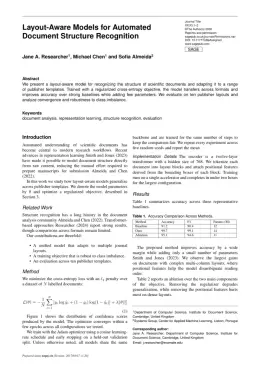
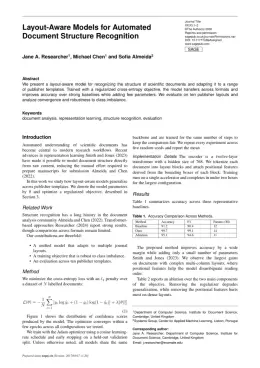
Cell Medicine Template

Write in a clean editor, then format for Cell Medicine in one click — DocuGuru applies the official SAGE template with author–year references and exports a submission-ready PDF plus the editable LaTeX source. Free to start.

About the Cell Medicine format

Cell Medicine is a peer-reviewed journal published by SAGE, covering Pluripotent Stem Cells Research, Pancreatic function and diabetes, Mesenchymal stem cell research.

PublisherSAGE
Reference styleAuthor–year (Harvard)
Author–year — (Smith, 2023) in the text
Smith, A., Jones, B. and Lee, C. (2023) 'A representative article title', Cell Medicine, 12(3), pp. 45–58.

Formats any DOI in Cell Medicine style. No sign-up.

Publishes research inPluripotent Stem Cells Research Pancreatic function and diabetes Mesenchymal stem cell research Tissue Engineering and Regenerative Medicine Liver physiology and pathology
ISSN2155-1790
h-index23
i10-index73
Total citations2,190
Top institutions publishing hereOkayama University
Journal websitebibpurl.oclc.org
You getA submission-ready PDF and the editable LaTeX source — ready to submit.

Papers published in Cell Medicine per year

14
2010
11
2011
35
2012
37
2013
6
2014
17
2015
14
2016
5
2017
17
2018
7
2019
1
2020

Citation impact of Cell Medicine by publication year

169
2010
138
2011
571
2012
256
2013
109
2014
269
2015
240
2016
53
2017
196
2018
170
2019
7
2020

Citations each year’s papers have accumulated so far — the most recent years are still building up.

Most-cited papers in Cell Medicine

Comparative Analysis of the Immunomodulatory Properties of Equine Adult-Derived Mesenchymal Stem Cells

Danielle D. Carrade, Michael W. Lamé, Michael S. Kent et al. · 1 Apr 2012

Mesenchymal stem cells (MSCs) derived from bone marrow (BM), adipose tissue (AT), umbilical cord blood (CB), and umbilical cord tissue (CT) are increasingly being used to treat equine inflammatory and degenerative lesions. MSCs modulate the immune system in part through mediator secretion. Animal species and MSC tissue of origin are both important determinants of MSC…

Approval of First CAR-Ts: Have we Solved all Hurdles for ATMPs?

Diane Seimetz, Karl Heller, Jan Richter · 1 Jan 2019

T cells are known as the most potent killer cells of the immune system, designed by nature to prevent unwanted challenges. The first class of therapeutic products harnessing the power of T cells for target-specific treatment of oncological diseases was bispecific antibodies. The first T-cell engaging bispecific antibodies that obtained approval were catumaxomab and blinatumomab…

Allogeneic Mesenchymal Stem Cell Transplantation in Dogs with Keratoconjunctivitis Sicca

Maura Krähembühl Wanderley Bittencourt, Michele A. Barros, João Flávio Panattoni Martins et al. · 1 Oct 2016

Keratoconjunctivitis sicca (KCS) is a dysfunction in tear production associated with clinical signs, which include conjunctival hyperemia, ocular discharge, discomfort, pain, and, eventually, corneal vascularization and pigmentation. Immunosuppressive drugs are routinely administrated for long periods to treat KCS but with side effects and limited results. Evaluation of the clinical benefits of intralacrimal transplantation of allogeneic…

Cell Therapy from Bench to Bedside Translation in CNS Neurorestoratology Era

Hongyun Huang, Lin Chen, Paul R. Sanberg · 1 Mar 2010

Recent advances in cell biology, neural injury and repair, and the progress towards development of neurorestorative interventions are the basis for increased optimism. Based on the complexity of the processes of demyelination and remyelination, degeneration and regeneration, damage and repair, functional loss and recovery, it would be expected that effective therapeutic approaches will require a…

Cryopreservation of Adipose-Derived Mesenchymal Stem Cells

Chika Miyagi‐Shiohira, Kiyoto Kurima, Naoya Kobayashi et al. · 1 Aug 2015

Mesenchymal stem cells (MSCs) have the potential to differentiate into cells of mesodermal origin such as osteoblasts, adipocytes, myocytes, and chondrocytes. They possess an immunosuppressive effect, which makes them a viable cell population for the cell-based therapy of treatment-resistant immune diseases. Adipose-derived mesenchymal stem cells (ASCs) have been demonstrated to have the ability to acquire…

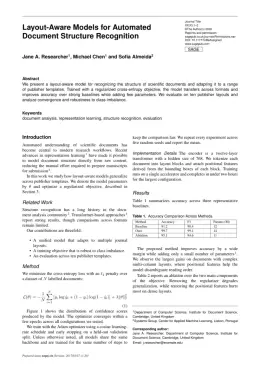
Cell Medicine template — frequently asked questions

How do I write a paper in the Cell Medicine format?
In DocuGuru you write your manuscript in a normal editor — no LaTeX setup required — and select the Cell Medicine template. When you export, DocuGuru compiles the paper into the official SAGE format and hands you a submission-ready PDF along with the editable LaTeX source.
What reference style does Cell Medicine use?
Cell Medicine uses Author–year (Harvard) references, shown as author–year markers such as (Smith, 2023) in the text. DocuGuru formats every in-text citation and the reference list in this exact style automatically. A reference appears like this: Smith, A., Jones, B. and Lee, C. (2023) 'A representative article title', Cell Medicine, 12(3), pp. 45–58.
Do I need to know LaTeX to submit to Cell Medicine?
No. DocuGuru generates the sagej LaTeX class and compiles the PDF for you in the background, so you get a SAGE-ready Cell Medicine document without writing any LaTeX. If you do want it, the LaTeX source is included in the export.
Can I import an existing draft into the Cell Medicine template?
Yes. Paste or upload your current manuscript — Word, LaTeX, Markdown, or plain text — and DocuGuru reflows it into the Cell Medicine format with correct headings, figures, tables, and author–year citations.
Who publishes Cell Medicine?
Cell Medicine is a multidisciplinary journal published by SAGE. DocuGuru's Cell Medicine template matches SAGE's official submission format.
Can I export a submission-ready Cell Medicine PDF?
Yes — DocuGuru produces a PDF built with the official Cell Medicine template (the sagej class) that is ready to submit to SAGE, together with the matching LaTeX source files.
How much does the Cell Medicine template cost?
You can start writing in the Cell Medicine template for free. Exporting the final submission-ready Cell Medicine PDF and LaTeX source is part of DocuGuru's paid plans — see the app for current pricing.
Use the Cell Medicine template