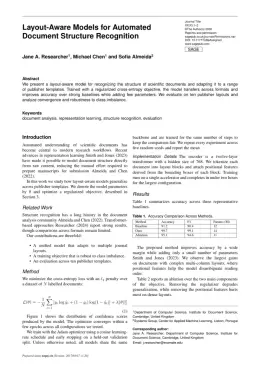
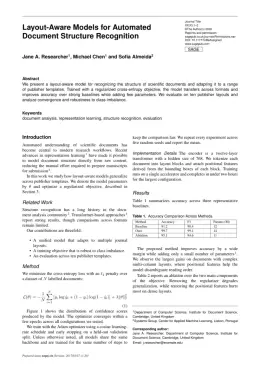
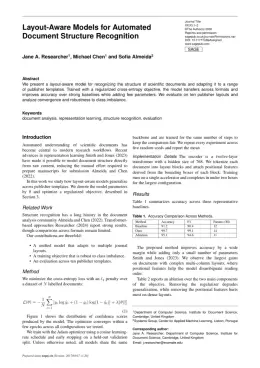
About the Cancer Informatics format
Cancer Informatics is a peer-reviewed journal published by SAGE, covering Gene expression and cancer classification, Bioinformatics and Genomic Networks, Cancer Genomics and Diagnostics.
| Publisher | SAGE |
|---|
| Reference style | Author–year (Harvard) Author–year — (Smith, 2023) in the text
Smith, A., Jones, B. and Lee, C. (2023) 'A representative article title', Cancer Informatics, 12(3), pp. 45–58.
Formats any DOI in Cancer Informatics style. No sign-up.
|
|---|
| Publishes research in | Gene expression and cancer classification Bioinformatics and Genomic Networks Cancer Genomics and Diagnostics Ferroptosis and cancer prognosis Molecular Biology Techniques and Applications |
|---|
| ISSN | 1176-9351 |
|---|
| Citation impact (2-yr) | 1.33 |
|---|
| h-index | 49 |
|---|
| i10-index | 293 |
|---|
| Total citations | 13,150 |
|---|
| Article processing charge | $1,848 |
|---|
| Open access | Yes |
|---|
| Top institutions publishing here | The University of Texas MD Anderson Cancer Center |
|---|
| Journal website | insights.sagepub.com |
|---|
| You get | A submission-ready PDF and the editable LaTeX source — ready to submit. |
|---|
Papers published in Cancer Informatics per year
Citation impact of Cancer Informatics by publication year
Citations each year’s papers have accumulated so far — the most recent years are still building up.
Most-cited papers in Cancer Informatics
Applications of Machine Learning in Cancer Prediction and Prognosis
Joseph A. Cruz, David S. Wishart · 1 Jan 2006
Machine learning is a branch of artificial intelligence that employs a variety of statistical, probabilistic and optimization techniques that allows computers to “learn” from past examples and to detect hard-to-discern patterns from large, noisy or complex data sets. This capability is particularly well-suited to medical applications, especially those that depend on complex proteomic and genomic…
Analysis of Gene Expression Data Using BRB-Array Tools
Richard Simon, Amy Lam, Ming‐Chung Li et al. · 1 Jan 2007
BRB-ArrayTools is an integrated software system for the comprehensive analysis of DNA microarray experiments. It was developed by professional biostatisticians experienced in the design and analysis of DNA microarray studies and incorporates methods developed by leading statistical laboratories. The software is designed for use by biomedical scientists who wish to have access to state-of-the-art statistical…
TNBCtype: A Subtyping Tool for Triple-Negative Breast Cancer
Xi Chen, Jiang Li, W.H. Gray et al. · 1 Jan 2012
MOTIVATION: Triple-negative breast cancer (TNBC) is a heterogeneous breast cancer group, and identification of molecular subtypes is essential for understanding the biological characteristics and clinical behaviors of TNBC as well as for developing personalized treatments. Based on 3,247 gene expression profiles from 21 breast cancer data sets, we discovered six TNBC subtypes from 587 TNBC…
Uncovering Biological Network Function via Graphlet Degree Signatures
Tijana Milenković, Nataša Pržulj · 1 Jan 2008
Motivation Proteins are essential macromolecules of life and thus understanding their function is of great importance. The number of functionally unclassified proteins is large even for simple and well studied organisms such as baker's yeast. Methods for determining protein function have shifted their focus from targeting specific proteins based solely on sequence homology to analyses…
Assessment of Weighted Quantile Sum Regression for Modeling Chemical Mixtures and Cancer Risk
Jenna Czarnota, Chris Gennings, David C. Wheeler · 1 Jan 2015
In evaluation of cancer risk related to environmental chemical exposures, the effect of many chemicals on disease is ultimately of interest. However, because of potentially strong correlations among chemicals that occur together, traditional regression methods suffer from collinearity effects, including regression coefficient sign reversal and variance inflation. In addition, penalized regression methods designed to remediate…