SAGE

Building Acoustics Template

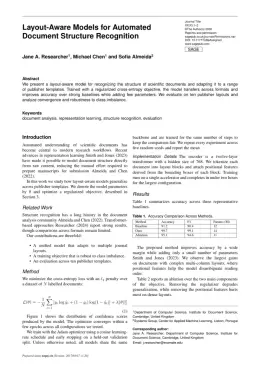
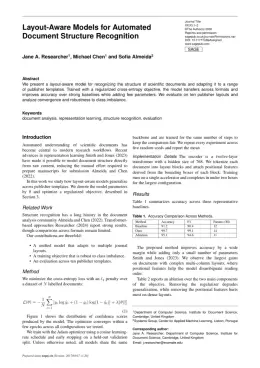
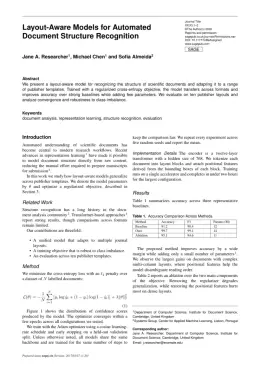
Write in a clean editor, then format for Building Acoustics in one click — DocuGuru applies the official SAGE template with author–year references and exports a submission-ready PDF plus the editable LaTeX source. Free to start.

About the Building Acoustics format

Building Acoustics is a peer-reviewed journal published by SAGE, covering Acoustic Wave Phenomena Research, Noise Effects and Management, Hearing Loss and Rehabilitation.

PublisherSAGE
Reference styleAuthor–year (Harvard)
Author–year — (Smith, 2023) in the text
Smith, A., Jones, B. and Lee, C. (2023) 'A representative article title', Building Acoustics, 12(3), pp. 45–58.

Formats any DOI in Building Acoustics style. No sign-up.

Publishes research inAcoustic Wave Phenomena Research Noise Effects and Management Hearing Loss and Rehabilitation Structural Health Monitoring Techniques Structural Engineering and Vibration Analysis
ISSN1351-010X
Citation impact (2-yr)1.3
h-index33
i10-index199
Total citations6,904
Top institutions publishing hereUniversity of Liverpool
Journal websiteus.sagepub.com
You getA submission-ready PDF and the editable LaTeX source — ready to submit.

Papers published in Building Acoustics per year

28
2014
38
2015
18
2016
17
2017
26
2018
21
2019
32
2020
17
2021
22
2022
24
2023
25
2024
36
2025

Citation impact of Building Acoustics by publication year

207
2014
121
2015
233
2016
249
2017
624
2018
262
2019
256
2020
179
2021
234
2022
160
2023
69
2024
34
2025

Citations each year’s papers have accumulated so far — the most recent years are still building up.

Most-cited papers in Building Acoustics

A Review of Sustainable Materials for Acoustic Applications

Francesco Asdrubali, Samuele Schiavoni, Kirill V. Horoshenkov · 1 Dec 2012

Acoustical sustainable materials, either natural or made from recycled materials, are quite often a valid alternative to traditional synthetic materials. The production of these materials generally has a lower environmental impact than conventional ones, though a proper analysis of their sustainability, through Life Cycle Assessment procedures, has to be carried out. 
\nAirborne sound absorption of…

The Effects of Noise on Children at School: A Review

Bridget Shield, Julie Dockrell · 1 Jun 2003

This paper reviews research on issues relating to the effects of noise on children at school. Areas covered include factors affecting speech intelligibility in the classroom; the effects of environmental and classroom noise on children's academic performance; children's annoyance due to noise; and surveys of classroom noise levels. Consistencies and discrepancies between the results of…

Review of acoustic comfort evaluation in dwellings—part I: Associations of acoustic field data to subjective responses from building surveys

Nikolaos-Georgios Vardaxis, Delphine Bard, Kerstin Persson Waye · 19 Mar 2018

Acoustic comfort is a concept hardly described in the literature. But it has been used in engineering typically to refer to low noise or annoyance in order to invoke no discomfort. Current standardized methods for airborne and impact sound reduction are deployed to assess acoustic comfort in dwellings. However, the measured sound pressure levels do…

Effects of low-frequency noise on human cognitive performances in laboratory

Laura Rossi, Andrea Prato, Lorenzo Lesina et al. · 1 Mar 2018

Indoor working and living environments are increasingly exposed to low-frequency noise sources. The well-known relationship between noise conditions and effects on human health requires the development of a proper procedure to evaluate the stress due to acoustical factors. For this purpose, an experiment, based on Soft Metrology principles, was designed to measure the changes of…

Building Acoustics template — frequently asked questions

How do I write a paper in the Building Acoustics format?
In DocuGuru you write your manuscript in a normal editor — no LaTeX setup required — and select the Building Acoustics template. When you export, DocuGuru compiles the paper into the official SAGE format and hands you a submission-ready PDF along with the editable LaTeX source.
What reference style does Building Acoustics use?
Building Acoustics uses Author–year (Harvard) references, shown as author–year markers such as (Smith, 2023) in the text. DocuGuru formats every in-text citation and the reference list in this exact style automatically. A reference appears like this: Smith, A., Jones, B. and Lee, C. (2023) 'A representative article title', Building Acoustics, 12(3), pp. 45–58.
Do I need to know LaTeX to submit to Building Acoustics?
No. DocuGuru generates the sagej LaTeX class and compiles the PDF for you in the background, so you get a SAGE-ready Building Acoustics document without writing any LaTeX. If you do want it, the LaTeX source is included in the export.
Can I import an existing draft into the Building Acoustics template?
Yes. Paste or upload your current manuscript — Word, LaTeX, Markdown, or plain text — and DocuGuru reflows it into the Building Acoustics format with correct headings, figures, tables, and author–year citations.
Who publishes Building Acoustics?
Building Acoustics is a multidisciplinary journal published by SAGE. DocuGuru's Building Acoustics template matches SAGE's official submission format.
Can I export a submission-ready Building Acoustics PDF?
Yes — DocuGuru produces a PDF built with the official Building Acoustics template (the sagej class) that is ready to submit to SAGE, together with the matching LaTeX source files.
How much does the Building Acoustics template cost?
You can start writing in the Building Acoustics template for free. Exporting the final submission-ready Building Acoustics PDF and LaTeX source is part of DocuGuru's paid plans — see the app for current pricing.

Use the Building Acoustics template