SAGE

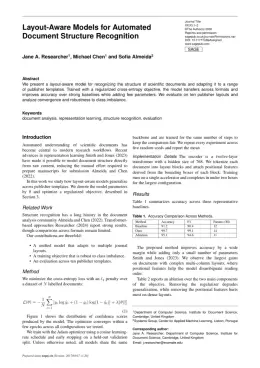
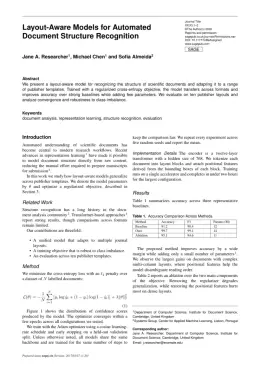
Analytical Chemistry Insights Template

Write in a clean editor, then format for Analytical Chemistry Insights in one click — DocuGuru applies the official SAGE template with author–year references and exports a submission-ready PDF plus the editable LaTeX source. Free to start.

About the Analytical Chemistry Insights format

Analytical Chemistry Insights is a peer-reviewed journal published by SAGE, covering Analytical Chemistry and Chromatography, Analytical Methods in Pharmaceuticals, Antibiotics Pharmacokinetics and Efficacy.

PublisherSAGE
Reference styleAuthor–year (Harvard)
Author–year — (Smith, 2023) in the text
Smith, A., Jones, B. and Lee, C. (2023) 'A representative article title', Analytical Chemistry Insights, 12(3), pp. 45–58.

Formats any DOI in Analytical Chemistry Insights style. No sign-up.

Publishes research inAnalytical Chemistry and Chromatography Analytical Methods in Pharmaceuticals Antibiotics Pharmacokinetics and Efficacy Analytical chemistry methods development Analytical Chemistry and Sensors
ISSN1177-3901
h-index24
i10-index72
Total citations2,521
Open accessYes
Top institutions publishing hereCairo University
Journal websitewww.la-press.com
You getA submission-ready PDF and the editable LaTeX source — ready to submit.

Papers published in Analytical Chemistry Insights per year

17
2007
14
2008
3
2009
6
2010
11
2011
7
2012
11
2013
11
2014
9
2015
10
2016
6
2017
5
2018

Citation impact of Analytical Chemistry Insights by publication year

151
2007
329
2008
23
2009
97
2010
200
2011
213
2012
535
2013
131
2014
184
2015
302
2016
78
2017
258
2018

Citations each year’s papers have accumulated so far — the most recent years are still building up.

Most-cited papers in Analytical Chemistry Insights

Development of Methods for the Determination of pK<sub>a</sub>Values

J.C. Reijenga, Arno J. F. van Hoof, A. van Loon et al. · 1 Jan 2013

The acid dissociation constant (pKa) is among the most frequently used physicochemical parameters, and its determination is of interest to a wide range of research fields. We present a brief introduction on the conceptual development of pKa as a physical parameter and its relationship to the concept of the pH of a solution. This is…

Quality Issues of Research Antibodies

Michael G. Weller · 1 Jan 2016

According to several recent studies, an unexpectedly high number of landmark papers seem to be not reproducible by independent laboratories. Nontherapeutic antibodies used for research, diagnostic, food analytical, environmental, and other purposes play a significant role in this matter. Although some papers have been published offering suggestions to improve the situation, they do not seem…

Use of Fourier Transform Infrared (FTIR) Spectroscopy to Study Cadmium-Induced Changes in <i>Padina Tetrastromatica</i> (Hauck)

Lisette D’Souza, Prabha Devi, M.P. Divya Shridhar et al. · 1 Jan 2008

The aim of this study is to adopt the approach of metabolic fingerprinting through the use of Fourier Transform Infrared (FTIR) technique to understand changes in the chemical structure in Padina tetrastromatica (Hauck). The marine brown alga under study was grown in two different environmental conditions; in natural seawater ( P. tetrastromatica (c)) and in…

In Vitro Studies of the Antimicrobial and Free-Radical Scavenging Potentials of Silver Nanoparticles Biosynthesized From the Extract of <i>Desmostachya bipinnata</i>

Sitaramanjaneya Reddy Guntur, N. S. Sampath Kumar, Manasa M Hegde et al. · 1 Jan 2018

The aim of this study was to perform green synthesis of silver nanoparticles (AgNPs) from the leaf extract of Desmostachya bipinnata (Dharba), a medicinally important herb which is widely used across India. Synthesized AgNPs were analyzed by UV-Visible spectroscopy, X-ray diffraction (XRD), Fourier transform infrared (FTIR) spectroscopy, scanning electron microscopy (SEM), and energy dispersive X-ray…

Analytical Methods for the Determination of Mineral Oil Saturated Hydrocarbons (MOSH) and Mineral Oil Aromatic Hydrocarbons (MOAH)—A Short Review

Sandra Weber, Karola Schrag, Gerd Mildau et al. · 1 Jan 2018

Mineral oils (such as paraffinum liquidum or white oil), which consist of mineral oil saturated hydrocarbons (MOSH) and mineral oil aromatic hydrocarbons (MOAH), are widely applied in various consumer products such as medicines and cosmetics. Contamination of food with mineral oil may occur by migration of mineral oil containing products from packaging materials, or during…

Analytical Chemistry Insights template — frequently asked questions

How do I write a paper in the Analytical Chemistry Insights format?
In DocuGuru you write your manuscript in a normal editor — no LaTeX setup required — and select the Analytical Chemistry Insights template. When you export, DocuGuru compiles the paper into the official SAGE format and hands you a submission-ready PDF along with the editable LaTeX source.
What reference style does Analytical Chemistry Insights use?
Analytical Chemistry Insights uses Author–year (Harvard) references, shown as author–year markers such as (Smith, 2023) in the text. DocuGuru formats every in-text citation and the reference list in this exact style automatically. A reference appears like this: Smith, A., Jones, B. and Lee, C. (2023) 'A representative article title', Analytical Chemistry Insights, 12(3), pp. 45–58.
Do I need to know LaTeX to submit to Analytical Chemistry Insights?
No. DocuGuru generates the sagej LaTeX class and compiles the PDF for you in the background, so you get a SAGE-ready Analytical Chemistry Insights document without writing any LaTeX. If you do want it, the LaTeX source is included in the export.
Can I import an existing draft into the Analytical Chemistry Insights template?
Yes. Paste or upload your current manuscript — Word, LaTeX, Markdown, or plain text — and DocuGuru reflows it into the Analytical Chemistry Insights format with correct headings, figures, tables, and author–year citations.
Who publishes Analytical Chemistry Insights?
Analytical Chemistry Insights is a multidisciplinary journal published by SAGE. DocuGuru's Analytical Chemistry Insights template matches SAGE's official submission format.
Can I export a submission-ready Analytical Chemistry Insights PDF?
Yes — DocuGuru produces a PDF built with the official Analytical Chemistry Insights template (the sagej class) that is ready to submit to SAGE, together with the matching LaTeX source files.
How much does the Analytical Chemistry Insights template cost?
You can start writing in the Analytical Chemistry Insights template for free. Exporting the final submission-ready Analytical Chemistry Insights PDF and LaTeX source is part of DocuGuru's paid plans — see the app for current pricing.

Use the Analytical Chemistry Insights template