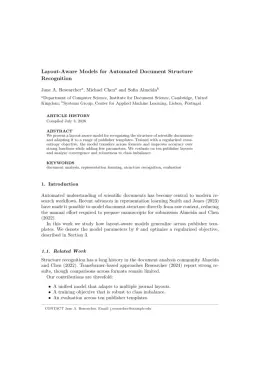
About the Human Molecular Genetics format
Human Molecular Genetics is a peer-reviewed journal published by Oxford University Press, covering Mitochondrial Function and Pathology, Genetic Neurodegenerative Diseases, Genetics and Neurodevelopmental Disorders. Over its lifetime it has published 14,282 papers, which have received 1,174,092 citations.
| Publisher | Oxford University Press |
|---|
| Reference style | Numbered (OUP) Numbered — [1], [2] in the text
[1] A. Smith, B. Jones, and C. Lee, A representative article title, Human Molecular Genetics 12 (2023) 45–58.
Formats any DOI in the closest standard style — Human Molecular Genetics has no published style definition, so this is an approximation. No sign-up.
|
|---|
| Publishes research in | Mitochondrial Function and Pathology Genetic Neurodegenerative Diseases Genetics and Neurodevelopmental Disorders RNA modifications and cancer RNA Research and Splicing |
|---|
| ISSN | 0964-6906 |
|---|
| Citation impact (2-yr) | 2.85 |
|---|
| h-index | 357 |
|---|
| i10-index | 11,559 |
|---|
| Article processing charge | $4,181 |
|---|
| Top institutions publishing here | Inserm |
|---|
| Journal website | hmg.oxfordjournals.org |
|---|
| You get | A submission-ready PDF and the editable LaTeX source — ready to submit. |
|---|
Papers published in Human Molecular Genetics per year
Citation impact of Human Molecular Genetics by publication year
Citations each year’s papers have accumulated so far — the most recent years are still building up.
Most-cited papers in Human Molecular Genetics
Mendelian randomization: genetic anchors for causal inference in epidemiological studies
George Davey Smith, Gibran Hemani · 4 Jul 2014
Observational epidemiological studies are prone to confounding, reverse causation and various biases and have generated findings that have proved to be unreliable indicators of the causal effects of modifiable exposures on disease outcomes. Mendelian randomization (MR) is a method that utilizes genetic variants that are robustly associated with such modifiable exposures to generate more reliable…
Non-coding RNA
John S. Mattick, Igor V. Makunin · 15 Apr 2006
The term non-coding RNA (ncRNA) is commonly employed for RNA that does not encode a protein, but this does not mean that such RNAs do not contain information nor have function. Although it has been generally assumed that most genetic information is transacted by proteins, recent evidence suggests that the majority of the genomes of…
The DNA methyltransferases of mammals
Timothy H. Bestor · 1 Oct 2000
The biological significance of 5-methylcytosine was in doubt for many years, but is no longer. Through targeted mutagenesis in mice it has been learnt that every protein shown by biochemical tests to be involved in the establishment, maintenance or interpretation of genomic methylation patterns is encoded by an essential gene. A human genetic disorder (ICF…
Evaluating the potential role of pleiotropy in Mendelian randomization studies
Gibran Hemani, Jack Bowden, George Davey Smith · 10 May 2018
Pleiotropy, the phenomenon of a single genetic variant influencing multiple traits, is likely widespread in the human genome. If pleiotropy arises because the single nucleotide polymorphism (SNP) influences one trait, which in turn influences another ('vertical pleiotropy'), then Mendelian randomization (MR) can be used to estimate the causal influence between the traits. Of prime focus…
Molecular components of the mammalian circadian clock
Caroline H. Ko, Joseph S. Takahashi · 20 Sep 2006
Circadian rhythms are approximately 24-h oscillations in behavior and physiology, which are internally generated and function to anticipate the environmental changes associated with the solar day. A conserved transcriptional-translational autoregulatory loop generates molecular oscillations of 'clock genes' at the cellular level. In mammals, the circadian system is organized in a hierarchical manner, in which a…