MDPI

Livers Template

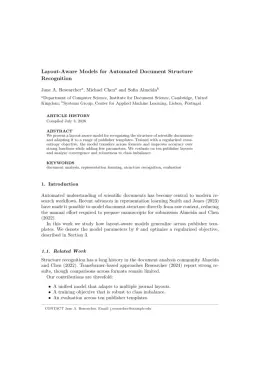
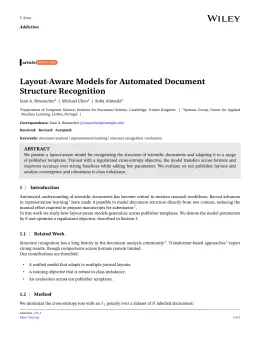
Write in a clean editor, then format for Livers in one click — DocuGuru applies the official MDPI template with numbered references and exports a submission-ready PDF plus the editable LaTeX source. Free to start.

About the Livers format

Livers is a peer-reviewed journal published by MDPI, covering Liver Disease Diagnosis and Treatment, Liver Disease and Transplantation, Hepatocellular Carcinoma Treatment and Prognosis. Over its lifetime it has published 292 papers, which have received 1,448 citations.

PublisherMDPI
Reference styleNumbered (MDPI)
Numbered — [1], [2] in the text
1. Smith, A.; Jones, B.; Lee, C. A Representative Article Title. Livers 2023, 12, 45–58.

Formats any DOI in Livers style. No sign-up.

Publishes research inLiver Disease Diagnosis and Treatment Liver Disease and Transplantation Hepatocellular Carcinoma Treatment and Prognosis Hepatitis B Virus Studies Hepatitis C virus research
ISSN2673-4389
Citation impact (2-yr)1.93
h-index17
i10-index46
Article processing charge$1,082
Open accessYes — indexed in DOAJ
Top institutions publishing hereUniversity of Kansas Medical Center
Journal websitewww.mdpi.com
You getA submission-ready PDF and the editable LaTeX source — ready to submit.

Papers published in Livers per year

1
2020
24
2021
33
2022
49
2023
47
2024
67
2025

Citation impact of Livers by publication year

0
2020
276
2021
399
2022
397
2023
182
2024
146
2025

Citations each year’s papers have accumulated so far — the most recent years are still building up.

Most-cited papers in Livers

Role of Oxidative Stress in Liver Disorders

Laura Conde de la Rosa, Leire Goicoechea, Sandra Torres et al. · 14 Oct 2022

Oxygen is vital for life as it is required for many different enzymatic reactions involved in intermediate metabolism and xenobiotic biotransformation. Moreover, oxygen consumption in the electron transport chain of mitochondria is used to drive the synthesis of ATP to meet the energetic demands of cells. However, toxic free radicals are generated as byproducts of…

Oxidative Stress in Non-Alcoholic Fatty Liver Disease

Carlo Smirne, Eleonora Croce, Davide Di Benedetto et al. · 1 Feb 2022

Non-alcoholic fatty liver disease (NAFLD) is a challenging disease caused by multiple factors, which may partly explain why it still remains an orphan of adequate therapies. This review highlights the interaction between oxidative stress (OS) and disturbed lipid metabolism. Several reactive oxygen species generators, including those produced in the gastrointestinal tract, contribute to the lipotoxic…

Statistical Machine Learning Approaches to Liver Disease Prediction

Fahad Mostafa, Easin Hasan, Morgan Williamson et al. · 1 Dec 2021

Medical diagnoses have important implications for improving patient care, research, and policy. For a medical diagnosis, health professionals use different kinds of pathological methods to make decisions on medical reports in terms of the patients’ medical conditions. Recently, clinicians have been actively engaged in improving medical diagnoses. The use of artificial intelligence and machine learning…

The Space of Disse: The Liver Hub in Health and Disease

Carlos Sanz‐García, Anabel Fernández‐Iglesias, Jordi Gracia‐Sancho et al. · 3 Feb 2021

Since it was first described by the German anatomist and histologist, Joseph Hugo Vincenz Disse, the structure and functions of the space of Disse, a thin perisinusoidal area between the endothelial cells and hepatocytes filled with blood plasma, have acquired great importance in liver disease. The space of Disse is home for the hepatic stellate…

Perspective on Quantitative Structure–Toxicity Relationship (QSTR) Models to Predict Hepatic Biotransformation of Xenobiotics

Mansi Rai, Namuna Paudel, Mesevilhou Sakhrie et al. · 30 Aug 2023

Biotransformation refers to the metabolic conversion of endogenous and xenobiotic chemicals into more hydrophilic substances. Xenobiotic biotransformation is accomplished by a restricted number of enzymes with broad substrate specificities. The biotransformation of xenobiotics is catalyzed by various enzyme systems that can be divided into four categories based on the reaction they catalyze. The primary concentration…


Livers template — frequently asked questions

How do I write a paper in the Livers format?
In DocuGuru you write your manuscript in a normal editor — no LaTeX setup required — and select the Livers template. When you export, DocuGuru compiles the paper into the official MDPI format and hands you a submission-ready PDF along with the editable LaTeX source.
What reference style does Livers use?
Livers uses Numbered (MDPI) references, shown as numbered [1], [2] markers in the text. DocuGuru formats every in-text citation and the reference list in this exact style automatically. A reference appears like this: 1. Smith, A.; Jones, B.; Lee, C. A Representative Article Title. Livers 2023, 12, 45–58.
Do I need to know LaTeX to submit to Livers?
No. DocuGuru generates the mdpi LaTeX class and compiles the PDF for you in the background, so you get a MDPI-ready Livers document without writing any LaTeX. If you do want it, the LaTeX source is included in the export.
Can I import an existing draft into the Livers template?
Yes. Paste or upload your current manuscript — Word, LaTeX, Markdown, or plain text — and DocuGuru reflows it into the Livers format with correct headings, figures, tables, and numbered citations.
What is Livers?
Livers - MDPI Journal. It is a multidisciplinary journal, published by MDPI.
Can I export a submission-ready Livers PDF?
Yes — DocuGuru produces a PDF built with the official Livers template (the mdpi class) that is ready to submit to MDPI, together with the matching LaTeX source files.
How much does the Livers template cost?
You can start writing in the Livers template for free. Exporting the final submission-ready Livers PDF and LaTeX source is part of DocuGuru's paid plans — see the app for current pricing.
Use the Livers template