MDPI

Limnological Review Template

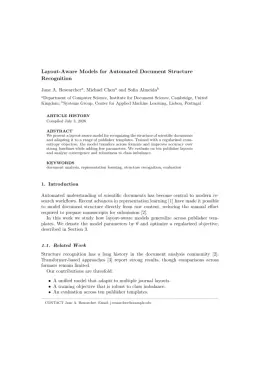
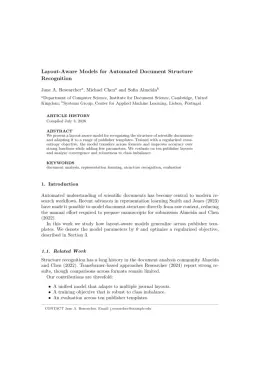
Write in a clean editor, then format for Limnological Review in one click — DocuGuru applies the official MDPI template with numbered references and exports a submission-ready PDF plus the editable LaTeX source. Free to start.

About the Limnological Review format

Limnological Review is a peer-reviewed journal published by MDPI, covering Integrated Water Resources Management, Aquatic Ecosystems and Phytoplankton Dynamics, Botany and Plant Ecology Studies. Over its lifetime it has published 392 papers, which have received 2,139 citations.

PublisherMDPI
Reference styleNumbered (MDPI)
Numbered — [1], [2] in the text
1. Smith, A.; Jones, B.; Lee, C. A Representative Article Title. Limnological Review 2023, 12, 45–58.

Formats any DOI in Limnological Review style. No sign-up.

Abbreviation (ISO-4)Limnol. Rev.
Publishes research inIntegrated Water Resources Management Aquatic Ecosystems and Phytoplankton Dynamics Botany and Plant Ecology Studies Water Quality and Pollution Assessment Hydrology and Watershed Management Studies
ISSN1642-5952
Citation impact (2-yr)2.88
h-index18
i10-index61
Open accessYes — indexed in DOAJ
Top institutions publishing hereAdam Mickiewicz University in Poznań
You getA submission-ready PDF and the editable LaTeX source — ready to submit.

Papers published in Limnological Review per year

26
2013
16
2014
24
2015
27
2016
20
2017
20
2018
16
2019
21
2020
19
2021
19
2023
36
2024
56
2025

Citation impact of Limnological Review by publication year

168
2013
167
2014
78
2015
167
2016
210
2017
93
2018
135
2019
93
2020
103
2021
69
2023
279
2024
71
2025

Citations each year’s papers have accumulated so far — the most recent years are still building up.

Most-cited papers in Limnological Review

Sustainable Solutions: Reviewing the Future of Textile Dye Contaminant Removal with Emerging Biological Treatments

Kusumlata, Balram Ambade, Kumar Ashish et al. · 3 Apr 2024

Synthetic dyes, exceeding 100,000 types on the market and produced at a global scale of over 700,000 tons annually, are extensively used in the textile industry. This industry, a leading contributor to water contamination, relies on dyes like reactive, azo, anthraquinone, and triphenylmethane, resulting in substantial water usage and significant effluent generation. A significant modern…

Pharmaceutical pollution of aquatic environment: an emerging and enormous challenge

Piotr Rzymski, Agnieszka Drewek, Piotr Klimaszyk · 1 Jun 2017

Abstract The global use of pharmaceuticals is on the systematic rise and leads to contamination of surface waters with xenobiotic compounds with a wide range of bioactivity. Waters that receive urban and medical effluents are particularly threatened. The presence of pharmaceuticals in these ecosystems can lead to unpredictable ecological impacts and responses, and may also…

Factors affecting the distribution patterns of aquatic macrophytes

Naseer Ahmad Dar, Ashok Pandit, Bashir Ahmad Ganai · 1 Jun 2014

Abstract Aquatic macrophytes constitute important components of many freshwater ecosystems. The manifold role of aquatic macrophytes in freshwater habitats is closely linked to their distribution, which in turn depends on a myriad of factors. Foremost, among these are light, water temperature, water quality changes and nutrient enrichment, sediment composition and fluctuations in water levels. Light…

Transboundary water resources “A comparative study”: The lessons learnt to help solve the Nile basin water conflict

Mohamed Ashour, Tawab E. Aly, Haitham M. Abueleyon · 1 Mar 2019

Abstract The problematic water situation in Egypt, as one of the River Nile basin countries, has been heightened by the harmful effects of the Grand Ethiopian Renaissance Dam (GERD) on Egypt’s share of the Nile water. In the light of this Egyptian attention was directed towards a study of worldwide transboundary water problems, in order…

The effect of glyphosate-based herbicide on aquatic organisms – a case study

Piotr Rzymski, Piotr Klimaszyk, Tomasz Kubacki et al. · 1 Dec 2013

Abstract The non-selective, post-emergence herbicides based on glyphosate [N-(phosphonomethyl) glycine] are one of the most widely used pesticides in agriculture, urban areas and forestry. Although there has been documentation on the physical, chemical and toxicological properties of glyphosate, the aquatic toxicity of such formulations still requires assessment and evaluation. In the present study, we describe…


Limnological Review template — frequently asked questions

How do I write a paper in the Limnological Review format?
In DocuGuru you write your manuscript in a normal editor — no LaTeX setup required — and select the Limnological Review template. When you export, DocuGuru compiles the paper into the official MDPI format and hands you a submission-ready PDF along with the editable LaTeX source.
What reference style does Limnological Review use?
Limnological Review uses Numbered (MDPI) references, shown as numbered [1], [2] markers in the text. DocuGuru formats every in-text citation and the reference list in this exact style automatically. A reference appears like this: 1. Smith, A.; Jones, B.; Lee, C. A Representative Article Title. Limnological Review 2023, 12, 45–58.
Do I need to know LaTeX to submit to Limnological Review?
No. DocuGuru generates the mdpi LaTeX class and compiles the PDF for you in the background, so you get a MDPI-ready Limnological Review document without writing any LaTeX. If you do want it, the LaTeX source is included in the export.
Can I import an existing draft into the Limnological Review template?
Yes. Paste or upload your current manuscript — Word, LaTeX, Markdown, or plain text — and DocuGuru reflows it into the Limnological Review format with correct headings, figures, tables, and numbered citations.
What is Limnological Review?
Limnological Review (Limnol. Rev.) - MDPI Journal. It is a multidisciplinary journal, published by MDPI.
Can I export a submission-ready Limnological Review PDF?
Yes — DocuGuru produces a PDF built with the official Limnological Review template (the mdpi class) that is ready to submit to MDPI, together with the matching LaTeX source files.
How much does the Limnological Review template cost?
You can start writing in the Limnological Review template for free. Exporting the final submission-ready Limnological Review PDF and LaTeX source is part of DocuGuru's paid plans — see the app for current pricing.
Use the Limnological Review template