
32 citations
Go to paper →
MDPI
Arthropoda Template
Write in a clean editor, then format for Arthropoda in one click — DocuGuru applies the official MDPI template with numbered references and exports a submission-ready PDF plus the editable LaTeX source. Free to start.
About the Arthropoda format
Arthropoda is a peer-reviewed journal published by MDPI, covering Crustacean biology and ecology, Subterranean biodiversity and taxonomy, Insect and Arachnid Ecology and Behavior. Over its lifetime it has published 74 papers, which have received 157 citations.
| Publisher | MDPI |
|---|---|
| Reference style | Numbered (MDPI) Numbered — [1], [2] in the text 1. Smith, A.; Jones, B.; Lee, C. A Representative Article Title. Arthropoda 2023, 12, 45–58.
Formats any DOI in Arthropoda style. No sign-up. |
| Publishes research in | Crustacean biology and ecology Subterranean biodiversity and taxonomy Insect and Arachnid Ecology and Behavior Spider Taxonomy and Behavior Studies Coral and Marine Ecosystems Studies |
| ISSN | 2813-3323 |
| Citation impact (2-yr) | 1.37 |
| h-index | 5 |
| i10-index | 3 |
| Open access | Yes — indexed in DOAJ |
| Top institutions publishing here | American Museum of Natural History |
| You get | A submission-ready PDF and the editable LaTeX source — ready to submit. |
Papers published in Arthropoda per year
Citation impact of Arthropoda by publication year
Citations each year’s papers have accumulated so far — the most recent years are still building up.
Most-cited papers in Arthropoda
An invasive orb-weaving spider from east Asia is now spreading through the southeastern United States; Trichonephila clavata (the “jorō spider”) makes large, imposing webs seemingly everywhere, including in urban landscapes, and even next to busy roads. However, areas near roads come with frequent disturbances, including auditory and vibrational, which for many animals, leads to physiological…
12 citations
Cite
SaveGo to paper →
A study was conducted to evaluate zooplankton species composition, abundance, and diversity in both natural and artificial lakes with varying trophic levels and to determine the relationship between zooplankton community structure and lake environmental conditions. This study hypothesized that correlations exist between zooplankton community structures and environmental parameters associated with eutrophication in natural and artificial…
10 citations
Cite
SaveGo to paper →
The genus Linothele (Araneae: Dipluridae) from Ecuador is reviewed. A total of 38 new species are described; from the Andes: L. alausi n. sp. (♀), L. anabellecitae n. sp. (♀♂), L. angamarca n. sp. (♀♂), L. banos n. sp. (♀♂), L. canirasi n. sp. (♀), L. carchi n. sp. (♀), L. cayambe n. sp. (♀♂),…
9 citations
Cite
SaveGo to paper →
The jorō spider (Trichonephila clavata, originally from east Asia) has been introduced in the southeastern United States, and is rapidly expanding this range, leading to questions about what facilitates this spread. Meanwhile, its cousin, the golden silk spider (T. clavipes), already has a range that covers most of the southeast. In an ongoing effort to…
8 citations
Cite
SaveGo to paper →
Related journal templates

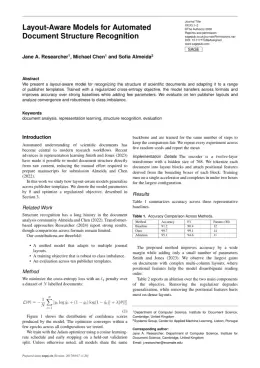
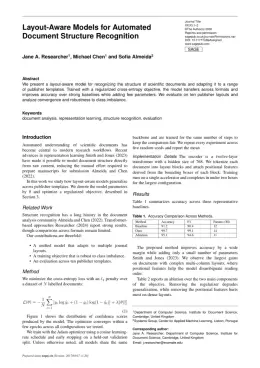
Arthropoda template — frequently asked questions
How do I write a paper in the Arthropoda format?
In DocuGuru you write your manuscript in a normal editor — no LaTeX setup required — and select the Arthropoda template. When you export, DocuGuru compiles the paper into the official MDPI format and hands you a submission-ready PDF along with the editable LaTeX source.
What reference style does Arthropoda use?
Arthropoda uses Numbered (MDPI) references, shown as numbered [1], [2] markers in the text. DocuGuru formats every in-text citation and the reference list in this exact style automatically. A reference appears like this: 1. Smith, A.; Jones, B.; Lee, C. A Representative Article Title. Arthropoda 2023, 12, 45–58.
Do I need to know LaTeX to submit to Arthropoda?
No. DocuGuru generates the mdpi LaTeX class and compiles the PDF for you in the background, so you get a MDPI-ready Arthropoda document without writing any LaTeX. If you do want it, the LaTeX source is included in the export.
Can I import an existing draft into the Arthropoda template?
Yes. Paste or upload your current manuscript — Word, LaTeX, Markdown, or plain text — and DocuGuru reflows it into the Arthropoda format with correct headings, figures, tables, and numbered citations.
What is Arthropoda?
Arthropoda - MDPI Journal. It is a multidisciplinary journal, published by MDPI.
Can I export a submission-ready Arthropoda PDF?
Yes — DocuGuru produces a PDF built with the official Arthropoda template (the mdpi class) that is ready to submit to MDPI, together with the matching LaTeX source files.
How much does the Arthropoda template cost?
You can start writing in the Arthropoda template for free. Exporting the final submission-ready Arthropoda PDF and LaTeX source is part of DocuGuru's paid plans — see the app for current pricing.