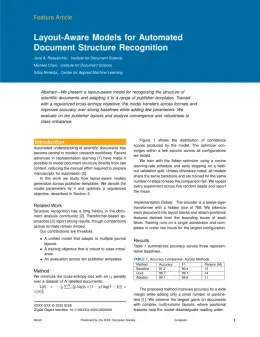
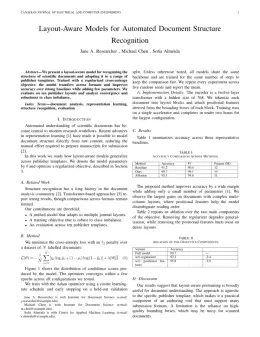
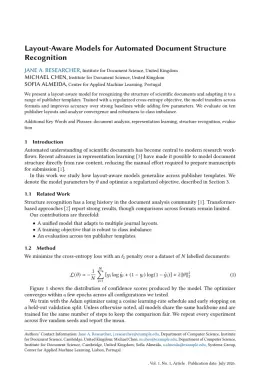
About the IEEE Transactions on Biomedical Engineering format
IEEE Transactions on Biomedical Engineering is a peer-reviewed journal published by IEEE, covering EEG and Brain-Computer Interfaces, Biomedical and Engineering Education, Neuroscience and Neural Engineering. Over its lifetime it has published 15,635 papers, which have received 698,598 citations.
| Publisher | IEEE |
|---|
| Reference style | Numbered (IEEE) Numbered — [1], [2] in the text
[1] A. Smith, B. Jones, and C. Lee, "A representative article title," IEEE Transactions on Biomedical Engineering, vol. 12, no. 3, pp. 45–58, 2023.
Formats any DOI in IEEE Transactions on Biomedical Engineering style. No sign-up.
|
|---|
| Publishes research in | EEG and Brain-Computer Interfaces Biomedical and Engineering Education Neuroscience and Neural Engineering Muscle activation and electromyography studies ECG Monitoring and Analysis |
|---|
| ISSN | 0018-9294 |
|---|
| Citation impact (2-yr) | 3.67 |
|---|
| h-index | 311 |
|---|
| i10-index | 9,161 |
|---|
| Top institutions publishing here | Massachusetts Institute of Technology |
|---|
| Journal website | ieeexplore.ieee.org |
|---|
| You get | A submission-ready PDF and the editable LaTeX source — ready to submit. |
|---|
Papers published in IEEE Transactions on Biomedical Engineering per year
Citation impact of IEEE Transactions on Biomedical Engineering by publication year
Citations each year’s papers have accumulated so far — the most recent years are still building up.
Most-cited papers in IEEE Transactions on Biomedical Engineering
A Real-Time QRS Detection Algorithm
Jiapu Pan, W.J. Tompkins · 1 Mar 1985
We have developed a real-time algorithm for detection of the QRS complexes of ECG signals. It reliably recognizes QRS complexes based upon digital analyses of slope, amplitude, and width. A special digital bandpass filter reduces false detections caused by the various types of interference present in ECG signals. This filtering permits use of low thresholds,…
OpenSim: Open-Source Software to Create and Analyze Dynamic Simulations of Movement
Scott L. Delp, Frank C. Anderson, Allison S. Arnold et al. · 23 Oct 2007
Dynamic simulations of movement allow one to study neuromuscular coordination, analyze athletic performance, and estimate internal loading of the musculoskeletal system. Simulations can also be used to identify the sources of pathological movement and establish a scientific basis for treatment planning. We have developed a freely available, open-source software system (OpenSim) that lets users develop…
BCI2000: A General-Purpose Brain-Computer Interface (BCI) System
Gerwin Schalk, Dennis J. McFarland, Thilo Hinterberger et al. · 25 May 2004
Many laboratories have begun to develop brain-computer interface (BCI) systems that provide communication and control capabilities to people with severe motor disabilities. Further progress and realization of practical applications depends on systematic evaluations and comparisons of different brain signals, recording methods, processing algorithms, output formats, and operating protocols. However, the typical BCI system is designed…
Localization of brain electrical activity via linearly constrained minimum variance spatial filtering
B.D. Van Veen, Wim van Drongelen, Moshe Yuchtman et al. · 1 Jan 1997
A spatial filtering method for localizing sources of brain electrical activity from surface recordings is described and analyzed. The spatial filters are implemented as a weighted sum of the data recorded at different sites. The weights are chosen to minimize the filter output power subject to a linear constraint. The linear constraint forces the filter…
A new strategy for multifunction myoelectric control
B. Hudgins, P. Parker, Robert N. Scott · 1 Jan 1993
This paper describes a novel approach to the control of a multifunction prosthesis based on the classification of myoelectric patterns. It is shown that the myoelectric signal exhibits a deterministic structure during the initial phase of a muscle contraction. Features are extracted from several time segments of the myoelectric signal to preserve pattern structure. These…