Elsevier

New Crops Template

Write in a clean editor, then format for New Crops in one click — DocuGuru applies the official Elsevier template with numbered references and exports a submission-ready PDF plus the editable LaTeX source. Free to start.

About the New Crops format

New Crops is a peer-reviewed journal published by Elsevier, covering Plant Molecular Biology Research, Plant Stress Responses and Tolerance, Genetic Mapping and Diversity in Plants and Animals.

PublisherElsevier
Reference styleNumbered (Elsevier)
Numbered — [1], [2] in the text
[1] A. Smith, B. Jones, C. Lee, A representative article title, New Crops 12 (2023) 45–58.

Formats any DOI in New Crops style. No sign-up.

Publishes research inPlant Molecular Biology Research Plant Stress Responses and Tolerance Genetic Mapping and Diversity in Plants and Animals Plant-Microbe Interactions and Immunity Plant nutrient uptake and metabolism
ISSN2949-9526
Citation impact (2-yr)12.21
h-index23
i10-index38
Total citations1,430
Top institutions publishing hereHenan University
You getA submission-ready PDF and the editable LaTeX source — ready to submit.

Papers published in New Crops per year

10
2023
40
2024
27
2025

Citation impact of New Crops by publication year

423
2023
821
2024
103
2025

Citations each year’s papers have accumulated so far — the most recent years are still building up.

Most-cited papers in New Crops

The central role of transcription factors in bridging biotic and abiotic stress responses for plants’ resilience

Fei Liu, Mengwei Xi, Tong Liu et al. · 18 Nov 2023

Plants are adversely affected by a wide range of abiotic and biotic stresses during their life cycle. In real ecological environments, multiple stresses often occur simultaneously and have huge effects on the yield and nutritional content of crops. Crosstalk is regarded to exist between these different stresses. To date, most research focuses on the interaction…

Regulatory mechanisms and breeding strategies for crop drought resistance

Zhenghua He, Pei Zhang, Haitao Jia et al. · 24 May 2024

Drought is a primary abiotic stress affecting crops, leading to plant stomatal closure, reduced photosynthetic capacity, and reduced yields or even harvest failure. Severe drought can adversely impact agricultural production, ecosystems, and socio-economic capacities. Recently, researchers have studied the regulatory mechanisms of crop drought resistance and cloned hundreds of genes via genetic and molecular approaches.…

Insights into plant–microbe interactions in the rhizosphere to promote sustainable agriculture in the new crops era

Xiaoyu Shi, Yige Zhao, Mengwei Xu et al. · 18 Nov 2023

Microbes accompany plants throughout their lives, from the seed to the ripe fruit. Plant-microbe interactions have long been a focus of research, leading to thousands of articles that demonstrate their importance for agriculture. Here, we review these previous findings, and discuss future directions and prospects of application of plant-microbe interactions from various perspectives: the community…

Current, faltering, and future strategies for advancing microbiome-assisted sustainable agriculture and environmental resilience

Ahmad Humayan Kabir, Md Zakaria Ibne Baki, Bulbul Ahmed et al. · 29 Jan 2024

Establishing global sustainable agriculture emerges as the primary, indispensable strategy to meet escalating food demands and address environmental preservation amidst the challenges posed by severe climate change. The intricate communities of microorganisms associated with plants, collectively termed the plant microbiome, wield significant influence over the vitality and productivity of plant species. Unleashing the potential of…

The hormonal, metabolic, and environmental regulation of plant shoot branching

Yuqi Liu, Shangyu Chen, Sikander Pal et al. · 23 May 2024

Plants have evolved varied structures for environmental adaptation. Shoot branching, as a part of plant architecture, influences the allocation of sugars produced by photosynthesis and thus greatly impacts crop yields. The activity of axillary meristem, and apical dominance governs the shoot branching patterns. In this review, we summarize the key factors involved in the formation…

New Crops template — frequently asked questions

How do I write a paper in the New Crops format?
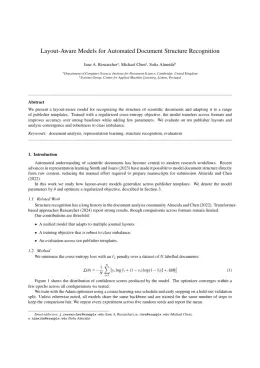
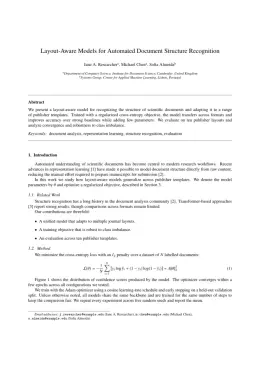
In DocuGuru you write your manuscript in a normal editor — no LaTeX setup required — and select the New Crops template. When you export, DocuGuru compiles the paper into the official Elsevier format and hands you a submission-ready PDF along with the editable LaTeX source.
What reference style does New Crops use?
New Crops uses Numbered (Elsevier) references, shown as numbered [1], [2] markers in the text. DocuGuru formats every in-text citation and the reference list in this exact style automatically. A reference appears like this: [1] A. Smith, B. Jones, C. Lee, A representative article title, New Crops 12 (2023) 45–58.
Do I need to know LaTeX to submit to New Crops?
No. DocuGuru generates the elsarticle LaTeX class and compiles the PDF for you in the background, so you get a Elsevier-ready New Crops document without writing any LaTeX. If you do want it, the LaTeX source is included in the export.
Can I import an existing draft into the New Crops template?
Yes. Paste or upload your current manuscript — Word, LaTeX, Markdown, or plain text — and DocuGuru reflows it into the New Crops format with correct headings, figures, tables, and numbered citations.
Who publishes New Crops?
New Crops is a multidisciplinary journal published by Elsevier. DocuGuru's New Crops template matches Elsevier's official submission format.
Can I export a submission-ready New Crops PDF?
Yes — DocuGuru produces a PDF built with the official New Crops template (the elsarticle class) that is ready to submit to Elsevier, together with the matching LaTeX source files.
How much does the New Crops template cost?
You can start writing in the New Crops template for free. Exporting the final submission-ready New Crops PDF and LaTeX source is part of DocuGuru's paid plans — see the app for current pricing.
Use the New Crops template