
2,147 citations
Cite
SaveGo to paper →
Elsevier
Energy Template
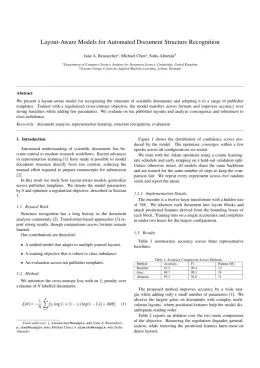
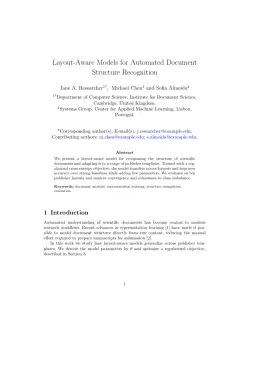
Write in a clean editor, then format for Energy in one click — DocuGuru applies the official Elsevier template with numbered references and exports a submission-ready PDF plus the editable LaTeX source. Free to start.
About the Energy format
Energy is a peer-reviewed journal published by Elsevier, covering Thermodynamic and Exergetic Analyses of Power and Cooling Systems, Integrated Energy Systems Optimization, Building Energy and Comfort Optimization. Over its lifetime it has published 44,431 papers, which have received 1,835,827 citations.
| Publisher | Elsevier |
|---|---|
| Reference style | Numbered (Elsevier) Numbered — [1], [2] in the text [1] A. Smith, B. Jones, C. Lee, A representative article title, Energy 12 (2023) 45–58.
Formats any DOI in Energy style. No sign-up. |
| Publishes research in | Thermodynamic and Exergetic Analyses of Power and Cooling Systems Integrated Energy Systems Optimization Building Energy and Comfort Optimization Thermochemical Biomass Conversion Processes Smart Grid Energy Management |
| ISSN | 0360-5442 |
| Citation impact (2-yr) | 9.83 |
| h-index | 320 |
| i10-index | 31,267 |
| Article processing charge | $3,980 |
| Top institutions publishing here | North China Electric Power University |
| Journal website | www.journals.elsevier.com |
| You get | A submission-ready PDF and the editable LaTeX source — ready to submit. |
Papers published in Energy per year
Citation impact of Energy by publication year
Citations each year’s papers have accumulated so far — the most recent years are still building up.
Most-cited papers in Energy
1,806 citations
Cite
SaveGo to paper →
Solar PV is rapidly growing globally, creating difficult questions around how to efficiently integrate it into national electricity grids. Its time-varying power output is difficult to model credibly because it depends on complex and variable weather systems, leading to difficulty in understanding its potential and limitations. We demonstrate how the MERRA and MERRA-2 global meteorological…
1,662 citations
Cite
SaveGo to paper →
1,552 citations
Cite
SaveGo to paper →
Reanalysis models are rapidly gaining popularity for simulating wind power output due to their convenience and global coverage. However, they should only be relied upon once thoroughly proven. This paper reports the first international validation of reanalysis for wind energy, testing NASA's MERRA and MERRA-2 in 23 European countries. Both reanalyses suffer significant spatial bias,…
1,466 citations
Cite
SaveGo to paper →
Related journal templates


Energy template — frequently asked questions
How do I write a paper in the Energy format?
In DocuGuru you write your manuscript in a normal editor — no LaTeX setup required — and select the Energy template. When you export, DocuGuru compiles the paper into the official Elsevier format and hands you a submission-ready PDF along with the editable LaTeX source.
What reference style does Energy use?
Energy uses Numbered (Elsevier) references, shown as numbered [1], [2] markers in the text. DocuGuru formats every in-text citation and the reference list in this exact style automatically. A reference appears like this: [1] A. Smith, B. Jones, C. Lee, A representative article title, Energy 12 (2023) 45–58.
Do I need to know LaTeX to submit to Energy?
No. DocuGuru generates the elsarticle LaTeX class and compiles the PDF for you in the background, so you get a Elsevier-ready Energy document without writing any LaTeX. If you do want it, the LaTeX source is included in the export.
Can I import an existing draft into the Energy template?
Yes. Paste or upload your current manuscript — Word, LaTeX, Markdown, or plain text — and DocuGuru reflows it into the Energy format with correct headings, figures, tables, and numbered citations.
What is Energy?
Elsevier journal (elsarticle). It is a multidisciplinary journal, published by Elsevier.
Can I export a submission-ready Energy PDF?
Yes — DocuGuru produces a PDF built with the official Energy template (the elsarticle class) that is ready to submit to Elsevier, together with the matching LaTeX source files.
How much does the Energy template cost?
You can start writing in the Energy template for free. Exporting the final submission-ready Energy PDF and LaTeX source is part of DocuGuru's paid plans — see the app for current pricing.