Copernicus Publications

Geographica Helvetica Template

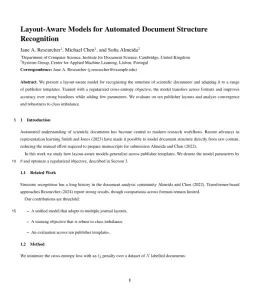
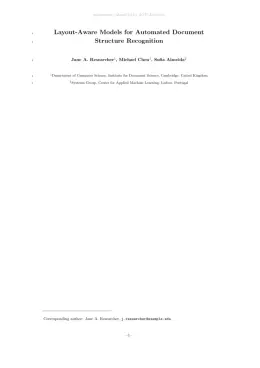
Write in a clean editor, then format for Geographica Helvetica in one click — DocuGuru applies the official Copernicus Publications template with author–year references and exports a submission-ready PDF plus the editable LaTeX source. Free to start.

About the Geographica Helvetica format

Geographica Helvetica is a peer-reviewed journal published by Copernicus Publications, covering Ecology, Conservation, and Geographical Studies, Historical Geography and Geographical Thought, Sociology and Education Studies. Over its lifetime it has published 2,302 papers, which have received 11,474 citations.

PublisherCopernicus Publications
Reference styleAuthor–year (Copernicus)
Author–year — (Smith, 2023) in the text
Smith, A., Jones, B., and Lee, C.: A representative article title, Geographica Helvetica, 12, 45–58, 2023.

Formats any DOI in Geographica Helvetica style. No sign-up.

Publishes research inEcology, Conservation, and Geographical Studies Historical Geography and Geographical Thought Sociology and Education Studies French Urban and Social Studies Urbanization and City Planning
ISSN0016-7312
Citation impact (2-yr)1.19
h-index43
i10-index265
Open accessYes — indexed in DOAJ
Top institutions publishing hereUniversity of Zurich
Journal websitewww.geographica-helvetica.net
You getA submission-ready PDF and the editable LaTeX source — ready to submit.

Papers published in Geographica Helvetica per year

56
2014
43
2015
42
2016
55
2017
36
2018
30
2019
41
2020
47
2021
54
2022
54
2023
36
2024
52
2025

Citation impact of Geographica Helvetica by publication year

788
2014
693
2015
696
2016
474
2017
332
2018
256
2019
468
2020
206
2021
192
2022
193
2023
98
2024
35
2025

Citations each year’s papers have accumulated so far — the most recent years are still building up.

Most-cited papers in Geographica Helvetica

A method for assessing "scientific" and "additional values" of geomorphosites

Emmanuel Reynard, G. Dalla Fontana, L. Kozlik et al. · 30 Sep 2007

Abstract. Over the last two decades, several methods have been developed to reduce subjectivity of geomorphosite selection through use of transparent assessment criteria. Most of these methods propose criteria such as integrity, rarity, representativeness and palaeogeographical importance for the evaluation of the «scientific value» of sites. For the assessment of their global quality, «additional values»…

Geomorphosite assessment in Montesinho Natural Park (Portugal)

Paulo Pereira, D. I. Pereira, M. I. Caetano Alves · 30 Sep 2007

Abstract. The Montesinho Natural Park (MNP), with an area of about 750 km2, is one of the largest protected areas in Portugal. Since its inauguration as a natural park in 1979, geological and geomorphological aspects have not been taken into consideration in its nature conservation policies. Over the last few years, this deficit has been…

Geodiversity : a theoretical and applied concept

Enrique Serrano, P. Ruiz-Flaño · 30 Sep 2007

Abstract. The concept of geodiversity appears to have grown out of the discussions around biodiversity, and has evolved over time to become both a tool and a theoretical concept. The paper presents an overview of this conceptual evolution, leading to formulation of the argument that geodiversity is a broader term than geological diversity. Consequently, it…

Geomorphosite assessment and management in protected areas of Greece Case study of the Lesvos island – coastal geomorphosites

Nickolas Zouros · 30 Sep 2007

Abstract. This paper presents a methodology for assessment of geomorphosites located in protected areas. The methodological process involves definition of «geomorphological value» of all sites using six criteria: 1) «scientific» and «educational value»; 2) geodiversity, 3) «ecological» and «aesthetic value»; 4) «cultural value»; 5) potential threats and protection needs; and 6) potential for use. The…

Geographica Helvetica template — frequently asked questions

How do I write a paper in the Geographica Helvetica format?
In DocuGuru you write your manuscript in a normal editor — no LaTeX setup required — and select the Geographica Helvetica template. When you export, DocuGuru compiles the paper into the official Copernicus Publications format and hands you a submission-ready PDF along with the editable LaTeX source.
What reference style does Geographica Helvetica use?
Geographica Helvetica uses Author–year (Copernicus) references, shown as author–year markers such as (Smith, 2023) in the text. DocuGuru formats every in-text citation and the reference list in this exact style automatically. A reference appears like this: Smith, A., Jones, B., and Lee, C.: A representative article title, Geographica Helvetica, 12, 45–58, 2023.
Do I need to know LaTeX to submit to Geographica Helvetica?
No. DocuGuru generates the copernicus LaTeX class and compiles the PDF for you in the background, so you get a Copernicus Publications-ready Geographica Helvetica document without writing any LaTeX. If you do want it, the LaTeX source is included in the export.
Can I import an existing draft into the Geographica Helvetica template?
Yes. Paste or upload your current manuscript — Word, LaTeX, Markdown, or plain text — and DocuGuru reflows it into the Geographica Helvetica format with correct headings, figures, tables, and author–year citations.
What is Geographica Helvetica?
Copernicus Publications journal. It is a earth and environmental sciences journal, published by Copernicus Publications.
Can I export a submission-ready Geographica Helvetica PDF?
Yes — DocuGuru produces a PDF built with the official Geographica Helvetica template (the copernicus class) that is ready to submit to Copernicus Publications, together with the matching LaTeX source files.
How much does the Geographica Helvetica template cost?
You can start writing in the Geographica Helvetica template for free. Exporting the final submission-ready Geographica Helvetica PDF and LaTeX source is part of DocuGuru's paid plans — see the app for current pricing.
Use the Geographica Helvetica template