Copernicus Publications

Earth System Dynamics Template

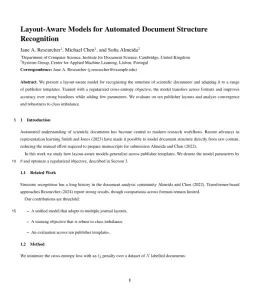
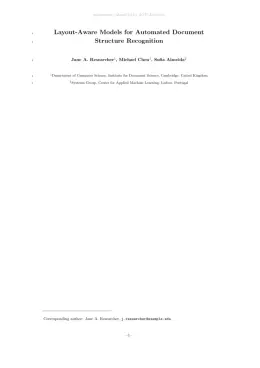
Write in a clean editor, then format for Earth System Dynamics in one click — DocuGuru applies the official Copernicus Publications template with author–year references and exports a submission-ready PDF plus the editable LaTeX source. Free to start.

About the Earth System Dynamics format

Earth System Dynamics is a peer-reviewed journal published by Copernicus Publications, covering Climate variability and models, Atmospheric and Environmental Gas Dynamics, Meteorological Phenomena and Simulations. Over its lifetime it has published 910 papers, which have received 39,043 citations.

PublisherCopernicus Publications
Reference styleAuthor–year (Copernicus)
Author–year — (Smith, 2023) in the text
Smith, A., Jones, B., and Lee, C.: A representative article title, Earth System Dynamics, 12, 45–58, 2023.

Formats any DOI in Earth System Dynamics style. No sign-up.

Publishes research inClimate variability and models Atmospheric and Environmental Gas Dynamics Meteorological Phenomena and Simulations Geology and Paleoclimatology Research Plant Water Relations and Carbon Dynamics
ISSN2190-4979
Citation impact (2-yr)5.68
h-index99
i10-index602
Article processing charge$1,585
Open accessYes — indexed in DOAJ
Top institutions publishing hereCentre National de la Recherche Scientifique
Journal websitewww.earth-system-dynamics.net
You getA submission-ready PDF and the editable LaTeX source — ready to submit.

Papers published in Earth System Dynamics per year

30
2014
47
2015
59
2016
73
2017
77
2018
49
2019
69
2020
70
2021
70
2022
68
2023
79
2024
107
2025

Citation impact of Earth System Dynamics by publication year

2.7K
2014
3.1K
2015
3.3K
2016
3.7K
2017
4.1K
2018
2K
2019
4.5K
2020
4.6K
2021
3.1K
2022
1.2K
2023
969
2024
288
2025

Citations each year’s papers have accumulated so far — the most recent years are still building up.

Most-cited papers in Earth System Dynamics

A trend-preserving bias correction – the ISI-MIP approach

Sabrina Hempel, Katja Frieler, Lila Warszawski et al. · 31 Jul 2013

Abstract. Statistical bias correction is commonly applied within climate impact modelling to correct climate model data for systematic deviations of the simulated historical data from observations. Methods are based on transfer functions generated to map the distribution of the simulated historical data to that of the observations. Those are subsequently applied to correct the future…

1,224 citations Cite SaveGo to paper →
Global modeling of withdrawal, allocation and consumptive use of surface water and groundwater resources

Yoshihide Wada, Dominik Wisser, Marc F. P. Bierkens · 14 Jan 2014

Abstract. To sustain growing food demand and increasing standard of living, global water withdrawal and consumptive water use have been increasing rapidly. To analyze the human perturbation on water resources consistently over large scales, a number of macro-scale hydrological models (MHMs) have been developed in recent decades. However, few models consider the interaction between terrestrial…

Climate model projections from the Scenario Model Intercomparison Project (ScenarioMIP) of CMIP6

Claudia Tebaldi, Kevin Debeire, Veronika Eyring et al. · 1 Mar 2021

Abstract. The Scenario Model Intercomparison Project (ScenarioMIP) defines and coordinates the main set of future climate projections, based on concentration-driven simulations, within the Coupled Model Intercomparison Project phase 6 (CMIP6). This paper presents a range of its outcomes by synthesizing results from the participating global coupled Earth system models. We limit our scope to the…

Differential climate impacts for policy-relevant limits to global warming: the case of 1.5 °C and 2 °C

Carl‐Friedrich Schleussner, Tabea Lissner, Erich Fischer et al. · 21 Apr 2016

Abstract. Robust appraisals of climate impacts at different levels of global-mean temperature increase are vital to guide assessments of dangerous anthropogenic interference with the climate system. The 2015 Paris Agreement includes a two-headed temperature goal: "holding the increase in the global average temperature to well below 2 °C above pre-industrial levels and pursuing efforts to…

Partitioning climate projection uncertainty with multiple large ensembles and CMIP5/6

Flavio Lehner, Clara Deser, Nicola Maher et al. · 29 May 2020

Abstract. Partitioning uncertainty in projections of future climate change into contributions from internal variability, model response uncertainty and emissions scenarios has historically relied on making assumptions about forced changes in the mean and variability. With the advent of multiple single-model initial-condition large ensembles (SMILEs), these assumptions can be scrutinized, as they allow a more robust…

Earth System Dynamics template — frequently asked questions

How do I write a paper in the Earth System Dynamics format?
In DocuGuru you write your manuscript in a normal editor — no LaTeX setup required — and select the Earth System Dynamics template. When you export, DocuGuru compiles the paper into the official Copernicus Publications format and hands you a submission-ready PDF along with the editable LaTeX source.
What reference style does Earth System Dynamics use?
Earth System Dynamics uses Author–year (Copernicus) references, shown as author–year markers such as (Smith, 2023) in the text. DocuGuru formats every in-text citation and the reference list in this exact style automatically. A reference appears like this: Smith, A., Jones, B., and Lee, C.: A representative article title, Earth System Dynamics, 12, 45–58, 2023.
Do I need to know LaTeX to submit to Earth System Dynamics?
No. DocuGuru generates the copernicus LaTeX class and compiles the PDF for you in the background, so you get a Copernicus Publications-ready Earth System Dynamics document without writing any LaTeX. If you do want it, the LaTeX source is included in the export.
Can I import an existing draft into the Earth System Dynamics template?
Yes. Paste or upload your current manuscript — Word, LaTeX, Markdown, or plain text — and DocuGuru reflows it into the Earth System Dynamics format with correct headings, figures, tables, and author–year citations.
What is Earth System Dynamics?
Copernicus Publications journal. It is a earth and environmental sciences journal, published by Copernicus Publications.
Can I export a submission-ready Earth System Dynamics PDF?
Yes — DocuGuru produces a PDF built with the official Earth System Dynamics template (the copernicus class) that is ready to submit to Copernicus Publications, together with the matching LaTeX source files.
How much does the Earth System Dynamics template cost?
You can start writing in the Earth System Dynamics template for free. Exporting the final submission-ready Earth System Dynamics PDF and LaTeX source is part of DocuGuru's paid plans — see the app for current pricing.
Use the Earth System Dynamics template