Copernicus Publications

Atmospheric Chemistry and Physics Template

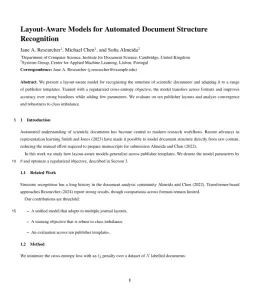
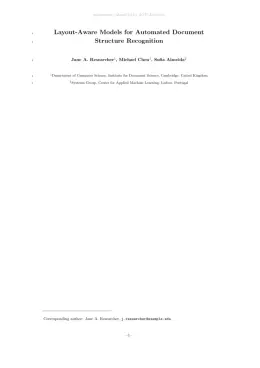
Write in a clean editor, then format for Atmospheric Chemistry and Physics in one click — DocuGuru applies the official Copernicus Publications template with author–year references and exports a submission-ready PDF plus the editable LaTeX source. Free to start.

About the Atmospheric Chemistry and Physics format

Atmospheric Chemistry and Physics is a peer-reviewed journal published by Copernicus Publications, covering Atmospheric chemistry and aerosols, Atmospheric Ozone and Climate, Atmospheric aerosols and clouds. Over its lifetime it has published 15,950 papers, which have received 1,146,696 citations.

PublisherCopernicus Publications
Reference styleAuthor–year (Copernicus)
Author–year — (Smith, 2023) in the text
Smith, A., Jones, B., and Lee, C.: A representative article title, Atmospheric Chemistry and Physics, 12, 45–58, 2023.

Formats any DOI in Atmospheric Chemistry and Physics style. No sign-up.

Publishes research inAtmospheric chemistry and aerosols Atmospheric Ozone and Climate Atmospheric aerosols and clouds Atmospheric and Environmental Gas Dynamics Air Quality and Health Impacts
ISSN1680-7316
Citation impact (2-yr)4.98
h-index350
i10-index13,145
Article processing charge$1,725
Open accessYes — indexed in DOAJ
Top institutions publishing hereCentre National de la Recherche Scientifique
Journal websitewww.atmospheric-chemistry-and-physics.net
You getA submission-ready PDF and the editable LaTeX source — ready to submit.

Papers published in Atmospheric Chemistry and Physics per year

801
2014
773
2015
888
2016
824
2017
968
2018
827
2019
827
2020
915
2021
791
2022
721
2023
707
2024
982
2025

Citation impact of Atmospheric Chemistry and Physics by publication year

66.2K
2014
71.1K
2015
69.2K
2016
58.9K
2017
65.5K
2018
55.1K
2019
48.5K
2020
39.2K
2021
23.5K
2022
13K
2023
7.1K
2024
2.7K
2025

Citations each year’s papers have accumulated so far — the most recent years are still building up.

Most-cited papers in Atmospheric Chemistry and Physics

Estimates of global terrestrial isoprene emissions using MEGAN (Model of Emissions of Gases and Aerosols from Nature)

Alex Guenther, Thomas Karl, P. C. Harley et al. · 2 Aug 2006

Abstract. Reactive gases and aerosols are produced by terrestrial ecosystems, processed within plant canopies, and can then be emitted into the above-canopy atmosphere. Estimates of the above-canopy fluxes are needed for quantitative earth system studies and assessments of past, present and future air quality and climate. The Model of Emissions of Gases and Aerosols from…

5,176 citations Cite SaveGo to paper →
The formation, properties and impact of secondary organic aerosol: current and emerging issues

Mattias Hallquist, John Wenger, Urs Baltensperger et al. · 29 Jul 2009

Abstract. Secondary organic aerosol (SOA) accounts for a significant fraction of ambient tropospheric aerosol and a detailed knowledge of the formation, properties and transformation of SOA is therefore required to evaluate its impact on atmospheric processes, climate and human health. The chemical and physical processes associated with SOA formation are complex and varied, and, despite…

4,523 citations Cite SaveGo to paper →
Organic aerosol and global climate modelling: a review

Maria Kanakidou, John H. Seinfeld, Spyros Ν. Pandis et al. · 30 Mar 2005

Abstract. The present paper reviews existing knowledge with regard to Organic Aerosol (OA) of importance for global climate modelling and defines critical gaps needed to reduce the involved uncertainties. All pieces required for the representation of OA in a global climate model are sketched out with special attention to Secondary Organic Aerosol (SOA): The emission…

3,737 citations Cite SaveGo to paper →
Global fire emissions and the contribution of deforestation, savanna, forest, agricultural, and peat fires (1997–2009)

Guido R. van der Werf, James T. Randerson, Louis Giglio et al. · 10 Dec 2010

Abstract. New burned area datasets and top-down constraints from atmospheric concentration measurements of pyrogenic gases have decreased the large uncertainty in fire emissions estimates. However, significant gaps remain in our understanding of the contribution of deforestation, savanna, forest, agricultural waste, and peat fires to total global fire emissions. Here we used a revised version of…

3,241 citations Cite SaveGo to paper →
A single parameter representation of hygroscopic growth and cloud condensation nucleus activity

Markus D. Petters, Sonia M. Kreidenweis · 18 Apr 2007

Abstract. We present a method to describe the relationship between particle dry diameter and cloud condensation nuclei (CCN) activity using a single hygroscopicity parameter κ. Values of the hygroscopicity parameter are between 0.5 and 1.4 for highly-CCN-active salts such as sodium chloride, between 0.01 and 0.5 for slightly to very hygroscopic organic species, and 0…

2,995 citations Cite SaveGo to paper →

Atmospheric Chemistry and Physics template — frequently asked questions

How do I write a paper in the Atmospheric Chemistry and Physics format?
In DocuGuru you write your manuscript in a normal editor — no LaTeX setup required — and select the Atmospheric Chemistry and Physics template. When you export, DocuGuru compiles the paper into the official Copernicus Publications format and hands you a submission-ready PDF along with the editable LaTeX source.
What reference style does Atmospheric Chemistry and Physics use?
Atmospheric Chemistry and Physics uses Author–year (Copernicus) references, shown as author–year markers such as (Smith, 2023) in the text. DocuGuru formats every in-text citation and the reference list in this exact style automatically. A reference appears like this: Smith, A., Jones, B., and Lee, C.: A representative article title, Atmospheric Chemistry and Physics, 12, 45–58, 2023.
Do I need to know LaTeX to submit to Atmospheric Chemistry and Physics?
No. DocuGuru generates the copernicus LaTeX class and compiles the PDF for you in the background, so you get a Copernicus Publications-ready Atmospheric Chemistry and Physics document without writing any LaTeX. If you do want it, the LaTeX source is included in the export.
Can I import an existing draft into the Atmospheric Chemistry and Physics template?
Yes. Paste or upload your current manuscript — Word, LaTeX, Markdown, or plain text — and DocuGuru reflows it into the Atmospheric Chemistry and Physics format with correct headings, figures, tables, and author–year citations.
What is Atmospheric Chemistry and Physics?
Copernicus Publications journal. It is a earth and environmental sciences journal, published by Copernicus Publications.
Can I export a submission-ready Atmospheric Chemistry and Physics PDF?
Yes — DocuGuru produces a PDF built with the official Atmospheric Chemistry and Physics template (the copernicus class) that is ready to submit to Copernicus Publications, together with the matching LaTeX source files.
How much does the Atmospheric Chemistry and Physics template cost?
You can start writing in the Atmospheric Chemistry and Physics template for free. Exporting the final submission-ready Atmospheric Chemistry and Physics PDF and LaTeX source is part of DocuGuru's paid plans — see the app for current pricing.
Use the Atmospheric Chemistry and Physics template