
938 citations
Cite
SaveGo to paper →
Copernicus Publications
European Journal of Mineralogy Template
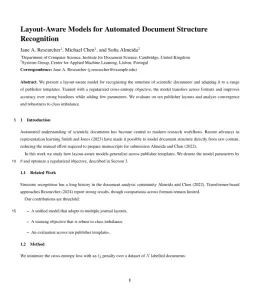
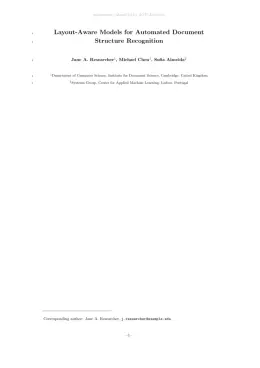
Write in a clean editor, then format for European Journal of Mineralogy in one click — DocuGuru applies the official Copernicus Publications template with author–year references and exports a submission-ready PDF plus the editable LaTeX source. Free to start.
About the European Journal of Mineralogy format
European Journal of Mineralogy is a peer-reviewed journal published by Copernicus Publications, covering Geological and Geochemical Analysis, Crystal Structures and Properties, High-pressure geophysics and materials. Over its lifetime it has published 3,594 papers, which have received 86,855 citations.
| Publisher | Copernicus Publications |
|---|---|
| Reference style | Author–year (Copernicus) Author–year — (Smith, 2023) in the text Smith, A., Jones, B., and Lee, C.: A representative article title, European Journal of Mineralogy, 12, 45–58, 2023.
Formats any DOI in European Journal of Mineralogy style. No sign-up. |
| Publishes research in | Geological and Geochemical Analysis Crystal Structures and Properties High-pressure geophysics and materials Mineralogy and Gemology Studies earthquake and tectonic studies |
| ISSN | 0935-1221 |
| Citation impact (2-yr) | 1.87 |
| h-index | 104 |
| i10-index | 2,137 |
| Article processing charge | $1,024 |
| Open access | Yes — indexed in DOAJ |
| Top institutions publishing here | Centre National de la Recherche Scientifique |
| Journal website | www.european-journal-of-mineralogy.net |
| You get | A submission-ready PDF and the editable LaTeX source — ready to submit. |
Papers published in European Journal of Mineralogy per year
Citation impact of European Journal of Mineralogy by publication year
Citations each year’s papers have accumulated so far — the most recent years are still building up.
Most-cited papers in European Journal of Mineralogy
657 citations
Cite
SaveGo to paper →
Abstract: Mineralogical, textural and chemical analyses of clay-rich materials following firing, evidence that initial mineralogical differences between two raw materials (one with carbonates and the other without) influence the textural and mineralogical evolution of the ceramics as T increases from 700 to 1100°C. Mineralogical and textural changes are interpreted considering local marked disequilibria in a…
620 citations
Cite
SaveGo to paper →
A systematic classification of the tourmaline-group minerals, general formula X Y3Z6 (T6O18) (BO3)3 V3W, is proposed, based on chemical composition and ordering at the different crystallographic sites of the tourmaline structure. There are currently thirteen accepted tourmaline species. However, based on the actual chemical compositions of holotype material, several of these species were imprecisely or…
519 citations
Cite
SaveGo to paper →
499 citations
Cite
SaveGo to paper →
Related journal templates
European Journal of Mineralogy template — frequently asked questions
How do I write a paper in the European Journal of Mineralogy format?
In DocuGuru you write your manuscript in a normal editor — no LaTeX setup required — and select the European Journal of Mineralogy template. When you export, DocuGuru compiles the paper into the official Copernicus Publications format and hands you a submission-ready PDF along with the editable LaTeX source.
What reference style does European Journal of Mineralogy use?
European Journal of Mineralogy uses Author–year (Copernicus) references, shown as author–year markers such as (Smith, 2023) in the text. DocuGuru formats every in-text citation and the reference list in this exact style automatically. A reference appears like this: Smith, A., Jones, B., and Lee, C.: A representative article title, European Journal of Mineralogy, 12, 45–58, 2023.
Do I need to know LaTeX to submit to European Journal of Mineralogy?
No. DocuGuru generates the copernicus LaTeX class and compiles the PDF for you in the background, so you get a Copernicus Publications-ready European Journal of Mineralogy document without writing any LaTeX. If you do want it, the LaTeX source is included in the export.
Can I import an existing draft into the European Journal of Mineralogy template?
Yes. Paste or upload your current manuscript — Word, LaTeX, Markdown, or plain text — and DocuGuru reflows it into the European Journal of Mineralogy format with correct headings, figures, tables, and author–year citations.
What is European Journal of Mineralogy?
Copernicus Publications journal. It is a earth and environmental sciences journal, published by Copernicus Publications.
Can I export a submission-ready European Journal of Mineralogy PDF?
Yes — DocuGuru produces a PDF built with the official European Journal of Mineralogy template (the copernicus class) that is ready to submit to Copernicus Publications, together with the matching LaTeX source files.
How much does the European Journal of Mineralogy template cost?
You can start writing in the European Journal of Mineralogy template for free. Exporting the final submission-ready European Journal of Mineralogy PDF and LaTeX source is part of DocuGuru's paid plans — see the app for current pricing.