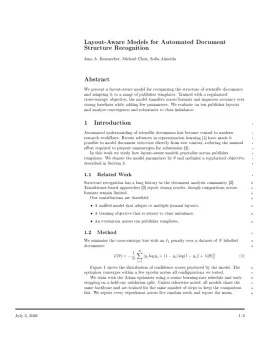
About the Molecular Neurodegeneration format
Molecular Neurodegeneration is a peer-reviewed journal published by BMC (BioMed Central), covering Alzheimer's disease research and treatments, Neuroinflammation and Neurodegeneration Mechanisms, Parkinson's Disease Mechanisms and Treatments. Over its lifetime it has published 1,591 papers, which have received 119,363 citations.
| Publisher | BMC (BioMed Central) |
|---|
| Reference style | Numbered (Vancouver) Numbered — [1], [2] in the text
1. Smith A, Jones B, Lee C. A representative article title. Molecular Neurodegeneration. 2023;12(3):45–58.
Formats any DOI in Molecular Neurodegeneration style. No sign-up.
|
|---|
| Publishes research in | Alzheimer's disease research and treatments Neuroinflammation and Neurodegeneration Mechanisms Parkinson's Disease Mechanisms and Treatments Amyotrophic Lateral Sclerosis Research Dementia and Cognitive Impairment Research |
|---|
| ISSN | 1750-1326 |
|---|
| Citation impact (2-yr) | 16.82 |
|---|
| h-index | 168 |
|---|
| i10-index | 1,198 |
|---|
| Article processing charge | $2,440 |
|---|
| Open access | Yes — indexed in DOAJ |
|---|
| Top institutions publishing here | Mayo Clinic in Florida |
|---|
| Journal website | www.molecularneurodegeneration.com |
|---|
| You get | A submission-ready PDF and the editable LaTeX source — ready to submit. |
|---|
Papers published in Molecular Neurodegeneration per year
Citation impact of Molecular Neurodegeneration by publication year
Citations each year’s papers have accumulated so far — the most recent years are still building up.
Most-cited papers in Molecular Neurodegeneration
The neuropathological diagnosis of Alzheimer’s disease
Michael DeTure, Dennis W. Dickson · 2 Aug 2019
Alzheimer's disease is a progressive neurodegenerative disease most often associated with memory deficits and cognitive decline, although less common clinical presentations are increasingly recognized. The cardinal pathological features of the disease have been known for more than one hundred years, and today the presence of these amyloid plaques and neurofibrillary tangles are still required for…
Mitochondria dysfunction in the pathogenesis of Alzheimer’s disease: recent advances
Wenzhang Wang, Fanpeng Zhao, Xiaopin Ma et al. · 29 May 2020
Alzheimer's disease (AD) is one of the most prevalent neurodegenerative diseases, characterized by impaired cognitive function due to progressive loss of neurons in the brain. Under the microscope, neuronal accumulation of abnormal tau proteins and amyloid plaques are two pathological hallmarks in affected brain regions. Although the detailed mechanism of the pathogenesis of AD is…
Adult hippocampal neurogenesis and its role in Alzheimer's disease
Yangling Mu, Fred H. Gage · 1 Jan 2011
The hippocampus, a brain area critical for learning and memory, is especially vulnerable to damage at early stages of Alzheimer's disease (AD). Emerging evidence has indicated that altered neurogenesis in the adult hippocampus represents an early critical event in the course of AD. Although causal links have not been established, a variety of key molecules…
Molecular and cellular mechanisms underlying the pathogenesis of Alzheimer’s disease
Tiantian Guo, Denghong Zhang, Yuzhe Zeng et al. · 16 Jul 2020
Alzheimer's disease (AD) is the most common neurodegenerative disorder seen in age-dependent dementia. There is currently no effective treatment for AD, which may be attributed in part to lack of a clear underlying mechanism. Studies within the last few decades provide growing evidence for a central role of amyloid β (Aβ) and tau, as well…
Exosomal cell-to-cell transmission of alpha synuclein oligomers
Karin M. Danzer, Lisa R. Kranich, Wolfgang Ruf et al. · 24 Aug 2012
BACKGROUND: Aggregation of alpha-synuclein (αsyn) and resulting cytotoxicity is a hallmark of sporadic and familial Parkinson's disease (PD) as well as dementia with Lewy bodies, with recent evidence implicating oligomeric and pre-fibrillar forms of αsyn as the pathogenic species. Recent in vitro studies support the idea of transcellular spread of extracellular, secreted αsyn across membranes.…