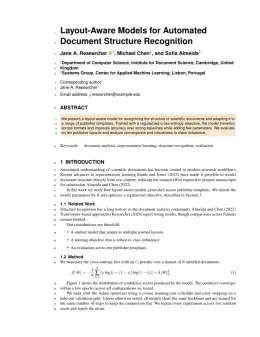
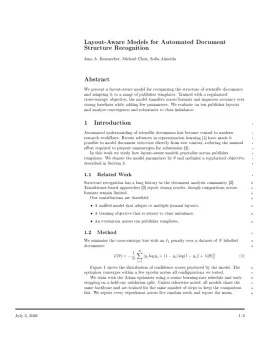
About the Microbiome format
Microbiome is a peer-reviewed journal published by BMC (BioMed Central), covering Gut microbiota and health, Microbial Community Ecology and Physiology, Genomics and Phylogenetic Studies. Over its lifetime it has published 2,480 papers, which have received 236,940 citations.
| Publisher | BMC (BioMed Central) |
|---|
| Reference style | Numbered (Vancouver) Numbered — [1], [2] in the text
1. Smith A, Jones B, Lee C. A representative article title. Microbiome. 2023;12(3):45–58.
Formats any DOI in Microbiome style. No sign-up.
|
|---|
| Publishes research in | Gut microbiota and health Microbial Community Ecology and Physiology Genomics and Phylogenetic Studies Clostridium difficile and Clostridium perfringens research Bacteriophages and microbial interactions |
|---|
| ISSN | 2049-2618 |
|---|
| Citation impact (2-yr) | 13.92 |
|---|
| h-index | 235 |
|---|
| i10-index | 1,931 |
|---|
| Article processing charge | $3,544 |
|---|
| Open access | Yes — indexed in DOAJ |
|---|
| Top institutions publishing here | Chinese Academy of Sciences |
|---|
| Journal website | microbiomejournal.biomedcentral.com |
|---|
| You get | A submission-ready PDF and the editable LaTeX source — ready to submit. |
|---|
Papers published in Microbiome per year
Citation impact of Microbiome by publication year
Citations each year’s papers have accumulated so far — the most recent years are still building up.
Most-cited papers in Microbiome
Optimizing taxonomic classification of marker-gene amplicon sequences with QIIME 2’s q2-feature-classifier plugin
Nicholas A. Bokulich, Benjamin D. Kaehler, Jai Ram Rideout et al. · 17 May 2018
BACKGROUND: Taxonomic classification of marker-gene sequences is an important step in microbiome analysis. RESULTS: We present q2-feature-classifier ( https://github.com/qiime2/q2-feature-classifier ), a QIIME 2 plugin containing several novel machine-learning and alignment-based methods for taxonomy classification. We evaluated and optimized several commonly used classification methods implemented in QIIME 1 (RDP, BLAST, UCLUST, and SortMeRNA) and several new…
Simple statistical identification and removal of contaminant sequences in marker-gene and metagenomics data
Nicole M. Davis, Diana M. Proctor, Susan Holmes et al. · 1 Dec 2018
BACKGROUND: The accuracy of microbial community surveys based on marker-gene and metagenomic sequencing (MGS) suffers from the presence of contaminants-DNA sequences not truly present in the sample. Contaminants come from various sources, including reagents. Appropriate laboratory practices can reduce contamination, but do not eliminate it. Here we introduce decontam ( https://github.com/benjjneb/decontam ), an open-source R…
MetaWRAP—a flexible pipeline for genome-resolved metagenomic data analysis
Gherman Uritskiy, Jocelyne DiRuggiero, James Taylor · 15 Sep 2018
BACKGROUND: The study of microbiomes using whole-metagenome shotgun sequencing enables the analysis of uncultivated microbial populations that may have important roles in their environments. Extracting individual draft genomes (bins) facilitates metagenomic analysis at the single genome level. Software and pipelines for such analysis have become diverse and sophisticated, resulting in a significant burden for biologists…
Normalization and microbial differential abundance strategies depend upon data characteristics
Sophie Weiss, Zhenjiang Zech Xu, Shyamal D. Peddada et al. · 3 Mar 2017
BACKGROUND: Data from 16S ribosomal RNA (rRNA) amplicon sequencing present challenges to ecological and statistical interpretation. In particular, library sizes often vary over several ranges of magnitude, and the data contains many zeros. Although we are typically interested in comparing relative abundance of taxa in the ecosystem of two or more groups, we can only…
Microbiome definition re-visited: old concepts and new challenges
Gabriele Berg, Daria Rybakova, Doreen Fischer et al. · 30 Jun 2020
The field of microbiome research has evolved rapidly over the past few decades and has become a topic of great scientific and public interest. As a result of this rapid growth in interest covering different fields, we are lacking a clear commonly agreed definition of the term "microbiome." Moreover, a consensus on best practices in…