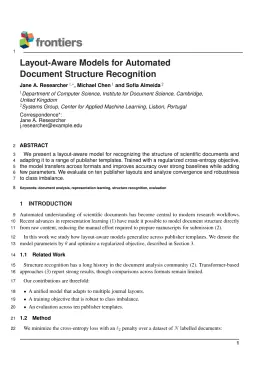
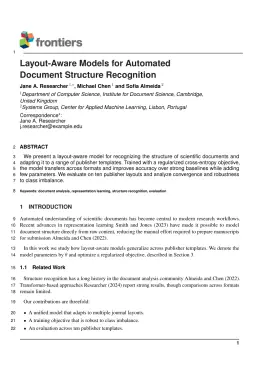
About the Acta Epileptologica format
Acta Epileptologica is a peer-reviewed journal published by BMC (BioMed Central), covering Epilepsy research and treatment, Pharmacological Effects and Toxicity Studies, Neuroscience and Neuropharmacology Research. Over its lifetime it has published 258 papers, which have received 1,335 citations.
| Publisher | BMC (BioMed Central) |
|---|
| Reference style | Numbered (Vancouver) Numbered — [1], [2] in the text
1. Smith A, Jones B, Lee C. A representative article title. Acta Epileptologica. 2023;12(3):45–58.
Formats any DOI in Acta Epileptologica style. No sign-up.
|
|---|
| Publishes research in | Epilepsy research and treatment Pharmacological Effects and Toxicity Studies Neuroscience and Neuropharmacology Research EEG and Brain-Computer Interfaces Metabolism and Genetic Disorders |
|---|
| ISSN | 2096-9384 |
|---|
| Citation impact (2-yr) | 2.36 |
|---|
| h-index | 16 |
|---|
| i10-index | 30 |
|---|
| Open access | Yes — indexed in DOAJ |
|---|
| Top institutions publishing here | Sichuan University |
|---|
| Journal website | link.springer.com |
|---|
| You get | A submission-ready PDF and the editable LaTeX source — ready to submit. |
|---|
Papers published in Acta Epileptologica per year
Citation impact of Acta Epileptologica by publication year
Citations each year’s papers have accumulated so far — the most recent years are still building up.
Most-cited papers in Acta Epileptologica
Biomolecular mechanisms of epileptic seizures and epilepsy: a review
Komang Trisna Sumadewi, Saktivi Harkitasari, David Christopher Tjandra · 15 Nov 2023
Epilepsy is a recurring neurological disease caused by the abnormal electrical activity in the brain. This disease has caused about 50 new cases in 100,000 populations every year with the clinical manifestations of awareness loss, bruising, and mobility abnormalities. Due to the lack understanding of the pathophysiology behind the illness, a wide variety of medications…
The pharmacological treatment of epilepsy: recent advances and future perspectives
Emilio Perucca · 17 Sep 2021
Abstract The pharmacological armamentarium against epilepsy has expanded considerably over the last three decades, and currently includes over 30 different antiseizure medications. Despite this large armamentarium, about one third of people with epilepsy fail to achieve sustained seizure freedom with currently available medications. This sobering fact, however, is mitigated by evidence that clinical outcomes for…
The role of inflammation in epileptogenesis
Fanwei Meng, Lifen Yao · 27 Sep 2020
Abstract Epilepsy is a chronic neurological disorder that has an extensive impact on a patient’s life. Accumulating evidence has suggested that inflammation participates in the progression of spontaneous and recurrent seizures. Pro-convulsant incidences can stimulate immune cells, augment the release of pro-inflammatory cytokines, elicit neuronal excitation as well as blood-brain barrier (BBB) dysfunction, and finally…
Machine learning applications for electroencephalograph signals in epilepsy: a quick review
Yang Si · 29 Apr 2020
Abstract Machine learning (ML) is a fundamental concept in the field of state-of-the-art artificial intelligence (AI). Over the past two decades, it has evolved rapidly and been employed wildly in many fields. In medicine the widespread usage of ML has been observed in recent years. The present review examines various ML approaches for electroencephalograph (EEG)…
Pathogenesis of seizures and epilepsy after stroke
Jiayu Chen, Haijiao Ye, Jie Zhang et al. · 4 Jan 2022
Abstract Stroke is the most frequent cause of secondary epilepsy in the elderly. The incidence of cerebral stroke is increasing with the extension of life expectancy, and the prevalence of post-stroke epilepsy (PSE) is rising. There are various seizure types after stroke, and the occurrence of epilepsy is closely related to the type and location…