ASME

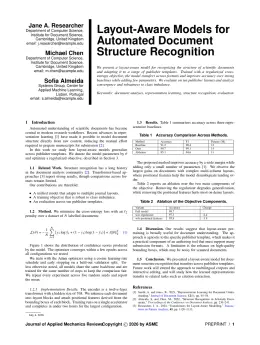
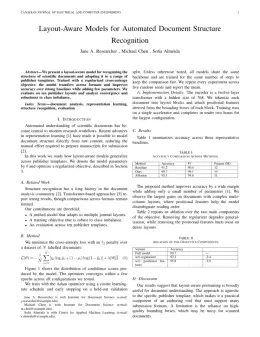
Journal of Turbomachinery Template

Write in a clean editor, then format for Journal of Turbomachinery in one click — DocuGuru applies the official ASME template with numbered references and exports a submission-ready PDF plus the editable LaTeX source. Free to start.

About the Journal of Turbomachinery format

Journal of Turbomachinery is a peer-reviewed journal published by ASME, covering Turbomachinery Performance and Optimization, Fluid Dynamics and Turbulent Flows, Heat Transfer Mechanisms. Over its lifetime it has published 4,696 papers, which have received 140,960 citations.

PublisherASME
Reference styleNumbered (ASME)
Numbered — [1], [2] in the text
[1] Smith, A., Jones, B., and Lee, C., 2023, "A Representative Article Title," Journal of Turbomachinery, 12(3), pp. 45–58.

Formats any DOI in Journal of Turbomachinery style. No sign-up.

Publishes research inTurbomachinery Performance and Optimization Fluid Dynamics and Turbulent Flows Heat Transfer Mechanisms Combustion and flame dynamics Computational Fluid Dynamics and Aerodynamics
ISSN0889-504X
Citation impact (2-yr)1.95
h-index134
i10-index2,973
Top institutions publishing hereUniversity of Cambridge
Journal websiteturbomachinery.asmedigitalcollection.asme.org
You getA submission-ready PDF and the editable LaTeX source — ready to submit.

Papers published in Journal of Turbomachinery per year

114
2014
90
2015
133
2016
95
2017
145
2018
90
2019
115
2020
243
2021
177
2022
164
2023
207
2024
191
2025

Citation impact of Journal of Turbomachinery by publication year

3.9K
2014
3.1K
2015
3.7K
2016
2.3K
2017
3.1K
2018
1.5K
2019
1.6K
2020
2.6K
2021
1.6K
2022
1K
2023
657
2024
168
2025

Citations each year’s papers have accumulated so far — the most recent years are still building up.

Most-cited papers in Journal of Turbomachinery

The 1993 IGTI Scholar Lecture: Loss Mechanisms in Turbomachines

J. D. Denton · 1 Oct 1993

The origins and effects of loss in turbomachines are discussed with the emphasis on trying to understand the physical origins of loss rather than on reviewing the available prediction methods. Loss is defined in terms of entropy increase and the relationship of this to the more familiar loss coefficients is derived and discussed. The sources…

1,611 citations Cite SaveGo to paper →
A Correlation-Based Transition Model Using Local Variables—Part I: Model Formulation

Florian Menter, Robin Langtry, S. R. Likki et al. · 1 Mar 2004

Abstract A new correlation-based transition model has been developed, which is based strictly on local variables. As a result, the transition model is compatible with modern computational fluid dynamics (CFD) approaches, such as unstructured grids and massive parallel execution. The model is based on two transport equations, one for intermittency and one for the transition…

1,461 citations Cite SaveGo to paper →
The 1991 IGTI Scholar Lecture: The Role of Laminar-Turbulent Transition in Gas Turbine Engines

R. E. Mayle · 1 Oct 1991

A critical study of laminar-turbulent transition phenomena and their role in aerodynamics and heat transfer in modern and future gas turbine engines is presented. In order to develop a coherent view of the subject, a current look at transition phenomena from both a theoretical and experimental standpoint are provided and a comprehensive state-of-the-art account of…

Film-Cooling Effectiveness Downstream of a Single Row of Holes With Variable Density Ratio

Anubhav Sinha, David G. Bogard, Michael E. Crawford · 1 Jul 1991

Film-cooling effectiveness was studied using a row of inclined holes that injected cryogenically cooled air across a flat, adiabatic test plate. The density ratio of the coolant to mainstream varied from 1.2 to 2.0. Surface temperatures were measured using a unique surface thermocouple arrangement free of conduction errors. Temperatures were obtained along the jet centerline…

A Correlation-Based Transition Model Using Local Variables—Part II: Test Cases and Industrial Applications

Robin Langtry, Florian Menter, S. R. Likki et al. · 1 Mar 2004

Abstract A new correlation-based transition model has been developed, which is built strictly on local variables. As a result, the transition model is compatible with modern computational fluid dynamics (CFD) methods using unstructured grids and massive parallel execution. The model is based on two transport equations, one for the intermittency and one for the transition…

Journal of Turbomachinery template — frequently asked questions

How do I write a paper in the Journal of Turbomachinery format?
In DocuGuru you write your manuscript in a normal editor — no LaTeX setup required — and select the Journal of Turbomachinery template. When you export, DocuGuru compiles the paper into the official ASME format and hands you a submission-ready PDF along with the editable LaTeX source.
What reference style does Journal of Turbomachinery use?
Journal of Turbomachinery uses Numbered (ASME) references, shown as numbered [1], [2] markers in the text. DocuGuru formats every in-text citation and the reference list in this exact style automatically. A reference appears like this: [1] Smith, A., Jones, B., and Lee, C., 2023, "A Representative Article Title," Journal of Turbomachinery, 12(3), pp. 45–58.
Do I need to know LaTeX to submit to Journal of Turbomachinery?
No. DocuGuru generates the asmejour LaTeX class and compiles the PDF for you in the background, so you get a ASME-ready Journal of Turbomachinery document without writing any LaTeX. If you do want it, the LaTeX source is included in the export.
Can I import an existing draft into the Journal of Turbomachinery template?
Yes. Paste or upload your current manuscript — Word, LaTeX, Markdown, or plain text — and DocuGuru reflows it into the Journal of Turbomachinery format with correct headings, figures, tables, and numbered citations.
What is Journal of Turbomachinery?
ASME journal. It is a engineering and computer science journal, published by ASME.
Can I export a submission-ready Journal of Turbomachinery PDF?
Yes — DocuGuru produces a PDF built with the official Journal of Turbomachinery template (the asmejour class) that is ready to submit to ASME, together with the matching LaTeX source files.
How much does the Journal of Turbomachinery template cost?
You can start writing in the Journal of Turbomachinery template for free. Exporting the final submission-ready Journal of Turbomachinery PDF and LaTeX source is part of DocuGuru's paid plans — see the app for current pricing.
Use the Journal of Turbomachinery template