American Physical Society

Physical Review Special Topics - Physics Education Research Template

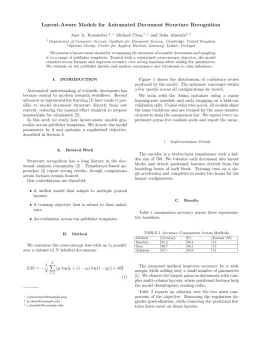
Write in a clean editor, then format for Physical Review Special Topics - Physics Education Research in one click — DocuGuru applies the official American Physical Society template with numbered references and exports a submission-ready PDF plus the editable LaTeX source. Free to start.

About the Physical Review Special Topics - Physics Education Research format

Physical Review Special Topics - Physics Education Research is a peer-reviewed journal published by American Physical Society, covering Science Education and Pedagogy, Educational Strategies and Epistemologies, Innovative Teaching Methods.

PublisherAmerican Physical Society
Reference styleNumbered (APS)
Numbered — [1], [2] in the text
[1] A. Smith, B. Jones, and C. Lee, Physical Review Special Topics - Physics Education Research 12, 45 (2023).

Formats any DOI in Physical Review Special Topics - Physics Education Research style. No sign-up.

Publishes research inScience Education and Pedagogy Educational Strategies and Epistemologies Innovative Teaching Methods Visual and Cognitive Learning Processes Innovative Teaching and Learning Methods
ISSN1554-9178
h-index76
i10-index317
Total citations21,289
Article processing charge$2,000
Open accessYes
Top institutions publishing hereUniversity of Colorado Boulder
Journal websitejournals.aps.org
You getA submission-ready PDF and the editable LaTeX source — ready to submit.

Papers published in Physical Review Special Topics - Physics Education Research per year

6
2005
14
2006
22
2007
24
2008
25
2009
36
2010
33
2011
46
2012
46
2013
59
2014
58
2015

Citation impact of Physical Review Special Topics - Physics Education Research by publication year

1K
2005
2.1K
2006
2.2K
2007
1.3K
2008
2.1K
2009
2.1K
2010
1.4K
2011
2.6K
2012
2.1K
2013
2.2K
2014
2.2K
2015

Citations each year’s papers have accumulated so far — the most recent years are still building up.

Most-cited papers in Physical Review Special Topics - Physics Education Research

New instrument for measuring student beliefs about physics and learning physics: The Colorado Learning Attitudes about Science Survey

Wendy K. Adams, Katherine K. Perkins, Noah S. Podolefsky et al. · 10 Jan 2006

The Colorado Learning Attitudes about Science Survey (CLASS) is a new instrument designed to measure student beliefs about physics and about learning physics. This instrument extends previous work by probing additional aspects of student beliefs and by using wording suitable for students in a wide variety of physics courses. The CLASS has been validated using…

When learning about the real world is better done virtually: A study of substituting computer simulations for laboratory equipment

Noah D. Finkelstein, Wendy K. Adams, Christopher Keller et al. · 6 Oct 2005

This paper examines the effects of substituting a computer simulation for real laboratory equipment in the second semester of a large-scale introductory physics course. The direct current circuit laboratory was modified to compare the effects of using computer simulations with the effects of using real light bulbs, meters, and wires. Two groups of students, those…

Barriers to the use of research-based instructional strategies: The influence of both individual and situational characteristics

Charles Henderson, Melissa Dancy · 7 Sep 2007

Many proven research-based instructional strategies have been developed for introductory college-level physics. Significant efforts to disseminate these strategies have focused on convincing individual instructors to give up their traditional practices in favor of particular research-based practices. Yet evidence suggests that the findings of educational research are, at best, only marginally incorporated into typical introductory physics…

Evaluating an electricity and magnetism assessment tool: Brief electricity and magnetism assessment

Lin Ding, Ruth Chabay, Bruce Sherwood et al. · 15 Mar 2006

The Brief Electricity and Magnetism Assessment (BEMA), developed by Chabay and Sherwood, was designed to assess student understanding of basic electricity and magnetism concepts covered in college-level calculus-based introductory physics courses. To evaluate the reliability and discriminatory power of this assessment tool, we performed statistical tests focusing both on item analyses (item difficulty index, item…

Physical Review Special Topics - Physics Education Research template — frequently asked questions

How do I write a paper in the Physical Review Special Topics - Physics Education Research format?
In DocuGuru you write your manuscript in a normal editor — no LaTeX setup required — and select the Physical Review Special Topics - Physics Education Research template. When you export, DocuGuru compiles the paper into the official American Physical Society format and hands you a submission-ready PDF along with the editable LaTeX source.
What reference style does Physical Review Special Topics - Physics Education Research use?
Physical Review Special Topics - Physics Education Research uses Numbered (APS) references, shown as numbered [1], [2] markers in the text. DocuGuru formats every in-text citation and the reference list in this exact style automatically. A reference appears like this: [1] A. Smith, B. Jones, and C. Lee, Physical Review Special Topics - Physics Education Research 12, 45 (2023).
Do I need to know LaTeX to submit to Physical Review Special Topics - Physics Education Research?
No. DocuGuru generates the revtex4-2 LaTeX class and compiles the PDF for you in the background, so you get a American Physical Society-ready Physical Review Special Topics - Physics Education Research document without writing any LaTeX. If you do want it, the LaTeX source is included in the export.
Can I import an existing draft into the Physical Review Special Topics - Physics Education Research template?
Yes. Paste or upload your current manuscript — Word, LaTeX, Markdown, or plain text — and DocuGuru reflows it into the Physical Review Special Topics - Physics Education Research format with correct headings, figures, tables, and numbered citations.
Who publishes Physical Review Special Topics - Physics Education Research?
Physical Review Special Topics - Physics Education Research is a physics journal published by American Physical Society. DocuGuru's Physical Review Special Topics - Physics Education Research template matches American Physical Society's official submission format.
Can I export a submission-ready Physical Review Special Topics - Physics Education Research PDF?
Yes — DocuGuru produces a PDF built with the official Physical Review Special Topics - Physics Education Research template (the revtex4-2 class) that is ready to submit to American Physical Society, together with the matching LaTeX source files.
How much does the Physical Review Special Topics - Physics Education Research template cost?
You can start writing in the Physical Review Special Topics - Physics Education Research template for free. Exporting the final submission-ready Physical Review Special Topics - Physics Education Research PDF and LaTeX source is part of DocuGuru's paid plans — see the app for current pricing.
Use the Physical Review Special Topics - Physics Education Research template