AGU (American Geophysical Union)

Journal of Geophysical Research: Atmospheres Template

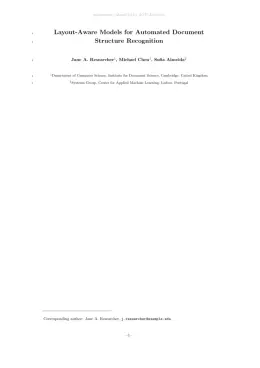
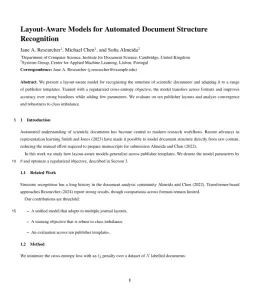
Write in a clean editor, then format for Journal of Geophysical Research: Atmospheres in one click — DocuGuru applies the official AGU (American Geophysical Union) template with author–year references and exports a submission-ready PDF plus the editable LaTeX source. Free to start.

About the Journal of Geophysical Research: Atmospheres format

Journal of Geophysical Research: Atmospheres is a peer-reviewed journal published by AGU (American Geophysical Union), covering Ionosphere and magnetosphere dynamics, Solar and Space Plasma Dynamics, Atmospheric chemistry and aerosols. Over its lifetime it has published 98,996 papers, which have received 6,706,260 citations.

PublisherAGU (American Geophysical Union)
Reference styleAuthor–year (APA)
Author–year — (Smith, 2023) in the text
Smith, A., Jones, B., & Lee, C. (2023). A representative article title. Journal of Geophysical Research: Atmospheres, 12(3), 45–58.

Formats any DOI in Journal of Geophysical Research: Atmospheres style. No sign-up.

Publishes research inIonosphere and magnetosphere dynamics Solar and Space Plasma Dynamics Atmospheric chemistry and aerosols Atmospheric Ozone and Climate Climate variability and models
ISSN0148-0227
Citation impact (2-yr)2.97
h-index663
i10-index77,097
Top institutions publishing hereGoddard Space Flight Center
Journal websitewww.agu.org
You getA submission-ready PDF and the editable LaTeX source — ready to submit.

Papers published in Journal of Geophysical Research: Atmospheres per year

2.3K
2002
3K
2003
2.2K
2004
2.1K
2005
2.4K
2006
2.7K
2007
3K
2008
2.4K
2009
3.1K
2010
3.2K
2011
2.5K
2012
8
2018

Citation impact of Journal of Geophysical Research: Atmospheres by publication year

196.8K
2002
279.9K
2003
187.2K
2004
179.1K
2005
212.3K
2006
226.1K
2007
242.3K
2008
182.2K
2009
210.8K
2010
218.6K
2011
162.2K
2012
493
2018

Citations each year’s papers have accumulated so far — the most recent years are still building up.

Most-cited papers in Journal of Geophysical Research: Atmospheres

Global analyses of sea surface temperature, sea ice, and night marine air temperature since the late nineteenth century

Nick A Rayner, D. E. Parker, E. B. Horton et al. · 17 Jul 2003

We present the Met Office Hadley Centre's sea ice and sea surface temperature (SST) data set, HadISST1, and the nighttime marine air temperature (NMAT) data set, HadMAT1. HadISST1 replaces the global sea ice and sea surface temperature (GISST) data sets and is a unique combination of monthly globally complete fields of SST and sea ice…

11,347 citations Cite SaveGo to paper →
Radiative transfer for inhomogeneous atmospheres: RRTM, a validated correlated‐k model for the longwave

E. J. Mlawer, Steven J. Taubman, P. Brown et al. · 1 Jul 1997

A rapid and accurate radiative transfer model (RRTM) for climate applications has been developed and the results extensively evaluated. The current version of RRTM calculates fluxes and cooling rates for the longwave spectral region (10–3000 cm −1 ) for an arbitrary clear atmosphere. The molecular species treated in the model are water vapor, carbon dioxide,…

8,750 citations Cite SaveGo to paper →
Summarizing multiple aspects of model performance in a single diagram

Karl E. Taylor · 1 Apr 2001

A diagram has been devised that can provide a concise statistical summary of how well patterns match each other in terms of their correlation, their root‐mean‐square difference, and the ratio of their variances. Although the form of this diagram is general, it is especially useful in evaluating complex models, such as those used to study…

8,741 citations Cite SaveGo to paper →
Bounding the role of black carbon in the climate system: A scientific assessment

Tami C. Bond, Sarah J. Doherty, D. W. Fahey et al. · 22 Apr 2013

Abstract Black carbon aerosol plays a unique and important role in Earth's climate system. Black carbon is a type of carbonaceous material with a unique combination of physical properties. This assessment provides an evaluation of black‐carbon climate forcing that is comprehensive in its inclusion of all known and relevant processes and that is quantitative in…

6,766 citations Cite SaveGo to paper →
Radiative forcing by long‐lived greenhouse gases: Calculations with the AER radiative transfer models

Michael Iacono, Jennifer Delamere, E. J. Mlawer et al. · 1 Jul 2008

A primary component of the observed recent climate change is the radiative forcing from increased concentrations of long‐lived greenhouse gases (LLGHGs). Effective simulation of anthropogenic climate change by general circulation models (GCMs) is strongly dependent on the accurate representation of radiative processes associated with water vapor, ozone, and LLGHGs. In the context of the increasing…

6,062 citations Cite SaveGo to paper →

Journal of Geophysical Research: Atmospheres template — frequently asked questions

How do I write a paper in the Journal of Geophysical Research: Atmospheres format?
In DocuGuru you write your manuscript in a normal editor — no LaTeX setup required — and select the Journal of Geophysical Research: Atmospheres template. When you export, DocuGuru compiles the paper into the official AGU (American Geophysical Union) format and hands you a submission-ready PDF along with the editable LaTeX source.
What reference style does Journal of Geophysical Research: Atmospheres use?
Journal of Geophysical Research: Atmospheres uses Author–year (APA) references, shown as author–year markers such as (Smith, 2023) in the text. DocuGuru formats every in-text citation and the reference list in this exact style automatically. A reference appears like this: Smith, A., Jones, B., & Lee, C. (2023). A representative article title. Journal of Geophysical Research: Atmospheres, 12(3), 45–58.
Do I need to know LaTeX to submit to Journal of Geophysical Research: Atmospheres?
No. DocuGuru generates the agujournal2025 LaTeX class and compiles the PDF for you in the background, so you get a AGU (American Geophysical Union)-ready Journal of Geophysical Research: Atmospheres document without writing any LaTeX. If you do want it, the LaTeX source is included in the export.
Can I import an existing draft into the Journal of Geophysical Research: Atmospheres template?
Yes. Paste or upload your current manuscript — Word, LaTeX, Markdown, or plain text — and DocuGuru reflows it into the Journal of Geophysical Research: Atmospheres format with correct headings, figures, tables, and author–year citations.
What is Journal of Geophysical Research: Atmospheres?
AGU journal. It is a earth and environmental sciences journal, published by AGU (American Geophysical Union).
Can I export a submission-ready Journal of Geophysical Research: Atmospheres PDF?
Yes — DocuGuru produces a PDF built with the official Journal of Geophysical Research: Atmospheres template (the agujournal2025 class) that is ready to submit to AGU (American Geophysical Union), together with the matching LaTeX source files.
How much does the Journal of Geophysical Research: Atmospheres template cost?
You can start writing in the Journal of Geophysical Research: Atmospheres template for free. Exporting the final submission-ready Journal of Geophysical Research: Atmospheres PDF and LaTeX source is part of DocuGuru's paid plans — see the app for current pricing.
Use the Journal of Geophysical Research: Atmospheres template