American Chemical Society

ACS Combinatorial Science Template

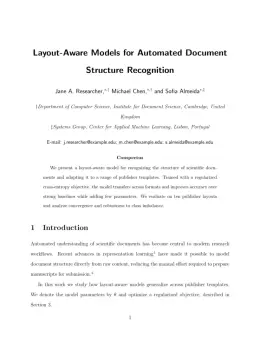
Write in a clean editor, then format for ACS Combinatorial Science in one click — DocuGuru applies the official American Chemical Society template with superscript references and exports a submission-ready PDF plus the editable LaTeX source. Free to start.

About the ACS Combinatorial Science format

ACS Combinatorial Science is a peer-reviewed journal published by American Chemical Society, covering Chemical Synthesis and Analysis, Multicomponent Synthesis of Heterocycles, History and advancements in chemistry.

PublisherAmerican Chemical Society
Reference styleSuperscript numbered (ACS)
Superscript — small raised numerals in the text
(1) Smith, A.; Jones, B.; Lee, C. A Representative Article Title. ACS Combinatorial Science 2023, 12, 45–58.

Formats any DOI in ACS Combinatorial Science style. No sign-up.

Publishes research inChemical Synthesis and Analysis Multicomponent Synthesis of Heterocycles History and advancements in chemistry Click Chemistry and Applications Synthesis and biological activity
ISSN2156-8944
h-index67
i10-index737
Total citations26,673
Top institutions publishing herePalacký University Olomouc
Journal websitepubs.acs.org
You getA submission-ready PDF and the editable LaTeX source — ready to submit.

Papers published in ACS Combinatorial Science per year

1
2007
25
2010
80
2011
97
2012
91
2013
102
2014
82
2015
116
2016
103
2017
101
2018
113
2019
110
2020

Citation impact of ACS Combinatorial Science by publication year

0
2007
958
2010
3.3K
2011
2.9K
2012
2.7K
2013
2.9K
2014
2.7K
2015
2.9K
2016
2.3K
2017
1.9K
2018
1.9K
2019
2.2K
2020

Citations each year’s papers have accumulated so far — the most recent years are still building up.

Most-cited papers in ACS Combinatorial Science

Combinatorial and High-Throughput Screening of Materials Libraries: Review of State of the Art

Radislav A. Potyrailo, Krishna Rajan, Klaus Stoewe et al. · 6 Jun 2011

Rational materials design based on prior knowledge is attractive because it promises to avoid time-consuming synthesis and testing of numerous materials candidates. However with the increase of complexity of materials, the scientific ability for the rational materials design becomes progressively limited. As a result of this complexity, combinatorial and high-throughput (CHT) experimentation in materials science…

Targeting the Dimerization of the Main Protease of Coronaviruses: A Potential Broad-Spectrum Therapeutic Strategy

Bhupesh Goyal, Deepti Goyal · 13 May 2020

on its dimerization and, thus, catalytic activity. We believe that the present review will stimulate research in this less explored yet quite significant area. The effect of the COVID-19 epidemic and the possibility of future CoV outbreaks strongly emphasize the urgent need for the design and development of potent antiviral agents against CoV infections.

Machine Learning Using Combined Structural and Chemical Descriptors for Prediction of Methane Adsorption Performance of Metal Organic Frameworks (MOFs)

Maryam Pardakhti, Ehsan Moharreri, David W. Wanik et al. · 11 Aug 2017

Using molecular simulation for adsorbent screening is computationally expensive and thus prohibitive to materials discovery. Machine learning (ML) algorithms trained on fundamental material properties can potentially provide quick and accurate methods for screening purposes. Prior efforts have focused on structural descriptors for use with ML. In this work, the use of chemical descriptors, in addition…

High-Throughput Combinatorial Database of Electronic Band Structures for Inorganic Scintillator Materials

Wahyu Setyawan, Romain Gaumé, Stephanie Lam et al. · 6 Jun 2011

For the purpose of creating a database of electronic structures of all the known inorganic compounds, we have developed a computational framework based on high-throughput ab initio calculations (AFLOW) and an online repository (www.aflowlib.org). In this article, we report the first step of this task: the calculation of band structures for 7439 compounds intended for…

CuAAC: An Efficient Click Chemistry Reaction on Solid Phase

Vida Castro, Hortensia Rodrı́guez, Fernando Alberício · 11 Dec 2015

Click chemistry is an approach that uses efficient and reliable reactions, such as Cu(I)-catalyzed azide-alkyne cycloaddition (CuAAC), to bind two molecular building blocks. CuAAC has broad applications in medicinal chemistry and other fields of chemistry. This review describes the general features and applications of CuAAC in solid-phase synthesis (CuAAC-SP), highlighting the suitability of this kind…

ACS Combinatorial Science template — frequently asked questions

How do I write a paper in the ACS Combinatorial Science format?
In DocuGuru you write your manuscript in a normal editor — no LaTeX setup required — and select the ACS Combinatorial Science template. When you export, DocuGuru compiles the paper into the official American Chemical Society format and hands you a submission-ready PDF along with the editable LaTeX source.
What reference style does ACS Combinatorial Science use?
ACS Combinatorial Science uses Superscript numbered (ACS) references, shown as superscript numerals in the text. DocuGuru formats every in-text citation and the reference list in this exact style automatically. A reference appears like this: (1) Smith, A.; Jones, B.; Lee, C. A Representative Article Title. ACS Combinatorial Science 2023, 12, 45–58.
Do I need to know LaTeX to submit to ACS Combinatorial Science?
No. DocuGuru generates the achemso LaTeX class and compiles the PDF for you in the background, so you get a American Chemical Society-ready ACS Combinatorial Science document without writing any LaTeX. If you do want it, the LaTeX source is included in the export.
Can I import an existing draft into the ACS Combinatorial Science template?
Yes. Paste or upload your current manuscript — Word, LaTeX, Markdown, or plain text — and DocuGuru reflows it into the ACS Combinatorial Science format with correct headings, figures, tables, and superscript citations.
Who publishes ACS Combinatorial Science?
ACS Combinatorial Science is a chemistry journal published by American Chemical Society. DocuGuru's ACS Combinatorial Science template matches American Chemical Society's official submission format.
Can I export a submission-ready ACS Combinatorial Science PDF?
Yes — DocuGuru produces a PDF built with the official ACS Combinatorial Science template (the achemso class) that is ready to submit to American Chemical Society, together with the matching LaTeX source files.
How much does the ACS Combinatorial Science template cost?
You can start writing in the ACS Combinatorial Science template for free. Exporting the final submission-ready ACS Combinatorial Science PDF and LaTeX source is part of DocuGuru's paid plans — see the app for current pricing.
Use the ACS Combinatorial Science template