
2,726 citations
Cite
SaveGo to paper →
American Chemical Society
ACS Chemical Health & Safety Template
Write in a clean editor, then format for ACS Chemical Health & Safety in one click — DocuGuru applies the official American Chemical Society template with superscript references and exports a submission-ready PDF plus the editable LaTeX source. Free to start.
About the ACS Chemical Health & Safety format
ACS Chemical Health & Safety is a peer-reviewed journal published by American Chemical Society, covering Chemical Safety and Risk Management, Chemistry and Chemical Engineering, Risk and Safety Analysis.
| Publisher | American Chemical Society |
|---|---|
| Reference style | Superscript numbered (ACS) Superscript — small raised numerals in the text (1) Smith, A.; Jones, B.; Lee, C. A Representative Article Title. ACS Chemical Health & Safety 2023, 12, 45–58.
Formats any DOI in ACS Chemical Health & Safety style. No sign-up. |
| Publishes research in | Chemical Safety and Risk Management Chemistry and Chemical Engineering Risk and Safety Analysis Occupational Health and Safety Research History and advancements in chemistry |
| ISSN | 1871-5532 |
| Citation impact (2-yr) | 2.14 |
| h-index | 45 |
| i10-index | 260 |
| Total citations | 13,737 |
| Top institutions publishing here | Los Alamos National Laboratory |
| Journal website | pubs.acs.org |
| You get | A submission-ready PDF and the editable LaTeX source — ready to submit. |
Papers published in ACS Chemical Health & Safety per year
Citation impact of ACS Chemical Health & Safety by publication year
Citations each year’s papers have accumulated so far — the most recent years are still building up.
Most-cited papers in ACS Chemical Health & Safety
MXenes are proven to be promising materials for a wide variety of applications, from electrochemical energy storage to environmental remediation, leading to their increasing popularity in research. With an influx of new researchers focused on MXenes, it is increasingly important to ensure the safe and reliable production of these materials. Herein, we describe the safe…
299 citations
Cite
SaveGo to paper →
The current paper gives a general overview of factors that can cause a dust explosion and the means by which such an event can be prevented and mitigated. Important explosibility parameters (e.g., maximum explosion pressure and standardized maximum rate of pressure rise) are described in terms of their relation to explosion causation, prevention and mitigation.…
257 citations
Cite
SaveGo to paper →
The COVID-19 pandemic has called for the increased use of disinfectants worldwide in public facilities, transportation, hospitals, nursing homes, wastewater treatment facilities, and even common households to mitigate virus burden. Active ingredients in common disinfectants recommended for use against COVID-19 viruses include chemicals such as quaternary ammonium compounds (QACs), hydrogen peroxide, bleach (sodium hypochlorite), and…
183 citations
Cite
SaveGo to paper →
Pharmaceuticals and Personal Care Products (PPCPs) are synthetic compounds widely used as consumer items such as cosmetics and therapeutic drugs across the globe. The inappropriate disposal of PPCPs in the environment has raised serious concerns regarding their potential adverse impacts on human and animal health. Hence, the present study aims to delve into the environmental…
159 citations
Cite
SaveGo to paper →
Related journal templates
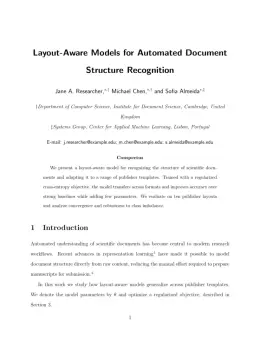
ACS Chemical Health & Safety template — frequently asked questions
How do I write a paper in the ACS Chemical Health & Safety format?
In DocuGuru you write your manuscript in a normal editor — no LaTeX setup required — and select the ACS Chemical Health & Safety template. When you export, DocuGuru compiles the paper into the official American Chemical Society format and hands you a submission-ready PDF along with the editable LaTeX source.
What reference style does ACS Chemical Health & Safety use?
ACS Chemical Health & Safety uses Superscript numbered (ACS) references, shown as superscript numerals in the text. DocuGuru formats every in-text citation and the reference list in this exact style automatically. A reference appears like this: (1) Smith, A.; Jones, B.; Lee, C. A Representative Article Title. ACS Chemical Health & Safety 2023, 12, 45–58.
Do I need to know LaTeX to submit to ACS Chemical Health & Safety?
No. DocuGuru generates the achemso LaTeX class and compiles the PDF for you in the background, so you get a American Chemical Society-ready ACS Chemical Health & Safety document without writing any LaTeX. If you do want it, the LaTeX source is included in the export.
Can I import an existing draft into the ACS Chemical Health & Safety template?
Yes. Paste or upload your current manuscript — Word, LaTeX, Markdown, or plain text — and DocuGuru reflows it into the ACS Chemical Health & Safety format with correct headings, figures, tables, and superscript citations.
Who publishes ACS Chemical Health & Safety?
ACS Chemical Health & Safety is a chemistry journal published by American Chemical Society. DocuGuru's ACS Chemical Health & Safety template matches American Chemical Society's official submission format.
Can I export a submission-ready ACS Chemical Health & Safety PDF?
Yes — DocuGuru produces a PDF built with the official ACS Chemical Health & Safety template (the achemso class) that is ready to submit to American Chemical Society, together with the matching LaTeX source files.
How much does the ACS Chemical Health & Safety template cost?
You can start writing in the ACS Chemical Health & Safety template for free. Exporting the final submission-ready ACS Chemical Health & Safety PDF and LaTeX source is part of DocuGuru's paid plans — see the app for current pricing.