American Chemical Society

ACS Applied Engineering Materials Template

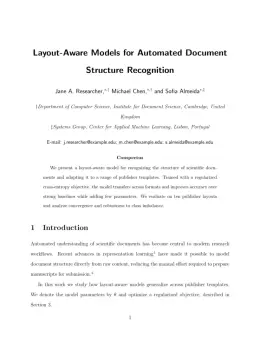
Write in a clean editor, then format for ACS Applied Engineering Materials in one click — DocuGuru applies the official American Chemical Society template with superscript references and exports a submission-ready PDF plus the editable LaTeX source. Free to start.

About the ACS Applied Engineering Materials format

ACS Applied Engineering Materials is a peer-reviewed journal published by American Chemical Society, covering Advanced Sensor and Energy Harvesting Materials, Advanced Photocatalysis Techniques, Electrocatalysts for Energy Conversion. Over its lifetime it has published 1,383 papers, which have received 6,542 citations.

PublisherAmerican Chemical Society
Reference styleSuperscript numbered (ACS)
Superscript — small raised numerals in the text
(1) Smith, A.; Jones, B.; Lee, C. A Representative Article Title. ACS Applied Engineering Materials 2023, 12, 45–58.

Formats any DOI in ACS Applied Engineering Materials style. No sign-up.

Publishes research inAdvanced Sensor and Energy Harvesting Materials Advanced Photocatalysis Techniques Electrocatalysts for Energy Conversion Supercapacitor Materials and Fabrication Surface Modification and Superhydrophobicity
ISSN2771-9545
Citation impact (2-yr)3.21
h-index27
i10-index215
Top institutions publishing hereChinese Academy of Sciences
You getA submission-ready PDF and the editable LaTeX source — ready to submit.

Papers published in ACS Applied Engineering Materials per year

60
2022
299
2023
287
2024
413
2025

Citation impact of ACS Applied Engineering Materials by publication year

672
2022
2.5K
2023
2K
2024
1K
2025

Citations each year’s papers have accumulated so far — the most recent years are still building up.

Most-cited papers in ACS Applied Engineering Materials

Nanoplastics Removal from Water using Metal–Organic Framework: Investigation of Adsorption Mechanisms, Kinetics, and Effective Environmental Parameters

Sweta Modak, Medha Kasula, Milad Rabbani Esfahani · 27 Jan 2023

Nanoplastics are becoming a concern for the environment and are gaining significant attention due to their challenging removal process and ability to transport coexisting pollutants. Because of their mobility, small size (<1 μm), and accumulation tendency, nanoplastics are toxic for terrestrial and aquatic living organisms and humans, causing inflammation and oxidative stress. In this study,…

Super-Stretchable, Self-Healing 2D MXene-Based Composites for Thermal Management and Electromagnetic Shielding Applications

Palash Das, Ankur Katheria, Arijit Jana et al. · 28 Mar 2023

MXene-based elastomeric electromagnetic radiation shielding composites are encouraging aspirants to ensure the secure performance of stretchable and wearable electronic gadgets. However, it is a tough challenge to construct effective stretchable elastomer/MXene composites with outstanding electromagnetic radiation shielding efficiency, healing capability, thermal management, and recyclability. To simultaneously promote the multifunctional characteristics of the elastomeric composites, we…

Aminosilane-Modified Ordered Hierarchical Nanostructured Silica for Highly-Selective Carbon Dioxide Capture at Low Pressure

K. Suresh Kumar Reddy, Anish Mathai Varghese, Adetola E. Ogungbenro et al. · 1 Feb 2023

High Resolution Image Download MS PowerPoint Slide Ordered hierarchical nanostructured silica (OHNS) adsorbents were prepared, and their surface was controllably modified by aminosilanization using two different aminosilanes, one bearing one primary amine unit per molecule (4-aminobutyltriethoxysilane, ABTS) and the other bearing both a primary and a secondary amine ( N -(2-aminoethyl)-3-aminopropylmethyldiethoxysilane, AAMS). Following physicochemical, structural,…

Efficient Manufacture, Deconstruction, and Upcycling of High-Performance Thermosets and Composites

Evan M. Lloyd, Julian C. Cooper, Peyton Shieh et al. · 16 Nov 2022

Thermoset polymers and fiber-reinforced polymer composites possess the chemical, physical, and mechanical properties necessary for energy-efficient vehicles and structures, but their energy-inefficient manufacturing and the lack of end-of-life management strategies render these materials unsustainable. Here, we demonstrate end-of-life deconstruction and upcycling of high-performance poly(dicyclopentadiene) (pDCPD) thermosets with a concurrent reduction in the energy demand for…

Self-Healable, Injectable, and Conductive Supramolecular Eutectogel for the Encapsulation and Sustained Release of the Anticancer Drug Curcumin

Nildhara Parsana, Sugam Kumar, Vinod K. Aswal et al. · 23 Dec 2022

The intriguing properties such as high environmental compatibility of supramolecular gels made solely through reversible noncovalent interactions are of recent interest. To offer proof of concept for the new-age sustainable materials, herein we have designed the self-healable, injectable, and ionic conductive supramolecular eutectogel in natural deep eutectic solvent (NADES). The studied eutectogels were prepared by…

ACS Applied Engineering Materials template — frequently asked questions

How do I write a paper in the ACS Applied Engineering Materials format?
In DocuGuru you write your manuscript in a normal editor — no LaTeX setup required — and select the ACS Applied Engineering Materials template. When you export, DocuGuru compiles the paper into the official American Chemical Society format and hands you a submission-ready PDF along with the editable LaTeX source.
What reference style does ACS Applied Engineering Materials use?
ACS Applied Engineering Materials uses Superscript numbered (ACS) references, shown as superscript numerals in the text. DocuGuru formats every in-text citation and the reference list in this exact style automatically. A reference appears like this: (1) Smith, A.; Jones, B.; Lee, C. A Representative Article Title. ACS Applied Engineering Materials 2023, 12, 45–58.
Do I need to know LaTeX to submit to ACS Applied Engineering Materials?
No. DocuGuru generates the achemso LaTeX class and compiles the PDF for you in the background, so you get a American Chemical Society-ready ACS Applied Engineering Materials document without writing any LaTeX. If you do want it, the LaTeX source is included in the export.
Can I import an existing draft into the ACS Applied Engineering Materials template?
Yes. Paste or upload your current manuscript — Word, LaTeX, Markdown, or plain text — and DocuGuru reflows it into the ACS Applied Engineering Materials format with correct headings, figures, tables, and superscript citations.
What is ACS Applied Engineering Materials?
ACS journal (achemso). It is a chemistry journal, published by American Chemical Society.
Can I export a submission-ready ACS Applied Engineering Materials PDF?
Yes — DocuGuru produces a PDF built with the official ACS Applied Engineering Materials template (the achemso class) that is ready to submit to American Chemical Society, together with the matching LaTeX source files.
How much does the ACS Applied Engineering Materials template cost?
You can start writing in the ACS Applied Engineering Materials template for free. Exporting the final submission-ready ACS Applied Engineering Materials PDF and LaTeX source is part of DocuGuru's paid plans — see the app for current pricing.
Use the ACS Applied Engineering Materials template