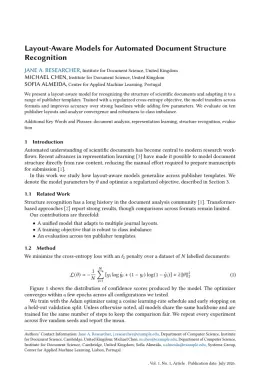
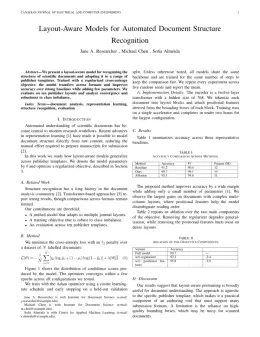
About the Proceedings of the ACM on Programming Languages format
Proceedings of the ACM on Programming Languages is a peer-reviewed journal published by ACM, covering Logic, programming, and type systems, Formal Methods in Verification, Parallel Computing and Optimization Techniques. Over its lifetime it has published 2,448 papers, which have received 31,458 citations.
| Publisher | ACM |
|---|
| Reference style | Numbered (ACM) Numbered — [1], [2] in the text
[1] Ada Smith, Ben Jones, and Cara Lee. 2023. A representative article title. Proceedings of the ACM on Programming Languages 12, 3, Article 45 (2023).
Formats any DOI in Proceedings of the ACM on Programming Languages style. No sign-up.
|
|---|
| Publishes research in | Logic, programming, and type systems Formal Methods in Verification Parallel Computing and Optimization Techniques Software Testing and Debugging Techniques Security and Verification in Computing |
|---|
| ISSN | 2475-1421 |
|---|
| Citation impact (2-yr) | 2.83 |
|---|
| h-index | 68 |
|---|
| i10-index | 855 |
|---|
| Open access | Yes |
|---|
| Top institutions publishing here | Max Planck Institute for Software Systems |
|---|
| Journal website | pacmpl.acm.org |
|---|
| You get | A submission-ready PDF and the editable LaTeX source — ready to submit. |
|---|
Papers published in Proceedings of the ACM on Programming Languages per year
Citation impact of Proceedings of the ACM on Programming Languages by publication year
Citations each year’s papers have accumulated so far — the most recent years are still building up.
Most-cited papers in Proceedings of the ACM on Programming Languages
An abstract domain for certifying neural networks
Gagandeep Singh, Timon Gehr, Markus Püschel et al. · 2 Jan 2019
We present a novel method for scalable and precise certification of deep neural networks. The key technical insight behind our approach is a new abstract domain which combines floating point polyhedra with intervals and is equipped with abstract transformers specifically tailored to the setting of neural networks. Concretely, we introduce new transformers for affine transforms,…
Grounded Copilot: How Programmers Interact with Code-Generating Models
Shraddha Barke, Michael B. James, Nadia Polikarpova · 6 Apr 2023
Powered by recent advances in code-generating models, AI assistants like Github Copilot promise to change the face of programming forever. But what is this new face of programming? We present the first grounded theory analysis of how programmers interact with Copilot, based on observing 20 participants—with a range of prior experience using the assistant—as they…
The tensor algebra compiler
Fredrik Kjølstad, Shoaib Kamil, Stephen Y. Chou et al. · 12 Oct 2017
Tensor algebra is a powerful tool with applications in machine learning, data analytics, engineering and the physical sciences. Tensors are often sparse and compound operations must frequently be computed in a single kernel for performance and to save memory. Programmers are left to write kernels for every operation of interest, with different mixes of dense…
RustBelt: securing the foundations of the Rust programming language
Ralf Jung, Jacques-Henri Jourdan, Robbert Krebbers et al. · 27 Dec 2017
Rust is a new systems programming language that promises to overcome the seemingly fundamental tradeoff between high-level safety guarantees and low-level control over resource management. Unfortunately, none of Rust's safety claims have been formally proven, and there is good reason to question whether they actually hold. Specifically, Rust employs a strong, ownership-based type system, but…
MadMax: surviving out-of-gas conditions in Ethereum smart contracts
Neville Grech, Michael Kong, Anton Jurisevic et al. · 24 Oct 2018
Ethereum is a distributed blockchain platform, serving as an ecosystem for smart contracts: full-fledged inter-communicating programs that capture the transaction logic of an account. Unlike programs in mainstream languages, a gas limit restricts the execution of an Ethereum smart contract: execution proceeds as long as gas is available. Thus, gas is a valuable resource that…