ACM

ACM Transactions on Architecture and Code Optimization Template

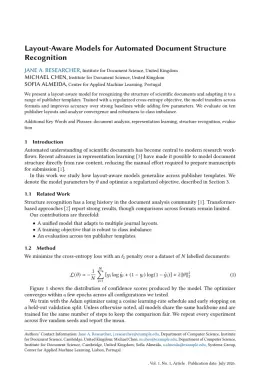
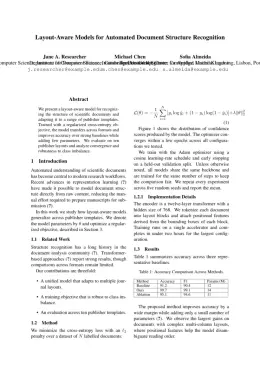
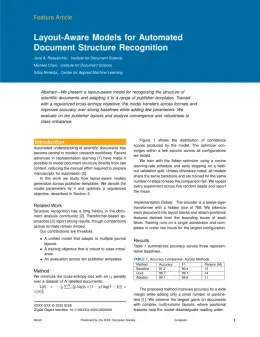
Write in a clean editor, then format for ACM Transactions on Architecture and Code Optimization in one click — DocuGuru applies the official ACM template with numbered references and exports a submission-ready PDF plus the editable LaTeX source. Free to start.

About the ACM Transactions on Architecture and Code Optimization format

ACM Transactions on Architecture and Code Optimization is a peer-reviewed journal published by ACM, covering Parallel Computing and Optimization Techniques, Advanced Data Storage Technologies, Interconnection Networks and Systems. Over its lifetime it has published 1,385 papers, which have received 19,012 citations.

PublisherACM
Reference styleNumbered (ACM)
Numbered — [1], [2] in the text
[1] Ada Smith, Ben Jones, and Cara Lee. 2023. A representative article title. ACM Transactions on Architecture and Code Optimization 12, 3, Article 45 (2023).

Formats any DOI in ACM Transactions on Architecture and Code Optimization style. No sign-up.

Publishes research inParallel Computing and Optimization Techniques Advanced Data Storage Technologies Interconnection Networks and Systems Cloud Computing and Resource Management Embedded Systems Design Techniques
ISSN1544-3566
Citation impact (2-yr)1.78
h-index56
i10-index510
Open accessYes
Top institutions publishing hereHuazhong University of Science and Technology
Journal websitedl.acm.org
You getA submission-ready PDF and the editable LaTeX source — ready to submit.

Papers published in ACM Transactions on Architecture and Code Optimization per year

47
2014
84
2015
72
2016
59
2017
73
2018
65
2019
53
2020
57
2021
80
2022
57
2023
103
2024
150
2025

Citation impact of ACM Transactions on Architecture and Code Optimization by publication year

1.1K
2014
1.2K
2015
1.5K
2016
1.4K
2017
881
2018
765
2019
720
2020
656
2021
740
2022
419
2023
406
2024
141
2025

Citations each year’s papers have accumulated so far — the most recent years are still building up.

Most-cited papers in ACM Transactions on Architecture and Code Optimization

Temperature-aware microarchitecture

Kevin Skadron, Mircea R. Stan, Karthik Sankaranarayanan et al. · 1 Mar 2004

With cooling costs rising exponentially, designing cooling solutions for worst-case power dissipation is prohibitively expensive. Chips that can autonomously modify their execution and power-dissipation characteristics permit the use of lower-cost cooling solutions while still guaranteeing safe temperature regulation. Evaluating techniques for this dynamic thermal management (DTM), however, requires a thermal model that is practical for…

CACTI 7

Rajeev Balasubramonian, Andrew B. Kahng, Naveen Muralimanohar et al. · 28 Jun 2017

Historically, server designers have opted for simple memory systems by picking one of a few commoditized DDR memory products. We are already witnessing a major upheaval in the off-chip memory hierarchy, with the introduction of many new memory products—buffer-on-board, LRDIMM, HMC, HBM, and NVMs, to name a few. Given the plethora of choices, it is…

Polyhedral parallel code generation for CUDA

Sven Verdoolaege, Juan Carlos Juega, Albert Cohen et al. · 1 Jan 2013

This article addresses the compilation of a sequential program for parallel execution on a modern GPU. To this end, we present a novel source-to-source compiler called PPCG. PPCG singles out for its ability to accelerate computations from any static control loop nest, generating multiple CUDA kernels when necessary. We introduce a multilevel tiling strategy and…

An Evaluation of High-Level Mechanistic Core Models

Trevor E. Carlson, Wim Heirman, Stijn Eyerman et al. · 25 Aug 2014

Large core counts and complex cache hierarchies are increasing the burden placed on commonly used simulation and modeling techniques. Although analytical models provide fast results, they do not apply to complex, many-core shared-memory systems. In contrast, detailed cycle-level simulation can be accurate but also tends to be slow, which limits the number of configurations that…

The McPAT Framework for Multicore and Manycore Architectures

Sheng Li, Jung Ho Ahn, Richard Strong et al. · 1 Apr 2013

This article introduces McPAT, an integrated power, area, and timing modeling framework that supports comprehensive design space exploration for multicore and manycore processor configurations ranging from 90nm to 22nm and beyond. At microarchitectural level, McPAT includes models for the fundamental components of a complete chip multiprocessor, including in-order and out-of-order processor cores, networks-on-chip, shared caches,…

ACM Transactions on Architecture and Code Optimization template — frequently asked questions

How do I write a paper in the ACM Transactions on Architecture and Code Optimization format?
In DocuGuru you write your manuscript in a normal editor — no LaTeX setup required — and select the ACM Transactions on Architecture and Code Optimization template. When you export, DocuGuru compiles the paper into the official ACM format and hands you a submission-ready PDF along with the editable LaTeX source.
What reference style does ACM Transactions on Architecture and Code Optimization use?
ACM Transactions on Architecture and Code Optimization uses Numbered (ACM) references, shown as numbered [1], [2] markers in the text. DocuGuru formats every in-text citation and the reference list in this exact style automatically. A reference appears like this: [1] Ada Smith, Ben Jones, and Cara Lee. 2023. A representative article title. ACM Transactions on Architecture and Code Optimization 12, 3, Article 45 (2023).
Do I need to know LaTeX to submit to ACM Transactions on Architecture and Code Optimization?
No. DocuGuru generates the acmart LaTeX class and compiles the PDF for you in the background, so you get a ACM-ready ACM Transactions on Architecture and Code Optimization document without writing any LaTeX. If you do want it, the LaTeX source is included in the export.
Can I import an existing draft into the ACM Transactions on Architecture and Code Optimization template?
Yes. Paste or upload your current manuscript — Word, LaTeX, Markdown, or plain text — and DocuGuru reflows it into the ACM Transactions on Architecture and Code Optimization format with correct headings, figures, tables, and numbered citations.
What is ACM Transactions on Architecture and Code Optimization?
ACM journal. It is a engineering and computer science journal, published by ACM.
Can I export a submission-ready ACM Transactions on Architecture and Code Optimization PDF?
Yes — DocuGuru produces a PDF built with the official ACM Transactions on Architecture and Code Optimization template (the acmart class) that is ready to submit to ACM, together with the matching LaTeX source files.
How much does the ACM Transactions on Architecture and Code Optimization template cost?
You can start writing in the ACM Transactions on Architecture and Code Optimization template for free. Exporting the final submission-ready ACM Transactions on Architecture and Code Optimization PDF and LaTeX source is part of DocuGuru's paid plans — see the app for current pricing.
Use the ACM Transactions on Architecture and Code Optimization template