ACM

ACM SIGCAPH Computers and the Physically Handicapped Template

Write in a clean editor, then format for ACM SIGCAPH Computers and the Physically Handicapped in one click — DocuGuru applies the official ACM template with numbered references and exports a submission-ready PDF plus the editable LaTeX source. Free to start.

About the ACM SIGCAPH Computers and the Physically Handicapped format

ACM SIGCAPH Computers and the Physically Handicapped is a peer-reviewed journal published by ACM, covering Digital Accessibility for Disabilities, Tactile and Sensory Interactions, Usability and User Interface Design.

PublisherACM
Reference styleNumbered (ACM)
Numbered — [1], [2] in the text
[1] Ada Smith, Ben Jones, and Cara Lee. 2023. A representative article title. ACM SIGCAPH Computers and the Physically Handicapped 12, 3, Article 45 (2023).

Formats any DOI in ACM SIGCAPH Computers and the Physically Handicapped style. No sign-up.

Publishes research inDigital Accessibility for Disabilities Tactile and Sensory Interactions Usability and User Interface Design Interactive and Immersive Displays Assistive Technology in Communication and Mobility
ISSN0163-5727
h-index13
i10-index23
Total citations748
Top institutions publishing hereEdward Hines, Jr. VA Hospital
Journal websiteportal.acm.org
You getA submission-ready PDF and the editable LaTeX source — ready to submit.

Papers published in ACM SIGCAPH Computers and the Physically Handicapped per year

7
1992
5
1993
4
1994
12
1995
8
1996
10
1997
8
1998
8
1999
8
2000
13
2001
28
2002
20
2003

Citation impact of ACM SIGCAPH Computers and the Physically Handicapped by publication year

11
1992
18
1993
3
1994
14
1995
73
1996
16
1997
36
1998
70
1999
42
2000
41
2001
221
2002
75
2003

Citations each year’s papers have accumulated so far — the most recent years are still building up.

Most-cited papers in ACM SIGCAPH Computers and the Physically Handicapped

A real-time assistive computer interface for users with motor disabilities

Armando Barreto, Scott Scargle, Malek Adjouadi · 1 Jun 1999

This study introduces the design of an integrated assistive real-time system developed as an alternate input device to computers that can be used by individuals with severe motor disabilities. An assistive technology device as defined by the Assistive Technology Act of 1998 is "any item, piece of equipment, or product system, whether acquired commercially, modified,…

Web usability and age

Ann Chadwick-Dias, Michelle McNulty, Tom Tullis · 17 Jun 2002

We conducted two usability studies that included a total of 49 participants ranging in age from 20 to 82. The goal of Study 1 was to learn whether there were differences in how older adults interact with the Web and whether changes in text size would affect performance. Users completed tasks on a prototype employee/retiree…

Promoting universal usability with multi-layer interface design

Ben Shneiderman · 17 Jun 2002

Increased interest in universal usability is causing some researchers to study advanced strategies for satisfying first-time as well as intermittent and expert users. This paper promotes the idea of multi-layer interface designs that enable first-time and novice users to begin with a limited set of features at layer 1. They can remain at layer 1,…

WAB

Andrea Kennel, Louis Perrochon, Alireza Darvishi · 1 Jun 1996

A blind or visually impaired user can get lost in hyperspace on one single W3-page. This paper presents Web Access for Blind users (WAB), a working system which makes web-surfing easier for blind persons. Normally, structure and meta information in HTML documents are displayed visually and are difficult for blind users to recognize. WAB transforms…

Intelligent animated agents for interactive language training

Ron Cole, Tim Carmell, Pam Connors et al. · 1 Jun 1998

This report describes a three-year project, now eight months old, to develop interactive learning tools for language training with profoundly deaf children. The tools combine four key technologies: speech recognition, developed at the Oregon Graduate Institute; speech synthesis, developed at the University of Edinburgh and modified at OGI; facial animation, developed at University of California,…

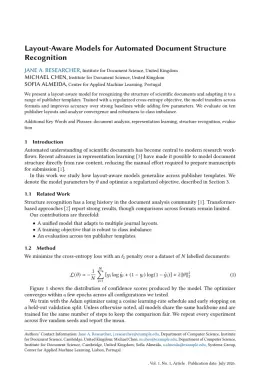
ACM SIGCAPH Computers and the Physically Handicapped template — frequently asked questions

How do I write a paper in the ACM SIGCAPH Computers and the Physically Handicapped format?
In DocuGuru you write your manuscript in a normal editor — no LaTeX setup required — and select the ACM SIGCAPH Computers and the Physically Handicapped template. When you export, DocuGuru compiles the paper into the official ACM format and hands you a submission-ready PDF along with the editable LaTeX source.
What reference style does ACM SIGCAPH Computers and the Physically Handicapped use?
ACM SIGCAPH Computers and the Physically Handicapped uses Numbered (ACM) references, shown as numbered [1], [2] markers in the text. DocuGuru formats every in-text citation and the reference list in this exact style automatically. A reference appears like this: [1] Ada Smith, Ben Jones, and Cara Lee. 2023. A representative article title. ACM SIGCAPH Computers and the Physically Handicapped 12, 3, Article 45 (2023).
Do I need to know LaTeX to submit to ACM SIGCAPH Computers and the Physically Handicapped?
No. DocuGuru generates the acmart LaTeX class and compiles the PDF for you in the background, so you get a ACM-ready ACM SIGCAPH Computers and the Physically Handicapped document without writing any LaTeX. If you do want it, the LaTeX source is included in the export.
Can I import an existing draft into the ACM SIGCAPH Computers and the Physically Handicapped template?
Yes. Paste or upload your current manuscript — Word, LaTeX, Markdown, or plain text — and DocuGuru reflows it into the ACM SIGCAPH Computers and the Physically Handicapped format with correct headings, figures, tables, and numbered citations.
Who publishes ACM SIGCAPH Computers and the Physically Handicapped?
ACM SIGCAPH Computers and the Physically Handicapped is a engineering and computer science journal published by ACM. DocuGuru's ACM SIGCAPH Computers and the Physically Handicapped template matches ACM's official submission format.
Can I export a submission-ready ACM SIGCAPH Computers and the Physically Handicapped PDF?
Yes — DocuGuru produces a PDF built with the official ACM SIGCAPH Computers and the Physically Handicapped template (the acmart class) that is ready to submit to ACM, together with the matching LaTeX source files.
How much does the ACM SIGCAPH Computers and the Physically Handicapped template cost?
You can start writing in the ACM SIGCAPH Computers and the Physically Handicapped template for free. Exporting the final submission-ready ACM SIGCAPH Computers and the Physically Handicapped PDF and LaTeX source is part of DocuGuru's paid plans — see the app for current pricing.
Use the ACM SIGCAPH Computers and the Physically Handicapped template