ACM

ACM SIGACCESS Accessibility and Computing Template

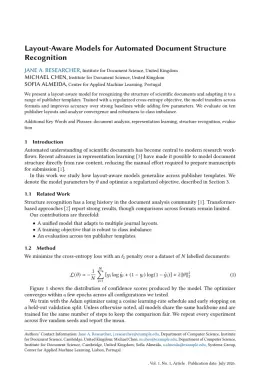
Write in a clean editor, then format for ACM SIGACCESS Accessibility and Computing in one click — DocuGuru applies the official ACM template with numbered references and exports a submission-ready PDF plus the editable LaTeX source. Free to start.

About the ACM SIGACCESS Accessibility and Computing format

ACM SIGACCESS Accessibility and Computing is a peer-reviewed journal published by ACM, covering Tactile and Sensory Interactions, Digital Accessibility for Disabilities, Assistive Technology in Communication and Mobility.

PublisherACM
Reference styleNumbered (ACM)
Numbered — [1], [2] in the text
[1] Ada Smith, Ben Jones, and Cara Lee. 2023. A representative article title. ACM SIGACCESS Accessibility and Computing 12, 3, Article 45 (2023).

Formats any DOI in ACM SIGACCESS Accessibility and Computing style. No sign-up.

Publishes research inTactile and Sensory Interactions Digital Accessibility for Disabilities Assistive Technology in Communication and Mobility Interactive and Immersive Displays Technology Use by Older Adults
ISSN1558-1187
Citation impact (2-yr)0.43
h-index25
i10-index78
Total citations2,662
Top institutions publishing hereUniversity of Washington
Journal websitecatalog.hathitrust.org
You getA submission-ready PDF and the editable LaTeX source — ready to submit.

Papers published in ACM SIGACCESS Accessibility and Computing per year

15
2013
20
2014
19
2015
19
2016
18
2017
14
2018
36
2020
14
2021
11
2022
9
2023
15
2024
13
2025

Citation impact of ACM SIGACCESS Accessibility and Computing by publication year

76
2013
71
2014
157
2015
79
2016
143
2017
37
2018
421
2020
31
2021
33
2022
3
2023
13
2024
1
2025

Citations each year’s papers have accumulated so far — the most recent years are still building up.

Most-cited papers in ACM SIGACCESS Accessibility and Computing

Toward fairness in AI for people with disabilities SBG@a research roadmap

Anhong Guo, Ece Kamar, Jennifer Wortman Vaughan et al. · 2 Mar 2020

AI technologies have the potential to dramatically impact the lives of people with disabilities (PWD). Indeed, improving the lives of PWD is a motivator for many state-of-the-art AI systems, such as automated speech recognition tools that can caption videos for people who are deaf and hard of hearing, or language prediction algorithms that can augment…

What is the point of fairness?

Cynthia L. Bennett, Os Keyes · 2 Mar 2020

Work integrating conversations around AI and Disability is vital and valued, particularly when done through a lens of fairness. Yet at the same time, analysing the ethical implications of AI for disabled people solely through the lens of a singular idea of "fairness" risks reinforcing existing power dynamics, either through reinforcing the position of existing…

Combating obesity trends in teenagers through persuasive mobile technology

Sonia M. Arteaga, Mo Kudeki, Adrienne Woodworth · 1 Jun 2009

Throughout the last decade, there has been an alarming increase in obesity prevalence among adults and teens throughout the world. Obesity has been found to increase the risk of developing diabetes, cardiovascular diseases, and some cancers. Due to the many health risks associated with obesity, an increase in prevalence has also pressured health care systems…

The impact of aging on access to technology

Sara J. Czaja · 1 Sep 2005

Two major demographic trends underscore the importance of considering adaptation to technology by older adults: the aging of the population and rapid dissemination of technological innovations. In the past decade, developments in computer and information technologies have occurred at an unprecedented rate and technology has become an integral component of work, education, communication and entertainment.…

Design and development of an indoor navigation and object identification system for the blind

Andreas Hub, Joachim Diepstraten, Thomas Ertl · 1 Sep 2003

In this paper we present a new system that assists blind users in orienting themselves in indoor environments. We developed a sensor module that can be handled like a flashlight by a blind user and can be used for searching tasks within the three-dimensional environment. By pressing keys, inquiries concerning object characteristics, position, orientation and…

ACM SIGACCESS Accessibility and Computing template — frequently asked questions

How do I write a paper in the ACM SIGACCESS Accessibility and Computing format?
In DocuGuru you write your manuscript in a normal editor — no LaTeX setup required — and select the ACM SIGACCESS Accessibility and Computing template. When you export, DocuGuru compiles the paper into the official ACM format and hands you a submission-ready PDF along with the editable LaTeX source.
What reference style does ACM SIGACCESS Accessibility and Computing use?
ACM SIGACCESS Accessibility and Computing uses Numbered (ACM) references, shown as numbered [1], [2] markers in the text. DocuGuru formats every in-text citation and the reference list in this exact style automatically. A reference appears like this: [1] Ada Smith, Ben Jones, and Cara Lee. 2023. A representative article title. ACM SIGACCESS Accessibility and Computing 12, 3, Article 45 (2023).
Do I need to know LaTeX to submit to ACM SIGACCESS Accessibility and Computing?
No. DocuGuru generates the acmart LaTeX class and compiles the PDF for you in the background, so you get a ACM-ready ACM SIGACCESS Accessibility and Computing document without writing any LaTeX. If you do want it, the LaTeX source is included in the export.
Can I import an existing draft into the ACM SIGACCESS Accessibility and Computing template?
Yes. Paste or upload your current manuscript — Word, LaTeX, Markdown, or plain text — and DocuGuru reflows it into the ACM SIGACCESS Accessibility and Computing format with correct headings, figures, tables, and numbered citations.
Who publishes ACM SIGACCESS Accessibility and Computing?
ACM SIGACCESS Accessibility and Computing is a engineering and computer science journal published by ACM. DocuGuru's ACM SIGACCESS Accessibility and Computing template matches ACM's official submission format.
Can I export a submission-ready ACM SIGACCESS Accessibility and Computing PDF?
Yes — DocuGuru produces a PDF built with the official ACM SIGACCESS Accessibility and Computing template (the acmart class) that is ready to submit to ACM, together with the matching LaTeX source files.
How much does the ACM SIGACCESS Accessibility and Computing template cost?
You can start writing in the ACM SIGACCESS Accessibility and Computing template for free. Exporting the final submission-ready ACM SIGACCESS Accessibility and Computing PDF and LaTeX source is part of DocuGuru's paid plans — see the app for current pricing.
Use the ACM SIGACCESS Accessibility and Computing template