Taylor & Francis

Wood Material Science and Engineering Template

Write in a clean editor, then format for Wood Material Science and Engineering in one click — DocuGuru applies the official Taylor & Francis template with author–year references and exports a submission-ready PDF plus the editable LaTeX source. Free to start.

About the Wood Material Science and Engineering format

Wood Material Science and Engineering is a peer-reviewed journal published by Taylor & Francis, covering Wood Treatment and Properties, Natural Fiber Reinforced Composites, Tree Root and Stability Studies.

PublisherTaylor & Francis
Reference styleAuthor–year (Chicago, T&F)
Author–year — (Smith, 2023) in the text
Smith, Ada, Ben Jones, and Cara Lee. 2023. "A Representative Article Title." Wood Material Science and Engineering 12 (3): 45–58.

Formats any DOI in Wood Material Science and Engineering style. No sign-up.

Publishes research inWood Treatment and Properties Natural Fiber Reinforced Composites Tree Root and Stability Studies Lignin and Wood Chemistry Bamboo properties and applications
ISSN1748-0272
Citation impact (2-yr)1.74
h-index40
i10-index416
Total citations13,318
Top institutions publishing hereNanjing Forestry University
Journal websitewww.tandfonline.com
You getA submission-ready PDF and the editable LaTeX source — ready to submit.

Papers published in Wood Material Science and Engineering per year

59
2014
42
2015
33
2016
32
2017
47
2018
54
2019
50
2020
99
2021
147
2022
147
2023
210
2024
257
2025

Citation impact of Wood Material Science and Engineering by publication year

897
2014
577
2015
303
2016
636
2017
928
2018
889
2019
770
2020
1.3K
2021
1.4K
2022
759
2023
632
2024
374
2025

Citations each year’s papers have accumulated so far — the most recent years are still building up.

Most-cited papers in Wood Material Science and Engineering

Thermo-hydro and thermo-hydro-mechanical wood processing: An opportunity for future environmentally friendly wood products

Dick Sandberg, Peer Haller, Parviz Navi · 18 Dec 2012

This state-of-the art report presents the basic concepts of some of the thermo-hydro (TH) and thermo-hydro-mechanical (THM) wood processes that are in use today, i.e. heat treatment, compression of wood in the longitudinal or transverse direction, and wood welding. The reasons for the growing interest in TH and THM techniques are discussed and the development…

Chemical modification of wood: A short review

Roger M. Rowell · 1 Mar 2006

Abstract For most markets for wood, it is used without any treatments or modifications. When wood is used in adverse environments, it may be treated with chemicals to help prevent decay, improve water resistance, reduce the effects of ultraviolet radiation or increase fire retardancy. Many of these treatments involve the use of toxic or corrosive…

Adhesive systems used in the European particleboard, MDF and OSB industries

George I. Mantanis, Eleftheria Athanassiadou, Marius Cătălin Barbu et al. · 9 Nov 2017

In this work, the adhesive systems used today in the European industries of particleboard, medium density fibreboard (MDF) and oriented strand board (OSB) are discussed. The structure of particleboard, MDF and OSB markets in Europe in relation to the types of adhesives and product specifications are presented as well. It is noticeable that new markets…

Understanding decay resistance, dimensional stability and strength changes in heat-treated and acetylated wood

Roger M. Rowell, Rebecca E. Ibach, James D. McSweeny et al. · 1 Mar 2009

Abstract Reductions in hygroscopicity, increased dimensional stability and decay resistance of heat-treated wood depend on decomposition of a large portion of the hemicelluloses in the wood cell wall. In theory, these hemicelluloses are converted to small organic molecules, water and volatile furan-type intermediates that can polymerize in the cell wall. Reductions in hygroscopicity and improved…

Recent progress in ultra-low formaldehyde emitting adhesive systems and formaldehyde scavengers in wood-based panels: a review

Lubos Kristak, Petar Antov, Pavlo Bekhta et al. · 7 Apr 2022

Traditional wood-based panels are produced with synthetic, formaldehyde-based adhesives, commonly made from fossil-derived constituents, such as urea, phenol, melamine, etc. Along with their numerous advantages, such as chemical versatility, high reactivity and excellent adhesive performance, these adhesives are characterized by certain problems, connected with the hazardous volatile organic compounds (VOCs), mostly free formaldehyde in the…

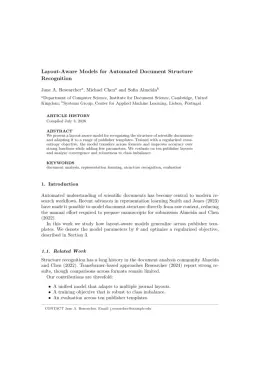
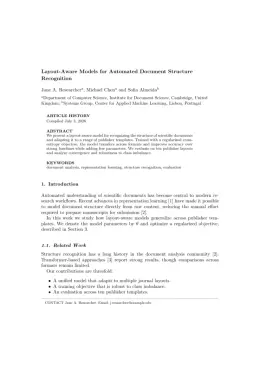
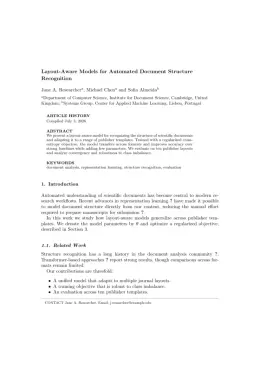
Wood Material Science and Engineering template — frequently asked questions

How do I write a paper in the Wood Material Science and Engineering format?
In DocuGuru you write your manuscript in a normal editor — no LaTeX setup required — and select the Wood Material Science and Engineering template. When you export, DocuGuru compiles the paper into the official Taylor & Francis format and hands you a submission-ready PDF along with the editable LaTeX source.
What reference style does Wood Material Science and Engineering use?
Wood Material Science and Engineering uses Author–year (Chicago, T&F) references, shown as author–year markers such as (Smith, 2023) in the text. DocuGuru formats every in-text citation and the reference list in this exact style automatically. A reference appears like this: Smith, Ada, Ben Jones, and Cara Lee. 2023. "A Representative Article Title." Wood Material Science and Engineering 12 (3): 45–58.
Do I need to know LaTeX to submit to Wood Material Science and Engineering?
No. DocuGuru generates the interact LaTeX class and compiles the PDF for you in the background, so you get a Taylor & Francis-ready Wood Material Science and Engineering document without writing any LaTeX. If you do want it, the LaTeX source is included in the export.
Can I import an existing draft into the Wood Material Science and Engineering template?
Yes. Paste or upload your current manuscript — Word, LaTeX, Markdown, or plain text — and DocuGuru reflows it into the Wood Material Science and Engineering format with correct headings, figures, tables, and author–year citations.
Who publishes Wood Material Science and Engineering?
Wood Material Science and Engineering is a multidisciplinary journal published by Taylor & Francis. DocuGuru's Wood Material Science and Engineering template matches Taylor & Francis's official submission format.
Can I export a submission-ready Wood Material Science and Engineering PDF?
Yes — DocuGuru produces a PDF built with the official Wood Material Science and Engineering template (the interact class) that is ready to submit to Taylor & Francis, together with the matching LaTeX source files.
How much does the Wood Material Science and Engineering template cost?
You can start writing in the Wood Material Science and Engineering template for free. Exporting the final submission-ready Wood Material Science and Engineering PDF and LaTeX source is part of DocuGuru's paid plans — see the app for current pricing.
Use the Wood Material Science and Engineering template