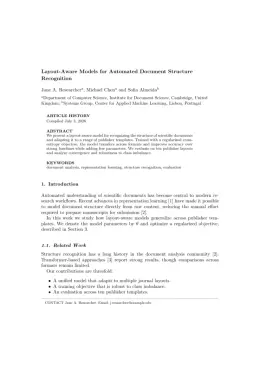
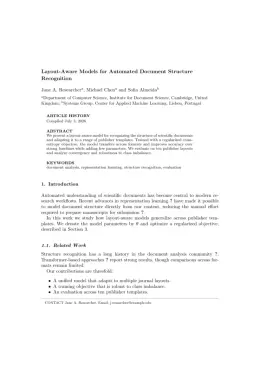
Taylor & Francis

Toxicology Mechanisms and Methods Template

Write in a clean editor, then format for Toxicology Mechanisms and Methods in one click — DocuGuru applies the official Taylor & Francis template with author–year references and exports a submission-ready PDF plus the editable LaTeX source. Free to start.

About the Toxicology Mechanisms and Methods format

Toxicology Mechanisms and Methods is a peer-reviewed journal published by Taylor & Francis, covering Carcinogens and Genotoxicity Assessment, Pesticide Exposure and Toxicity, Heavy Metal Exposure and Toxicity.

PublisherTaylor & Francis
Reference styleAuthor–year (Chicago, T&F)
Author–year — (Smith, 2023) in the text
Smith, Ada, Ben Jones, and Cara Lee. 2023. "A Representative Article Title." Toxicology Mechanisms and Methods 12 (3): 45–58.

Formats any DOI in Toxicology Mechanisms and Methods style. No sign-up.

Publishes research inCarcinogens and Genotoxicity Assessment Pesticide Exposure and Toxicity Heavy Metal Exposure and Toxicity Environmental Toxicology and Ecotoxicology Effects and risks of endocrine disrupting chemicals
ISSN1537-6516
Citation impact (2-yr)2.66
h-index69
i10-index981
Total citations34,233
Top institutions publishing hereAnnamalai University
Journal websitewww.informapharmascience.com
You getA submission-ready PDF and the editable LaTeX source — ready to submit.

Papers published in Toxicology Mechanisms and Methods per year

78
2014
73
2015
102
2016
92
2017
76
2018
66
2019
69
2020
86
2021
70
2022
70
2023
85
2024
110
2025

Citation impact of Toxicology Mechanisms and Methods by publication year

1.8K
2014
1.8K
2015
2.5K
2016
2K
2017
1.8K
2018
2.7K
2019
1.1K
2020
1.4K
2021
830
2022
461
2023
467
2024
212
2025

Citations each year’s papers have accumulated so far — the most recent years are still building up.

Most-cited papers in Toxicology Mechanisms and Methods

The effects of heavy metals on human metabolism

Zhushan Fu, Shuhua Xi · 10 Dec 2019

As technology continues to advance, heavy metals in drinking water have exceeded recommended limits from regulators around the world. The main source of human exposure to heavy metals is from contaminated drinking water. The effects of drinking water contaminated with heavy metals, such as arsenic, lead, nickel, cadmium and mercury, have gradually caught the attention…

1,018 citations Cite SaveGo to paper →
In Silico Tools for Sharing Data and Knowledge on Toxicity and Metabolism: Derek for Windows, Meteor, and Vitic

Carol A. Marchant, Katharine Briggs, Anthony D. Long · 1 Jan 2008

ABSTRACT Lhasa Limited is a not-for-profit organization that exists to promote the sharing of data and knowledge in chemistry and the life sciences. It has developed the software tools Derek for Windows, Meteor, and Vitic to facilitate such sharing. Derek for Windows and Meteor are knowledge-based expert systems that predict the toxicity and metabolism of…

Dose-dependent in-vivo toxicity assessment of silver nanoparticle in Wistar rats

Dhermendra K. Tiwari, Takashi Jin, J. Behari · 16 Nov 2010

This study aims to suggest the limits of silver nanoparticle (AgNP) uses for medicinal purpose and was performed to explore the effect of various doses of silver nanoparticle in rats. Four different doses of AgNP (4, 10, 20, and 40 mg/kg) were injected intravenously. For safety evaluation of injected AgNP, body weight, organ coefficient, whole…

Zinc oxide nanoparticles impacts: cytotoxicity, genotoxicity, developmental toxicity, and neurotoxicity

Sanjiv Singh · 29 Nov 2018

Zinc oxide (ZnO) is the most commonly used nanoparticles among different nanoparticles. Its applications ranged from personal care products, sensors, antibacterial creams, and biomedical applications. The broad range of applications raises concern in regards to their potential toxicity. Therefore, it is required to understand their toxicity mechanism and pattern on various levels. The primary aim…

Aflatoxin B1: metabolism, toxicology, and its involvement in oxidative stress and cancer development

Weiya Cao, Pan Yu, Kepeng Yang et al. · 21 Dec 2021

fungi, which are widely distributed in nature. Aflatoxin B1 (AFB1) is the most toxic of these compounds and its metabolites have a variety of biological activities, including acute toxicity, teratogenicity, mutagenicity and carcinogenicity, which has been well-characterized to lead to the development of hepatocellular carcinoma (HCC) in humans and animals. This review focuses on the…

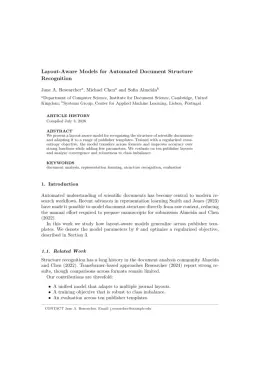
Toxicology Mechanisms and Methods template — frequently asked questions

How do I write a paper in the Toxicology Mechanisms and Methods format?
In DocuGuru you write your manuscript in a normal editor — no LaTeX setup required — and select the Toxicology Mechanisms and Methods template. When you export, DocuGuru compiles the paper into the official Taylor & Francis format and hands you a submission-ready PDF along with the editable LaTeX source.
What reference style does Toxicology Mechanisms and Methods use?
Toxicology Mechanisms and Methods uses Author–year (Chicago, T&F) references, shown as author–year markers such as (Smith, 2023) in the text. DocuGuru formats every in-text citation and the reference list in this exact style automatically. A reference appears like this: Smith, Ada, Ben Jones, and Cara Lee. 2023. "A Representative Article Title." Toxicology Mechanisms and Methods 12 (3): 45–58.
Do I need to know LaTeX to submit to Toxicology Mechanisms and Methods?
No. DocuGuru generates the interact LaTeX class and compiles the PDF for you in the background, so you get a Taylor & Francis-ready Toxicology Mechanisms and Methods document without writing any LaTeX. If you do want it, the LaTeX source is included in the export.
Can I import an existing draft into the Toxicology Mechanisms and Methods template?
Yes. Paste or upload your current manuscript — Word, LaTeX, Markdown, or plain text — and DocuGuru reflows it into the Toxicology Mechanisms and Methods format with correct headings, figures, tables, and author–year citations.
Who publishes Toxicology Mechanisms and Methods?
Toxicology Mechanisms and Methods is a multidisciplinary journal published by Taylor & Francis. DocuGuru's Toxicology Mechanisms and Methods template matches Taylor & Francis's official submission format.
Can I export a submission-ready Toxicology Mechanisms and Methods PDF?
Yes — DocuGuru produces a PDF built with the official Toxicology Mechanisms and Methods template (the interact class) that is ready to submit to Taylor & Francis, together with the matching LaTeX source files.
How much does the Toxicology Mechanisms and Methods template cost?
You can start writing in the Toxicology Mechanisms and Methods template for free. Exporting the final submission-ready Toxicology Mechanisms and Methods PDF and LaTeX source is part of DocuGuru's paid plans — see the app for current pricing.
Use the Toxicology Mechanisms and Methods template