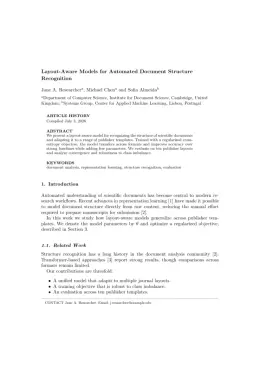
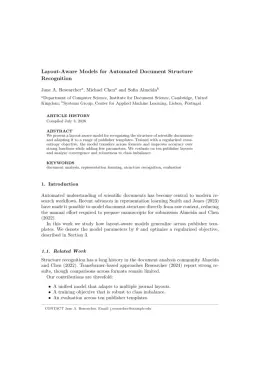
Taylor & Francis

Toxicology Communications Template

Write in a clean editor, then format for Toxicology Communications in one click — DocuGuru applies the official Taylor & Francis template with author–year references and exports a submission-ready PDF plus the editable LaTeX source. Free to start.

About the Toxicology Communications format

Toxicology Communications is a peer-reviewed journal published by Taylor & Francis, covering Poisoning and overdose treatments, Drug-Induced Hepatotoxicity and Protection, Pesticide Exposure and Toxicity.

PublisherTaylor & Francis
Reference styleAuthor–year (Chicago, T&F)
Author–year — (Smith, 2023) in the text
Smith, Ada, Ben Jones, and Cara Lee. 2023. "A Representative Article Title." Toxicology Communications 12 (3): 45–58.

Formats any DOI in Toxicology Communications style. No sign-up.

Publishes research inPoisoning and overdose treatments Drug-Induced Hepatotoxicity and Protection Pesticide Exposure and Toxicity Venomous Animal Envenomation and Studies Forensic Toxicology and Drug Analysis
ISSN2473-4306
Citation impact (2-yr)0.92
h-index17
i10-index30
Total citations1,161
Article processing charge$778
Open accessYes
Top institutions publishing hereWashington Poison Center
Journal websitewww.tandfonline.com
You getA submission-ready PDF and the editable LaTeX source — ready to submit.

Papers published in Toxicology Communications per year

15
2017
27
2018
24
2019
12
2020
30
2021
22
2022
26
2023
24
2024
31
2025

Citation impact of Toxicology Communications by publication year

151
2017
391
2018
192
2019
94
2020
139
2021
85
2022
41
2023
42
2024
13
2025

Citations each year’s papers have accumulated so far — the most recent years are still building up.

Most-cited papers in Toxicology Communications

Novichok agents: a historical, current, and toxicological perspective

Peter R. Chai, Bryan D. Hayes, Timothy B. Erickson et al. · 1 Jan 2018

The Novichok, or “newcomer” class of nerve agents are lesser characterized, weaponized organophosphate agents. The use of known Novichok agents in warfare is banned under the Chemical Weapons Convention of 1997. Novichok agents are considered more potent than VX gas and can be applied in unitary and binary forms. Like other nerve agents, Novichok agents…

Toxic chemical weapons of assassination and warfare: nerve agents VX and sarin

Peter R. Chai, Edward W. Boyer, Houssam Alnahhas et al. · 1 Jan 2017

The use of VX and sarin as weapons of assassination and warfare raises important considerations for healthcare professionals who may encounter victims, bystanders, and responders who require prompt assessment and treatment. Chemical warfare agents such as VX and sarin constitute a considerable threat to the health of the civilian population, military personnel, and peacekeeping forces.…

Revival of an antidote: bedside experience with physostigmine

Joseph J. Rasimas, Kamal K. Sachdeva, J. Ward Donovan · 1 Jan 2018

Anticholinergic activity is relevant for many medicinal and natural toxins. Delirium is a common consequence of toxicity. A direct antidote is available, but not often used. At one toxicology center, physostigmine continues to be employed in the emergency department and acute hospital setting. It is given 0.02 mg/kg IV at a rate of 0.5 mg/min…

Use of fomepizole as an adjunct in the treatment of acetaminophen overdose: a case series

Garrett Rampon, Haley Wartman, Stephen Osmon et al. · 25 Dec 2019

Acetaminophen toxicity remains a leading cause of acute liver failure in the United States and world-wide. Fomepizole is a cytochrome P450 inhibitor that may inhibit production of toxic metabolites of acetaminophen. However there are limited clinical data of its use for this purpose in the literature. Here we present a case series of six patients…

Survival after severe methemoglobinemia secondary to sodium nitrate ingestion

Maricel Dela Cruz, Joshua Glick, Seth H. Merker et al. · 1 Jan 2018

Sodium nitrate is used as a food preservative and color fixative. Sodium nitrate poisoning has occurred in the setting of well water contamination with nitrogenous waste runoff. Most clinically significant exposures result from improper labeling or unintentional use. We describe a case of severe methemoglobinemia associated with intentional sodium nitrate ingestion. A 23-year-old female presented…

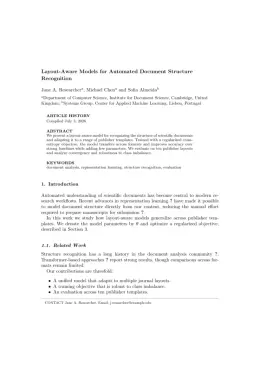
Toxicology Communications template — frequently asked questions

How do I write a paper in the Toxicology Communications format?
In DocuGuru you write your manuscript in a normal editor — no LaTeX setup required — and select the Toxicology Communications template. When you export, DocuGuru compiles the paper into the official Taylor & Francis format and hands you a submission-ready PDF along with the editable LaTeX source.
What reference style does Toxicology Communications use?
Toxicology Communications uses Author–year (Chicago, T&F) references, shown as author–year markers such as (Smith, 2023) in the text. DocuGuru formats every in-text citation and the reference list in this exact style automatically. A reference appears like this: Smith, Ada, Ben Jones, and Cara Lee. 2023. "A Representative Article Title." Toxicology Communications 12 (3): 45–58.
Do I need to know LaTeX to submit to Toxicology Communications?
No. DocuGuru generates the interact LaTeX class and compiles the PDF for you in the background, so you get a Taylor & Francis-ready Toxicology Communications document without writing any LaTeX. If you do want it, the LaTeX source is included in the export.
Can I import an existing draft into the Toxicology Communications template?
Yes. Paste or upload your current manuscript — Word, LaTeX, Markdown, or plain text — and DocuGuru reflows it into the Toxicology Communications format with correct headings, figures, tables, and author–year citations.
Who publishes Toxicology Communications?
Toxicology Communications is a multidisciplinary journal published by Taylor & Francis. DocuGuru's Toxicology Communications template matches Taylor & Francis's official submission format.
Can I export a submission-ready Toxicology Communications PDF?
Yes — DocuGuru produces a PDF built with the official Toxicology Communications template (the interact class) that is ready to submit to Taylor & Francis, together with the matching LaTeX source files.
How much does the Toxicology Communications template cost?
You can start writing in the Toxicology Communications template for free. Exporting the final submission-ready Toxicology Communications PDF and LaTeX source is part of DocuGuru's paid plans — see the app for current pricing.
Use the Toxicology Communications template