
418 citations
Cite
SaveGo to paper →
Taylor & Francis
The Journal of The American Paraplegia Society Template
Write in a clean editor, then format for The Journal of The American Paraplegia Society in one click — DocuGuru applies the official Taylor & Francis template with author–year references and exports a submission-ready PDF plus the editable LaTeX source. Free to start.
About the The Journal of The American Paraplegia Society format
The Journal of The American Paraplegia Society is a peer-reviewed journal published by Taylor & Francis, covering Spinal Cord Injury Research, Urinary Bladder and Prostate Research, Nerve Injury and Rehabilitation.
| Publisher | Taylor & Francis |
|---|---|
| Reference style | Author–year (Chicago, T&F) Author–year — (Smith, 2023) in the text Smith, Ada, Ben Jones, and Cara Lee. 2023. "A Representative Article Title." The Journal of The American Paraplegia Society 12 (3): 45–58.
Formats any DOI in The Journal of The American Paraplegia Society style. No sign-up. |
| Publishes research in | Spinal Cord Injury Research Urinary Bladder and Prostate Research Nerve Injury and Rehabilitation Cerebral Palsy and Movement Disorders Neurogenetic and Muscular Disorders Research |
| ISSN | 0195-2307 |
| h-index | 34 |
| i10-index | 96 |
| Total citations | 3,592 |
| Top institutions publishing here | Medical College of Wisconsin |
| Journal website | www.tandfonline.com |
| You get | A submission-ready PDF and the editable LaTeX source — ready to submit. |
Papers published in The Journal of The American Paraplegia Society per year
Citation impact of The Journal of The American Paraplegia Society by publication year
Citations each year’s papers have accumulated so far — the most recent years are still building up.
Most-cited papers in The Journal of The American Paraplegia Society
The Urinary Tract Infection Consensus Conference brought together researchers, clinicians, and consumers to arrive at consensus on the best practices for preventing and treating urinary tract infections in people with spinal cord injuries; the risk factors and diagnostic studies that should be done; indications for antibiotic use; appropriate follow-up management; and needed future research. Urinary…
179 citations
Cite
SaveGo to paper →
Autonomic hyperreflexia occurs in up to 85 percent of individuals with spinal cord injuries above the major splanchnic sympathetic outflow. In such cases, paroxysmal reflex sympathetic activity develops in response to noxious stimuli below the level of the neurologic lesion. The clinical features of autonomic hyperreflexia are due largely to reflex sympathetic adrenergic and cholinergic…
91 citations
Cite
SaveGo to paper →
The medical records of 88 patients followed through our spinal cord injury clinic were reviewed to determine if elevated intravesical pressures result in more urologic complications than are seen with low pressure bladders. Fifty-two of the patients were noted to have a high bladder pressure (sustained detrusor pressure greater than 40 cm water) on cystogram…
76 citations
Cite
SaveGo to paper →
In twenty-five SCI subjects, antispasticity effects of three putative antispasticity agents [clonidine (an alpha-2 noradrenergic agonist), cyproheptadine (a 5-HT2 antagonist) and baclofen (a GABA-B agonist)] were tested in terms of changes in leg tone as graded by the Ashworth scale (AS), in terms of the vibratory inhibition of the H-reflex (VII) and in terms of…
72 citations
Cite
SaveGo to paper →
Related journal templates
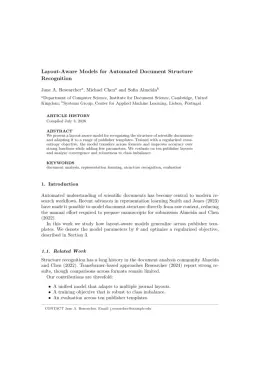 Journal of Computational and Graphical Statistics
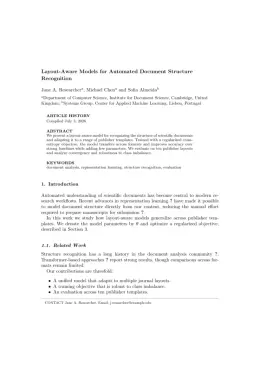 Journal of Experimental & Theoretical Artificial Intelligence
Journal of Intelligent Transportation Systems
Journal of Experimental & Theoretical Artificial Intelligence
Journal of Intelligent Transportation Systems
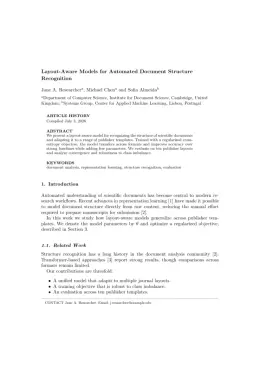 Journal of Modern Optics
Journal of Nonparametric Statistics
Journal of Nuclear Science and Technology
Journal of Quality Technology
Journal of Simulation
Journal of Modern Optics
Journal of Nonparametric Statistics
Journal of Nuclear Science and Technology
Journal of Quality Technology
Journal of Simulation
The Journal of The American Paraplegia Society template — frequently asked questions
How do I write a paper in the The Journal of The American Paraplegia Society format?
In DocuGuru you write your manuscript in a normal editor — no LaTeX setup required — and select the The Journal of The American Paraplegia Society template. When you export, DocuGuru compiles the paper into the official Taylor & Francis format and hands you a submission-ready PDF along with the editable LaTeX source.
What reference style does The Journal of The American Paraplegia Society use?
The Journal of The American Paraplegia Society uses Author–year (Chicago, T&F) references, shown as author–year markers such as (Smith, 2023) in the text. DocuGuru formats every in-text citation and the reference list in this exact style automatically. A reference appears like this: Smith, Ada, Ben Jones, and Cara Lee. 2023. "A Representative Article Title." The Journal of The American Paraplegia Society 12 (3): 45–58.
Do I need to know LaTeX to submit to The Journal of The American Paraplegia Society?
No. DocuGuru generates the interact LaTeX class and compiles the PDF for you in the background, so you get a Taylor & Francis-ready The Journal of The American Paraplegia Society document without writing any LaTeX. If you do want it, the LaTeX source is included in the export.
Can I import an existing draft into the The Journal of The American Paraplegia Society template?
Yes. Paste or upload your current manuscript — Word, LaTeX, Markdown, or plain text — and DocuGuru reflows it into the The Journal of The American Paraplegia Society format with correct headings, figures, tables, and author–year citations.
Who publishes The Journal of The American Paraplegia Society?
The Journal of The American Paraplegia Society is a multidisciplinary journal published by Taylor & Francis. DocuGuru's The Journal of The American Paraplegia Society template matches Taylor & Francis's official submission format.
Can I export a submission-ready The Journal of The American Paraplegia Society PDF?
Yes — DocuGuru produces a PDF built with the official The Journal of The American Paraplegia Society template (the interact class) that is ready to submit to Taylor & Francis, together with the matching LaTeX source files.
How much does the The Journal of The American Paraplegia Society template cost?
You can start writing in the The Journal of The American Paraplegia Society template for free. Exporting the final submission-ready The Journal of The American Paraplegia Society PDF and LaTeX source is part of DocuGuru's paid plans — see the app for current pricing.