Taylor & Francis

The International Journal of Aerospace Psychology Template

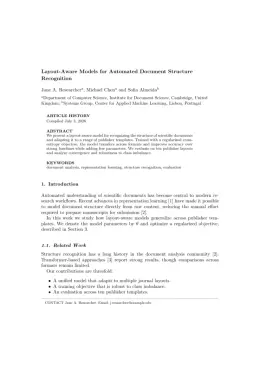
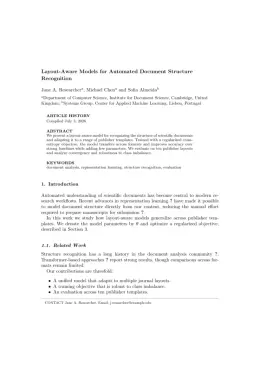
Write in a clean editor, then format for The International Journal of Aerospace Psychology in one click — DocuGuru applies the official Taylor & Francis template with author–year references and exports a submission-ready PDF plus the editable LaTeX source. Free to start.

About the The International Journal of Aerospace Psychology format

The International Journal of Aerospace Psychology is a peer-reviewed journal published by Taylor & Francis, covering Human-Automation Interaction and Safety, Occupational Health and Safety Research, Risk and Safety Analysis.

PublisherTaylor & Francis
Reference styleAuthor–year (Chicago, T&F)
Author–year — (Smith, 2023) in the text
Smith, Ada, Ben Jones, and Cara Lee. 2023. "A Representative Article Title." The International Journal of Aerospace Psychology 12 (3): 45–58.

Formats any DOI in The International Journal of Aerospace Psychology style. No sign-up.

Publishes research inHuman-Automation Interaction and Safety Occupational Health and Safety Research Risk and Safety Analysis Air Traffic Management and Optimization Aerospace and Aviation Technology
ISSN2472-1832
Citation impact (2-yr)1.7
h-index18
i10-index35
Total citations1,279
Top institutions publishing hereEmbry–Riddle Aeronautical University
Journal websitewww.tandfonline.com
You getA submission-ready PDF and the editable LaTeX source — ready to submit.

Papers published in The International Journal of Aerospace Psychology per year

13
2017
10
2018
10
2019
23
2020
24
2021
13
2022
21
2023
10
2024
9
2025

Citation impact of The International Journal of Aerospace Psychology by publication year

268
2017
216
2018
108
2019
199
2020
231
2021
97
2022
119
2023
25
2024
7
2025

Citations each year’s papers have accumulated so far — the most recent years are still building up.

Most-cited papers in The International Journal of Aerospace Psychology

Eye-Tracking Measures in Aviation: A Selective Literature Review

Sylvia Peißl, Christopher D. Wickens, Rithi Baruah · 27 Sep 2018

Objective: The aim of this article is to present a comprehensive review of eye-tracking measures and discuss different application areas of the method of eye tracking in the field of aviation.\n\nBackground: Psychophysiological measures such as eye tracking in pilots are useful for detecting fatigue or high-workload conditions, for investigating motion sickness and hypoxia, or for…

Pilot Flying and Pilot Monitoring’s Aircraft State Awareness During Go-Around Execution in Aviation: A Behavioral and Eye Tracking Study

Frédéric Dehais, Julia Behrend, Vsevolod Peysakhovich et al. · 3 Apr 2017

Objective: Examination of the performance and visual scanning of aircrews during final approach and an unexpected go-around maneuver.Background: Accident and incident analyses have revealed that go-around procedures are often imperfectly performed because of their complexity, their high time stress, and their rarity of occurrence that avails little time for practice. We wished to examine this…

Pilot Work Related Stress (WRS), Effects on Wellbeing and Mental Health, and Coping Methods

Joan Cahill, Paul Cullen, Sohaib Anwer et al. · 14 Jan 2021

Objective: The objective of this study is to investigate the relationship between sources of work-related stress (WRS) for pilots, effects on wellbeing, and coping mechanisms.Background: Recent studies have measured depression levels in pilots but not the relationship between depression levels and coping strategies.Methods: An anonymous web-based survey was conducted with commercial pilots.A regression model was…

The Influence of Surprise on Upset Recovery Performance in Airline Pilots

Annemarie Landman, Eric L. Groen, M. M. van Paassen et al. · 3 Apr 2017

Objective: The aim of this study was to test if performance of airline pilots, in performing an aerodynamic stall recovery procedure, decreases when they are surprised, compared to when they anticipate a stall event.Background: New flight-safety regulations for commercial aviation recommend the introduction of surprise and startle in upset prevention and recovery training. This calls…

Assessment of Augmented Reality Technology’s Impact on Speed of Learning and Task Performance in Aeronautical Engineering Technology Education

Kristoffer B. Borgen, Timothy Ropp, William T. Weldon · 19 Feb 2021

Objective: This study compared learning and skill transfer among university aviation students using interactive Augmented Reality (AR) technology versus traditional paper-based instruction. While similar AR use and research in university education exists, this study piloted a comparative method assessing knowledge retention and transfer.Background: AR technology is a popular tool used in technical education. But learner…

The International Journal of Aerospace Psychology template — frequently asked questions

How do I write a paper in the The International Journal of Aerospace Psychology format?
In DocuGuru you write your manuscript in a normal editor — no LaTeX setup required — and select the The International Journal of Aerospace Psychology template. When you export, DocuGuru compiles the paper into the official Taylor & Francis format and hands you a submission-ready PDF along with the editable LaTeX source.
What reference style does The International Journal of Aerospace Psychology use?
The International Journal of Aerospace Psychology uses Author–year (Chicago, T&F) references, shown as author–year markers such as (Smith, 2023) in the text. DocuGuru formats every in-text citation and the reference list in this exact style automatically. A reference appears like this: Smith, Ada, Ben Jones, and Cara Lee. 2023. "A Representative Article Title." The International Journal of Aerospace Psychology 12 (3): 45–58.
Do I need to know LaTeX to submit to The International Journal of Aerospace Psychology?
No. DocuGuru generates the interact LaTeX class and compiles the PDF for you in the background, so you get a Taylor & Francis-ready The International Journal of Aerospace Psychology document without writing any LaTeX. If you do want it, the LaTeX source is included in the export.
Can I import an existing draft into the The International Journal of Aerospace Psychology template?
Yes. Paste or upload your current manuscript — Word, LaTeX, Markdown, or plain text — and DocuGuru reflows it into the The International Journal of Aerospace Psychology format with correct headings, figures, tables, and author–year citations.
Who publishes The International Journal of Aerospace Psychology?
The International Journal of Aerospace Psychology is a multidisciplinary journal published by Taylor & Francis. DocuGuru's The International Journal of Aerospace Psychology template matches Taylor & Francis's official submission format.
Can I export a submission-ready The International Journal of Aerospace Psychology PDF?
Yes — DocuGuru produces a PDF built with the official The International Journal of Aerospace Psychology template (the interact class) that is ready to submit to Taylor & Francis, together with the matching LaTeX source files.
How much does the The International Journal of Aerospace Psychology template cost?
You can start writing in the The International Journal of Aerospace Psychology template for free. Exporting the final submission-ready The International Journal of Aerospace Psychology PDF and LaTeX source is part of DocuGuru's paid plans — see the app for current pricing.

Use the The International Journal of Aerospace Psychology template