Taylor & Francis

Temperature Template

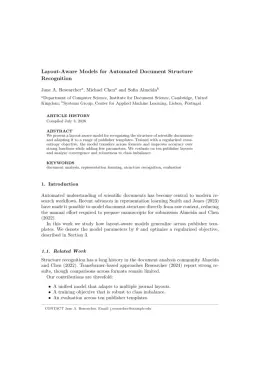
Write in a clean editor, then format for Temperature in one click — DocuGuru applies the official Taylor & Francis template with author–year references and exports a submission-ready PDF plus the editable LaTeX source. Free to start.

About the Temperature format

Temperature is a peer-reviewed journal published by Taylor & Francis, covering Thermoregulation and physiological responses, Exercise and Physiological Responses, Climate Change and Health Impacts.

PublisherTaylor & Francis
Reference styleAuthor–year (Chicago, T&F)
Author–year — (Smith, 2023) in the text
Smith, Ada, Ben Jones, and Cara Lee. 2023. "A Representative Article Title." Temperature 12 (3): 45–58.

Formats any DOI in Temperature style. No sign-up.

Publishes research inThermoregulation and physiological responses Exercise and Physiological Responses Climate Change and Health Impacts Infrared Thermography in Medicine Adipose Tissue and Metabolism
ISSN2332-8940
Citation impact (2-yr)3.56
h-index60
i10-index256
Total citations13,907
Top institutions publishing hereUniversity of Ottawa
Journal websitewww.tandfonline.com
You getA submission-ready PDF and the editable LaTeX source — ready to submit.

Papers published in Temperature per year

60
2014
94
2015
75
2016
58
2017
36
2018
32
2019
41
2020
27
2021
41
2022
22
2023
34
2024
33
2025

Citation impact of Temperature by publication year

1.3K
2014
2.4K
2015
2K
2016
2.3K
2017
824
2018
1.6K
2019
1.7K
2020
552
2021
733
2022
124
2023
224
2024
48
2025

Citations each year’s papers have accumulated so far — the most recent years are still building up.

Most-cited papers in Temperature

Physiology of sweat gland function: The roles of sweating and sweat composition in human health

Lindsay B. Baker · 15 Jun 2019

The purpose of this comprehensive review is to: 1) review the physiology of sweat gland function and mechanisms determining the amount and composition of sweat excreted onto the skin surface; 2) provide an overview of the well-established thermoregulatory functions and adaptive responses of the sweat gland; and 3) discuss the state of evidence for potential…

Effects of temperature on feeding and digestive processes in fish

Hélène Volkoff, Ivar Rønnestad · 8 May 2020

. variations in metabolic and digestive enzyme profiles. The goal of this review is to summarize our current knowledge on the effects of temperature on energy homeostasis, with specific focus on metabolism, feeding, digestion, and how fish are often able to "adapt" to changing environments through phenotypic and physiological changes.

Rapid responses of plants to temperature changes

Catarina Carvalho Nievola, Camila Pereira Carvalho, Victória Carvalho et al. · 28 Sep 2017

Temperature is one of the main environmental factors that affect plant metabolism. Considering that plants are sessile, their survival depends on the efficient activation of resistance responses to thermal stress. In this comprehensive review, we discuss recent work on rapid biochemical and physiological adjustments, herein referred to as those occurring during the first few hours…

Body temperature regulation in diabetes

Glen P. Kenny, Ronald J. Sigal, Ryan McGinn · 2 Jan 2016

The effects of type 1 and type 2 diabetes on the body's physiological response to thermal stress is a relatively new topic in research. Diabetes tends to place individuals at greater risk for heat-related illness during heat waves and physical activity due to an impaired capacity to dissipate heat. Specifically, individuals with diabetes have been…

Temperature regulation in women: Effects of the menstrual cycle

Fiona C. Baker, Felicia T. Siboza, Andrea Fuller · 22 Mar 2020

Core body temperature changes across the ovulatory menstrual cycle, such that it is 0.3°C to 0.7°C higher in the post-ovulatory luteal phase when progesterone is high compared with the pre-ovulatory follicular phase. This temperature difference, which is most evident during sleep or immediately upon waking before any activity, is used by women as a retrospective…

Temperature template — frequently asked questions

How do I write a paper in the Temperature format?
In DocuGuru you write your manuscript in a normal editor — no LaTeX setup required — and select the Temperature template. When you export, DocuGuru compiles the paper into the official Taylor & Francis format and hands you a submission-ready PDF along with the editable LaTeX source.
What reference style does Temperature use?
Temperature uses Author–year (Chicago, T&F) references, shown as author–year markers such as (Smith, 2023) in the text. DocuGuru formats every in-text citation and the reference list in this exact style automatically. A reference appears like this: Smith, Ada, Ben Jones, and Cara Lee. 2023. "A Representative Article Title." Temperature 12 (3): 45–58.
Do I need to know LaTeX to submit to Temperature?
No. DocuGuru generates the interact LaTeX class and compiles the PDF for you in the background, so you get a Taylor & Francis-ready Temperature document without writing any LaTeX. If you do want it, the LaTeX source is included in the export.
Can I import an existing draft into the Temperature template?
Yes. Paste or upload your current manuscript — Word, LaTeX, Markdown, or plain text — and DocuGuru reflows it into the Temperature format with correct headings, figures, tables, and author–year citations.
Who publishes Temperature?
Temperature is a multidisciplinary journal published by Taylor & Francis. DocuGuru's Temperature template matches Taylor & Francis's official submission format.
Can I export a submission-ready Temperature PDF?
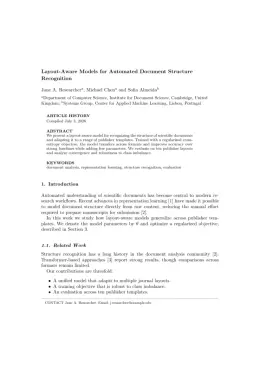
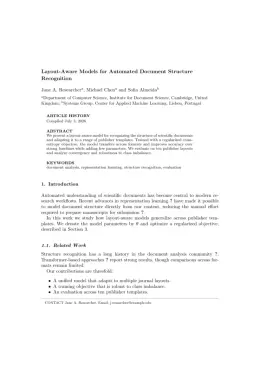
Yes — DocuGuru produces a PDF built with the official Temperature template (the interact class) that is ready to submit to Taylor & Francis, together with the matching LaTeX source files.
How much does the Temperature template cost?
You can start writing in the Temperature template for free. Exporting the final submission-ready Temperature PDF and LaTeX source is part of DocuGuru's paid plans — see the app for current pricing.
Use the Temperature template