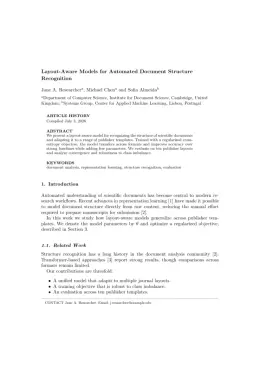
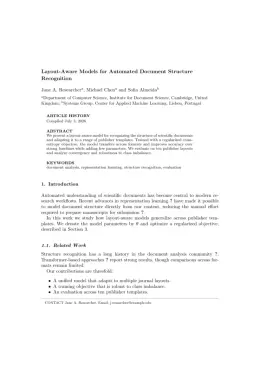
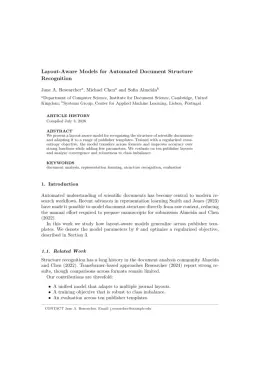
About the Stochastics format
Stochastics is a peer-reviewed journal published by Taylor & Francis, covering Stochastic processes and financial applications, Financial Risk and Volatility Modeling, Stochastic processes and statistical mechanics.
| Publisher | Taylor & Francis |
|---|
| Reference style | Author–year (Chicago, T&F) Author–year — (Smith, 2023) in the text
Smith, Ada, Ben Jones, and Cara Lee. 2023. "A Representative Article Title." Stochastics 12 (3): 45–58.
Formats any DOI in Stochastics style. No sign-up.
|
|---|
| Publishes research in | Stochastic processes and financial applications Financial Risk and Volatility Modeling Stochastic processes and statistical mechanics Probability and Risk Models Insurance, Mortality, Demography, Risk Management |
|---|
| ISSN | 1744-2508 |
|---|
| Citation impact (2-yr) | 1.06 |
|---|
| h-index | 39 |
|---|
| i10-index | 251 |
|---|
| Total citations | 9,209 |
|---|
| Top institutions publishing here | University of Oslo |
|---|
| Journal website | www.tandfonline.com |
|---|
| You get | A submission-ready PDF and the editable LaTeX source — ready to submit. |
|---|
Papers published in Stochastics per year
Citation impact of Stochastics by publication year
Citations each year’s papers have accumulated so far — the most recent years are still building up.
Most-cited papers in Stochastics
Risk minimizing portfolios and HJBI equations for stochastic differential games
Sure Mataramvura, Bernt Øksendal · 21 Jun 2008
In this paper, we consider the problem to find a market portfolio that minimizes the convex risk measure of the terminal wealth in a jump diffusion market. We formulate the problem as a two player (zero-sum) stochastic differential game. To help us find a solution, we prove a theorem giving the Hamilton–Jacobi–Bellman–Isaacs (HJBI) conditions for…
A mean-field stochastic maximum principle via Malliavin calculus
Thilo Meyer‐Brandis, Bernt Øksendal, Xun Yu Zhou · 10 Feb 2012
This paper considers a mean-field type stochastic control problem where the dynamics is governed by a controlled Itô–Lévy process and the information available to the controller is possibly less than the overall information. All the system coefficients and the objective performance functional are allowed to be random, possibly non-Markovian. Malliavin calculus is employed to derive…
The stochastic Fubini theorem revisited
Mark Veraar · 4 Nov 2011
Abstract. In this note we present an elementary and self-contained proof of the stochastic Fubini theorem, which states that one can interchange a Lebesgue integral and a stochastic integral. The integrability conditions we use are weaker and more natural than the usual conditions in the literature. In particular, we do not need integrability in Ω,…
Some properties of the sub-fractional Brownian motion
Constantin Tudor · 22 Dec 2006
We study several properties of the sub-fractional Brownian motion (fBm) introduced by Bojdecki et al. related to those of the fBm. This process is a self-similar Gaussian process depending on a parameter H ∈ (0, 2) with non stationary increments and is a generalization of the Brownian motion (Bm). The strong variation of the indefinite…
Strong convergence rates for backward Euler–Maruyama method for non-linear dissipative-type stochastic differential equations with super-linear diffusion coefficients
Xuerong Mao, Łukasz Szpruch · 10 Feb 2012
In this work, we generalize the current theory of strong convergence rates for the backward Euler–Maruyama scheme for highly non-linear stochastic differential equations, which appear in both mathematical finance and bio-mathematics. More precisely, we show that under a dissipative condition on the drift coefficient and super-linear growth condition on the diffusion coefficient the BEM scheme…