Taylor & Francis

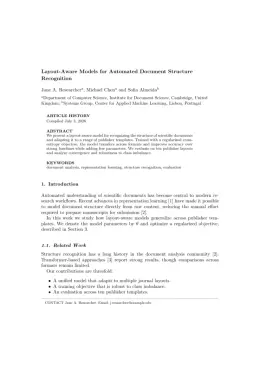
Soft Materials Template

Write in a clean editor, then format for Soft Materials in one click — DocuGuru applies the official Taylor & Francis template with author–year references and exports a submission-ready PDF plus the editable LaTeX source. Free to start.

About the Soft Materials format

Soft Materials is a peer-reviewed journal published by Taylor & Francis, covering Hydrogels: synthesis, properties, applications, Surfactants and Colloidal Systems, Liquid Crystal Research Advancements.

PublisherTaylor & Francis
Reference styleAuthor–year (Chicago, T&F)
Author–year — (Smith, 2023) in the text
Smith, Ada, Ben Jones, and Cara Lee. 2023. "A Representative Article Title." Soft Materials 12 (3): 45–58.

Formats any DOI in Soft Materials style. No sign-up.

Publishes research inHydrogels: synthesis, properties, applications Surfactants and Colloidal Systems Liquid Crystal Research Advancements Polymer Nanocomposites and Properties Advanced Sensor and Energy Harvesting Materials
ISSN1539-445X
Citation impact (2-yr)1.22
h-index37
i10-index272
Total citations8,970
Top institutions publishing hereSichuan University
Journal websitewww.tandfonline.com
You getA submission-ready PDF and the editable LaTeX source — ready to submit.

Papers published in Soft Materials per year

50
2014
36
2015
44
2016
31
2017
35
2018
50
2019
60
2020
43
2021
25
2022
30
2023
24
2024
10
2025

Citation impact of Soft Materials by publication year

641
2014
406
2015
509
2016
273
2017
518
2018
678
2019
501
2020
250
2021
161
2022
103
2023
36
2024
7
2025

Citations each year’s papers have accumulated so far — the most recent years are still building up.

Most-cited papers in Soft Materials

Influence of Processing Conditions on Polymorphism and Nanofiber Morphology of Electroactive Poly(vinylidene fluoride) Electrospun Membranes

Clarisse Ribeiro, Vítor Sencadas, José Luís Gómez Ribelles et al. · 29 Aug 2010

Poly(vinylidene fluoride) (PVDF) electrospun membranes are obtained from a 20% w/w solution of the polymer in dimethyl formamide. Processing parameters are systematically changed to analyze their influence on fiber morphology, fiber orientation, and on the crystallinity and crystal phase of the membranes. The PVDF concentration and travelling distance from the needle to the collector are…

Formation of Concentrated Nanoemulsions by Extreme Shear

Kieche Meleson, Sara M. Graves, Thomas G. Mason · 1 May 2004

Abstract We have systematically investigated the production of “nanoemulsions,” droplets of one liquid phase in another immiscible liquid phase that have diameters less than 100 nm. Our approach relies on a combination of extreme shear due to multipass, high‐pressure microfluidic injection and systematic control of the emulsion's composition. By repeatedly shearing a silicone oil‐in‐water emulsion…

Bigels: A unique class of materials for drug delivery applications

Ahmad Shakeel, Francesca R. Lupi, Domenico Gabriele et al. · 8 Jan 2018

Bigels, combination of organogel and hydrogel, are unique solid-like formulations with improved properties for food, cosmetics, and pharmaceutical applications. Bigel possesses merits of both phases, aqueous and oily, and displays better properties than either of the single gel. The uniqueness of bigels comes from their ability to deliver both hydrophilic and lipophilic active agents, enrichment…

Organogels as Matrices for Controlled Drug Delivery: A Review on the Current State

Sai Sateesh Sagiri, Beauty Behera, Ruby Rafanan et al. · 25 Apr 2013

Over the last two decades, organogels have found tremendous use in the pharmaceutical, food, and cosmetics industries with notable developments as drug delivery matrices and trans and saturated fat replacers in processed foods. The functionality of organogels benefits from their ease of preparation, cost effectiveness, and ability to contain both hydrophilic and lipophilic constituents. This…

Controlling the surface structure, mechanical properties, crystallinity, and piezoelectric properties of electrospun PVDF nanofibers by maneuvering molecular weight

Bilal Zaarour, Lei Zhu, Xiangyu Jin · 22 Feb 2019

Polyvinylidene fluoride (PVDF) is a significant polymer in the formation of nanofiber webs via the electrospinning technique. In this paper, three PVDF-wrinkled fiber webs with different molecular weights (MWs) (180000, 275000, and 530000) were generated via the electrospinning method by using tetrahydrofuran/N,N-dimethylformamide at the solvent ratio of 1:1 as a mixed solvent. The formation mechanism…

Soft Materials template — frequently asked questions

How do I write a paper in the Soft Materials format?
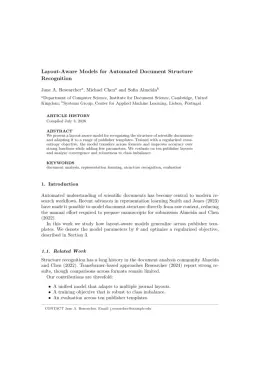
In DocuGuru you write your manuscript in a normal editor — no LaTeX setup required — and select the Soft Materials template. When you export, DocuGuru compiles the paper into the official Taylor & Francis format and hands you a submission-ready PDF along with the editable LaTeX source.
What reference style does Soft Materials use?
Soft Materials uses Author–year (Chicago, T&F) references, shown as author–year markers such as (Smith, 2023) in the text. DocuGuru formats every in-text citation and the reference list in this exact style automatically. A reference appears like this: Smith, Ada, Ben Jones, and Cara Lee. 2023. "A Representative Article Title." Soft Materials 12 (3): 45–58.
Do I need to know LaTeX to submit to Soft Materials?
No. DocuGuru generates the interact LaTeX class and compiles the PDF for you in the background, so you get a Taylor & Francis-ready Soft Materials document without writing any LaTeX. If you do want it, the LaTeX source is included in the export.
Can I import an existing draft into the Soft Materials template?
Yes. Paste or upload your current manuscript — Word, LaTeX, Markdown, or plain text — and DocuGuru reflows it into the Soft Materials format with correct headings, figures, tables, and author–year citations.
Who publishes Soft Materials?
Soft Materials is a multidisciplinary journal published by Taylor & Francis. DocuGuru's Soft Materials template matches Taylor & Francis's official submission format.
Can I export a submission-ready Soft Materials PDF?
Yes — DocuGuru produces a PDF built with the official Soft Materials template (the interact class) that is ready to submit to Taylor & Francis, together with the matching LaTeX source files.
How much does the Soft Materials template cost?
You can start writing in the Soft Materials template for free. Exporting the final submission-ready Soft Materials PDF and LaTeX source is part of DocuGuru's paid plans — see the app for current pricing.
Use the Soft Materials template