
144 citations
Cite
SaveGo to paper →
Taylor & Francis
Slavonica Template
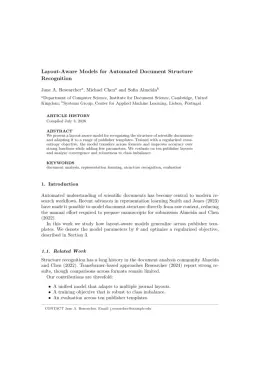
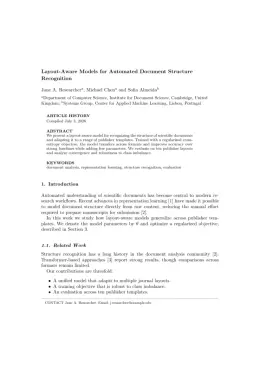
Write in a clean editor, then format for Slavonica in one click — DocuGuru applies the official Taylor & Francis template with author–year references and exports a submission-ready PDF plus the editable LaTeX source. Free to start.
About the Slavonica format
Slavonica is a peer-reviewed journal published by Taylor & Francis, covering Eastern European Communism and Reforms, Soviet and Russian History, Russian Literature and Bakhtin Studies.
| Publisher | Taylor & Francis |
|---|---|
| Reference style | Author–year (Chicago, T&F) Author–year — (Smith, 2023) in the text Smith, Ada, Ben Jones, and Cara Lee. 2023. "A Representative Article Title." Slavonica 12 (3): 45–58.
Formats any DOI in Slavonica style. No sign-up. |
| Publishes research in | Eastern European Communism and Reforms Soviet and Russian History Russian Literature and Bakhtin Studies Historical Geopolitical and Social Dynamics Discourse Analysis and Cultural Communication |
| ISSN | 1361-7427 |
| Citation impact (2-yr) | 0.12 |
| h-index | 11 |
| i10-index | 14 |
| Total citations | 750 |
| Top institutions publishing here | University of Glasgow |
| Journal website | www.tandfonline.com |
| You get | A submission-ready PDF and the editable LaTeX source — ready to submit. |
Papers published in Slavonica per year
Citation impact of Slavonica by publication year
Citations each year’s papers have accumulated so far — the most recent years are still building up.
Most-cited papers in Slavonica
A critical exploration is provided of the path and building metaphors used in the speeches of the former Russian president Vladimir Putin. We use the concepts of 'discourse metaphor' and 'frame' in our analysis of a corpus of Putin's speeches written and delivered between 2000 and 2007 in order to reveal the rhetorical strategies employed…
52 citations
Cite
SaveGo to paper →
My main thesis can be formulated as follows: accounts of the traumatic presence of the Soviet past in present-day Russia — descriptions that rely on analytical frameworks based in claims concerning the masses' post-Soviet nostalgia and the restoration efforts of the political powers-that-be, which supports and guides this nostalgia — are becoming less and less…
51 citations
Cite
SaveGo to paper →
(2003). Inventing Andrei: Soviet and Post-Soviet Views of Andrei Rublev and his Trinity Icon. Slavonica: Vol. 9, No. 2, pp. 83-90.
30 citations
Cite
SaveGo to paper →
AbstractSocialist realism, introduced to the East German architectural establishment as their nation's new design culture in 1950, brought with it much more than just the USSR's Stalin-era aesthetic. It presented new models of cultural authority, expectations of architects as socialist role models, and innovative systems of reward and discipline — all of these managed by…
18 citations
Cite
SaveGo to paper →
Related journal templates
Slavonica template — frequently asked questions
How do I write a paper in the Slavonica format?
In DocuGuru you write your manuscript in a normal editor — no LaTeX setup required — and select the Slavonica template. When you export, DocuGuru compiles the paper into the official Taylor & Francis format and hands you a submission-ready PDF along with the editable LaTeX source.
What reference style does Slavonica use?
Slavonica uses Author–year (Chicago, T&F) references, shown as author–year markers such as (Smith, 2023) in the text. DocuGuru formats every in-text citation and the reference list in this exact style automatically. A reference appears like this: Smith, Ada, Ben Jones, and Cara Lee. 2023. "A Representative Article Title." Slavonica 12 (3): 45–58.
Do I need to know LaTeX to submit to Slavonica?
No. DocuGuru generates the interact LaTeX class and compiles the PDF for you in the background, so you get a Taylor & Francis-ready Slavonica document without writing any LaTeX. If you do want it, the LaTeX source is included in the export.
Can I import an existing draft into the Slavonica template?
Yes. Paste or upload your current manuscript — Word, LaTeX, Markdown, or plain text — and DocuGuru reflows it into the Slavonica format with correct headings, figures, tables, and author–year citations.
Who publishes Slavonica?
Slavonica is a multidisciplinary journal published by Taylor & Francis. DocuGuru's Slavonica template matches Taylor & Francis's official submission format.
Can I export a submission-ready Slavonica PDF?
Yes — DocuGuru produces a PDF built with the official Slavonica template (the interact class) that is ready to submit to Taylor & Francis, together with the matching LaTeX source files.
How much does the Slavonica template cost?
You can start writing in the Slavonica template for free. Exporting the final submission-ready Slavonica PDF and LaTeX source is part of DocuGuru's paid plans — see the app for current pricing.