Taylor & Francis

Receptors and Channels Template

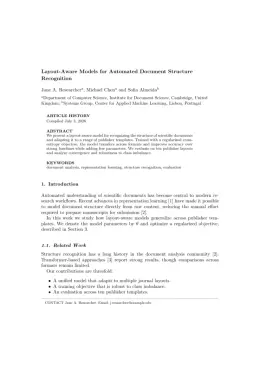
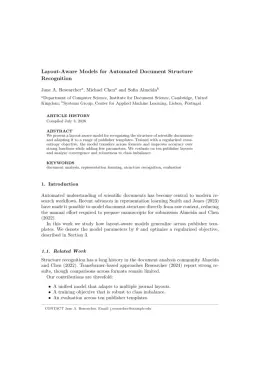
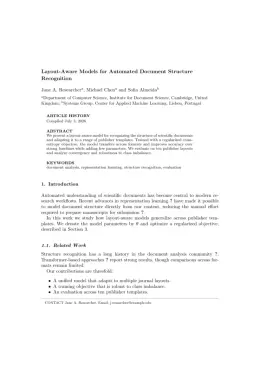
Write in a clean editor, then format for Receptors and Channels in one click — DocuGuru applies the official Taylor & Francis template with author–year references and exports a submission-ready PDF plus the editable LaTeX source. Free to start.

About the Receptors and Channels format

Receptors and Channels is a peer-reviewed journal published by Taylor & Francis, covering Receptor Mechanisms and Signaling, Ion channel regulation and function, Neuropeptides and Animal Physiology.

PublisherTaylor & Francis
Reference styleAuthor–year (Chicago, T&F)
Author–year — (Smith, 2023) in the text
Smith, Ada, Ben Jones, and Cara Lee. 2023. "A Representative Article Title." Receptors and Channels 12 (3): 45–58.

Formats any DOI in Receptors and Channels style. No sign-up.

Publishes research inReceptor Mechanisms and Signaling Ion channel regulation and function Neuropeptides and Animal Physiology Neuroscience and Neural Engineering Cardiac electrophysiology and arrhythmias
ISSN1060-6823
h-index39
i10-index100
Total citations4,541
Top institutions publishing hereGlaxoSmithKline (United States)
Journal websitewww.tandfonline.com
You getA submission-ready PDF and the editable LaTeX source — ready to submit.

Papers published in Receptors and Channels per year

1
1994
64
2002
68
2003
33
2004

Citation impact of Receptors and Channels by publication year

8
1994
2.3K
2002
1.8K
2003
470
2004

Citations each year’s papers have accumulated so far — the most recent years are still building up.

Most-cited papers in Receptors and Channels

VPAC Receptors for VIP and PACAP

Marc Laburthe, Alain Couvineau, Jean‐Claude Marie · 1 Jan 2002

VIP and PACAP are two prominent neuropeptides that share two common G protein-coupled receptors, VPAC1 and VPAC2, while PACAP has an additional specific receptor, PAC1. This article reviews the present knowledge regarding various aspects of VPAC receptors including: 1) receptor specificity toward natural VIP-related peptides and pharmacology of synthetic agonists or antagonists; 2) genomic organization…

Structure-Function of the Glucagon Receptor Family of G Protein-Coupled Receptors: The Glucagon, GIP, GLP-1, and GLP-2 Receptors

Patricia L. Brubaker, Daniel J. Drucker · 1 Jan 2002

The glucagon-like peptides include glucagon, GLP-1, and GLP-2, and exert diverse actions on nutrient intake, gastrointestinal motility, islet hormone secretion, cell proliferation and apoptosis, nutrient absorption, and nutrient assimilation. GIP, a related member of the glucagon peptide superfamily, also regulates nutrient disposal via stimulation of insulin secretion. The actions of these peptides are mediated by…

Cellular Signaling Mechanisms for Muscarinic Acetylcholine Receptors

Alfred Lanzafame, Arthur Christopoulos, F. Mitchelson · 1 Jan 2003

Signaling pathways for muscarinic acetylcholine receptors (mAChRs) include several enzymes and ion channels. Recent studies have revealed the importance of various isoforms of both alpha and betagamma subunits of G proteins in initiation of signaling as well as the role of the small monomeric G protein, Rho, in the activation of phospholipase D. Modulation of…

Receptors and Channels template — frequently asked questions

How do I write a paper in the Receptors and Channels format?
In DocuGuru you write your manuscript in a normal editor — no LaTeX setup required — and select the Receptors and Channels template. When you export, DocuGuru compiles the paper into the official Taylor & Francis format and hands you a submission-ready PDF along with the editable LaTeX source.
What reference style does Receptors and Channels use?
Receptors and Channels uses Author–year (Chicago, T&F) references, shown as author–year markers such as (Smith, 2023) in the text. DocuGuru formats every in-text citation and the reference list in this exact style automatically. A reference appears like this: Smith, Ada, Ben Jones, and Cara Lee. 2023. "A Representative Article Title." Receptors and Channels 12 (3): 45–58.
Do I need to know LaTeX to submit to Receptors and Channels?
No. DocuGuru generates the interact LaTeX class and compiles the PDF for you in the background, so you get a Taylor & Francis-ready Receptors and Channels document without writing any LaTeX. If you do want it, the LaTeX source is included in the export.
Can I import an existing draft into the Receptors and Channels template?
Yes. Paste or upload your current manuscript — Word, LaTeX, Markdown, or plain text — and DocuGuru reflows it into the Receptors and Channels format with correct headings, figures, tables, and author–year citations.
Who publishes Receptors and Channels?
Receptors and Channels is a multidisciplinary journal published by Taylor & Francis. DocuGuru's Receptors and Channels template matches Taylor & Francis's official submission format.
Can I export a submission-ready Receptors and Channels PDF?
Yes — DocuGuru produces a PDF built with the official Receptors and Channels template (the interact class) that is ready to submit to Taylor & Francis, together with the matching LaTeX source files.
How much does the Receptors and Channels template cost?
You can start writing in the Receptors and Channels template for free. Exporting the final submission-ready Receptors and Channels PDF and LaTeX source is part of DocuGuru's paid plans — see the app for current pricing.

Use the Receptors and Channels template