Taylor & Francis

Radiation effects and defects in solids Template

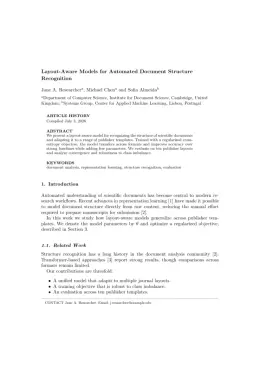
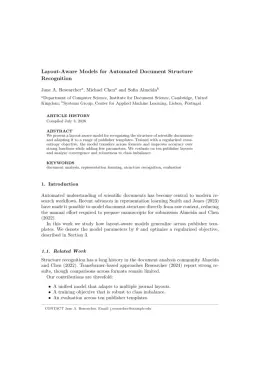
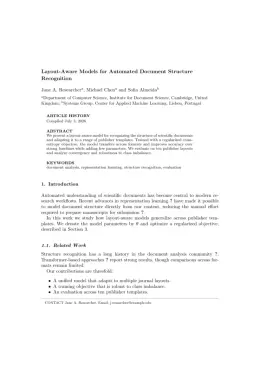
Write in a clean editor, then format for Radiation effects and defects in solids in one click — DocuGuru applies the official Taylor & Francis template with author–year references and exports a submission-ready PDF plus the editable LaTeX source. Free to start.

About the Radiation effects and defects in solids format

Radiation effects and defects in solids is a peer-reviewed journal published by Taylor & Francis, covering Ion-surface interactions and analysis, Luminescence Properties of Advanced Materials, Glass properties and applications.

PublisherTaylor & Francis
Reference styleAuthor–year (Chicago, T&F)
Author–year — (Smith, 2023) in the text
Smith, Ada, Ben Jones, and Cara Lee. 2023. "A Representative Article Title." Radiation effects and defects in solids 12 (3): 45–58.

Formats any DOI in Radiation effects and defects in solids style. No sign-up.

Publishes research inIon-surface interactions and analysis Luminescence Properties of Advanced Materials Glass properties and applications Solid-state spectroscopy and crystallography Polymer Nanocomposite Synthesis and Irradiation
ISSN1026-549X
Citation impact (2-yr)1.78
h-index50
i10-index861
Total citations29,417
Top institutions publishing hereUniversity of Messina
Journal websitewww.tandfonline.com
You getA submission-ready PDF and the editable LaTeX source — ready to submit.

Papers published in Radiation effects and defects in solids per year

76
2014
98
2015
94
2016
100
2017
109
2018
98
2019
112
2020
73
2021
117
2022
110
2023
172
2024
157
2025

Citation impact of Radiation effects and defects in solids by publication year

625
2014
482
2015
695
2016
676
2017
898
2018
768
2019
554
2020
371
2021
477
2022
420
2023
545
2024
179
2025

Citations each year’s papers have accumulated so far — the most recent years are still building up.

Most-cited papers in Radiation effects and defects in solids

Recent progress in understanding reactor pressure vessel steel embrittlement

G.R. Odette, G.E. Lucas · 1 Jun 1998

Abstract This paper reviews the current understanding of the basic mechanisms of irradiation embrittlement in reactor pressure vessel steels. Radiation enhanced diffusiona at operating temperatures around 290°C leads to the formation of various ultrafine scale hardening phases, including copper rich and copper catalysed manganese-nickel rich precipitates. Other nanofeatures that do not require copper, so-called matrix…

Materials modification by electronic excitation

N. Itoh, A. M. Stoneham · 1 Nov 2001

Abstract Excitonic mechanisms of defect formation and of sputtering from surfaces, induced as a consequence of exciton relaxation, are effective in a limited class of wide-gap materials, such as alkali halides, alkaline earth fluorides and fused quartz. In this paper, we point out that modification by electronic excitation can be achieved in a far wider…

Carbonaceous clusters in irradiated polymers as revealed by UV-Vis spectrometry

D. Fink, W. H. Chung, R. Klett et al. · 1 Jun 1995

Abstract Carbonaceous clusters-supposed to be the carriers of electric conductivity-are formed along latent tracks of energetic ions in polymers. The different experimental techniques for cluster determination are summarized. Here we present some new results which have been derived from UV-Vis spectrometric examinations. Especially the initial phase of cluster growth is studied in detail. There are…

Thermal spike model in the electronic stopping power regime

M. Toulemonde, E. Paumier, C. Dufour · 1 Mar 1993

Abstract Two models have been proposed in order to explain the appearance of latent tracks induced in matter by the slowing down process of ions in the electronic stopping power regime. The first one was the thermal spike proposed by Desauer and reconsidered for metals by Seitz and Koehler. The second one was the ionic…

Radiation effects and defects in solids template — frequently asked questions

How do I write a paper in the Radiation effects and defects in solids format?
In DocuGuru you write your manuscript in a normal editor — no LaTeX setup required — and select the Radiation effects and defects in solids template. When you export, DocuGuru compiles the paper into the official Taylor & Francis format and hands you a submission-ready PDF along with the editable LaTeX source.
What reference style does Radiation effects and defects in solids use?
Radiation effects and defects in solids uses Author–year (Chicago, T&F) references, shown as author–year markers such as (Smith, 2023) in the text. DocuGuru formats every in-text citation and the reference list in this exact style automatically. A reference appears like this: Smith, Ada, Ben Jones, and Cara Lee. 2023. "A Representative Article Title." Radiation effects and defects in solids 12 (3): 45–58.
Do I need to know LaTeX to submit to Radiation effects and defects in solids?
No. DocuGuru generates the interact LaTeX class and compiles the PDF for you in the background, so you get a Taylor & Francis-ready Radiation effects and defects in solids document without writing any LaTeX. If you do want it, the LaTeX source is included in the export.
Can I import an existing draft into the Radiation effects and defects in solids template?
Yes. Paste or upload your current manuscript — Word, LaTeX, Markdown, or plain text — and DocuGuru reflows it into the Radiation effects and defects in solids format with correct headings, figures, tables, and author–year citations.
Who publishes Radiation effects and defects in solids?
Radiation effects and defects in solids is a multidisciplinary journal published by Taylor & Francis. DocuGuru's Radiation effects and defects in solids template matches Taylor & Francis's official submission format.
Can I export a submission-ready Radiation effects and defects in solids PDF?
Yes — DocuGuru produces a PDF built with the official Radiation effects and defects in solids template (the interact class) that is ready to submit to Taylor & Francis, together with the matching LaTeX source files.
How much does the Radiation effects and defects in solids template cost?
You can start writing in the Radiation effects and defects in solids template for free. Exporting the final submission-ready Radiation effects and defects in solids PDF and LaTeX source is part of DocuGuru's paid plans — see the app for current pricing.

Use the Radiation effects and defects in solids template