Taylor & Francis

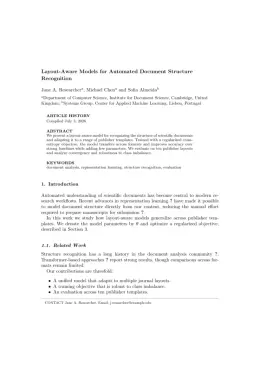
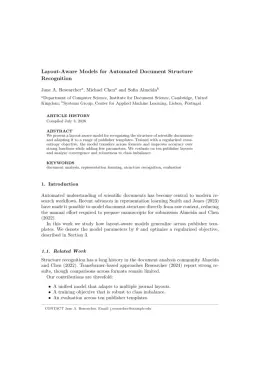
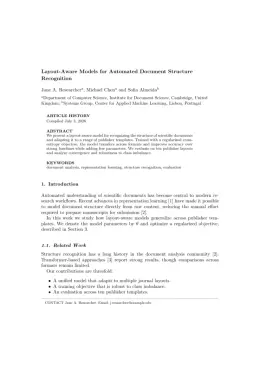
Psychological Inquiry Template

Write in a clean editor, then format for Psychological Inquiry in one click — DocuGuru applies the official Taylor & Francis template with author–year references and exports a submission-ready PDF plus the editable LaTeX source. Free to start.

About the Psychological Inquiry format

Psychological Inquiry is a peer-reviewed journal published by Taylor & Francis, covering Social and Intergroup Psychology, Cultural Differences and Values, Psychology of Moral and Emotional Judgment.

PublisherTaylor & Francis
Reference styleAuthor–year (Chicago, T&F)
Author–year — (Smith, 2023) in the text
Smith, Ada, Ben Jones, and Cara Lee. 2023. "A Representative Article Title." Psychological Inquiry 12 (3): 45–58.

Formats any DOI in Psychological Inquiry style. No sign-up.

Publishes research inSocial and Intergroup Psychology Cultural Differences and Values Psychology of Moral and Emotional Judgment Mental Health Research Topics Academic and Historical Perspectives in Psychology
ISSN1047-840X
Citation impact (2-yr)1.08
h-index139
i10-index745
Total citations143,104
Top institutions publishing hereNorthwestern University
Journal websitewww.tandf.co.uk
You getA submission-ready PDF and the editable LaTeX source — ready to submit.

Papers published in Psychological Inquiry per year

50
2014
47
2015
54
2016
44
2017
31
2018
33
2019
45
2020
42
2021
38
2022
40
2023
40
2024
41
2025

Citation impact of Psychological Inquiry by publication year

1.7K
2014
8.6K
2015
1.9K
2016
1.9K
2017
682
2018
392
2019
1.9K
2020
355
2021
210
2022
154
2023
55
2024
38
2025

Citations each year’s papers have accumulated so far — the most recent years are still building up.

Most-cited papers in Psychological Inquiry

The "What" and "Why" of Goal Pursuits: Human Needs and the Self-Determination of Behavior

Edward L. Deci, Richard M. Ryan · 1 Oct 2000

Abstract Self-determination theory (SDT) maintains that an understanding of human motivation requires a consideration of innate psychological needs for competence, autonomy, and relatedness. We discuss the SDT concept of needs as it relates to previous need theories, emphasizing that needs specify the necessary conditions for psychological growth, integrity, and well-being. This concept of needs leads…

32,509 citations Cite SaveGo to paper →
TARGET ARTICLE: "Posttraumatic Growth: Conceptual Foundations and Empirical Evidence"

Richard G. Tedeschi, Lawrence G. Calhoun · 1 Jan 2004

Abstract This article describes the concept of posttraumatic growth, its conceptual foundations, and supporting empirical evidence. Posttraumatic growth is the experience of positive change that occurs as a result of the struggle with highly challenging life crises. It is manifested in a variety of ways, including an increased appreciation for life in general, more meaningful…

6,054 citations Cite SaveGo to paper →
Emotion Regulation: Current Status and Future Prospects

James J. Gross · 2 Jan 2015

One of the fastest growing areas within psychology is the field of emotion regulation. However, enthusiasm for this topic continues to outstrip conceptual clarity, and there remains considerable uncertainty as to what is even meant by “emotion regulation.” The goal of this review is to examine the current status and future prospects of this rapidly…

4,899 citations Cite SaveGo to paper →
Mindfulness: Theoretical Foundations and Evidence for its Salutary Effects

Kirk Warren Brown, Richard M. Ryan, J. David Creswell · 19 Oct 2007

Interest in mindfulness and its enhancement has burgeoned in recent years. In this article, we discuss in detail the nature of mindfulness and its relation to other, established theories of attention and awareness in day-to-day life. We then examine theory and evidence for the role of mindfulness in curtailing negative functioning and enhancing positive outcomes…

3,626 citations Cite SaveGo to paper →
TARGET ARTICLE: Hope Theory: Rainbows in the Mind

C. R. Snyder · 1 Oct 2002

Abstract Hope is defined as the perceived capability to derive pathways to desired goals, and motivate oneself via agency thinking to use those pathways. The adult and child hope scales that are derived from hope theory are described. Hope theory is compared to theories of learned optimism, optimism, self-efficacy, and self-esteem. Higher hope consistently is…

3,588 citations Cite SaveGo to paper →

Psychological Inquiry template — frequently asked questions

How do I write a paper in the Psychological Inquiry format?
In DocuGuru you write your manuscript in a normal editor — no LaTeX setup required — and select the Psychological Inquiry template. When you export, DocuGuru compiles the paper into the official Taylor & Francis format and hands you a submission-ready PDF along with the editable LaTeX source.
What reference style does Psychological Inquiry use?
Psychological Inquiry uses Author–year (Chicago, T&F) references, shown as author–year markers such as (Smith, 2023) in the text. DocuGuru formats every in-text citation and the reference list in this exact style automatically. A reference appears like this: Smith, Ada, Ben Jones, and Cara Lee. 2023. "A Representative Article Title." Psychological Inquiry 12 (3): 45–58.
Do I need to know LaTeX to submit to Psychological Inquiry?
No. DocuGuru generates the interact LaTeX class and compiles the PDF for you in the background, so you get a Taylor & Francis-ready Psychological Inquiry document without writing any LaTeX. If you do want it, the LaTeX source is included in the export.
Can I import an existing draft into the Psychological Inquiry template?
Yes. Paste or upload your current manuscript — Word, LaTeX, Markdown, or plain text — and DocuGuru reflows it into the Psychological Inquiry format with correct headings, figures, tables, and author–year citations.
Who publishes Psychological Inquiry?
Psychological Inquiry is a multidisciplinary journal published by Taylor & Francis. DocuGuru's Psychological Inquiry template matches Taylor & Francis's official submission format.
Can I export a submission-ready Psychological Inquiry PDF?
Yes — DocuGuru produces a PDF built with the official Psychological Inquiry template (the interact class) that is ready to submit to Taylor & Francis, together with the matching LaTeX source files.
How much does the Psychological Inquiry template cost?
You can start writing in the Psychological Inquiry template for free. Exporting the final submission-ready Psychological Inquiry PDF and LaTeX source is part of DocuGuru's paid plans — see the app for current pricing.
Use the Psychological Inquiry template