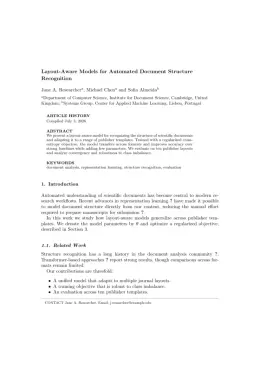
About the Psychoanalytic Inquiry format
Psychoanalytic Inquiry is a peer-reviewed journal published by Taylor & Francis, covering Psychotherapy Techniques and Applications, Academic and Historical Perspectives in Psychology, Counseling, Therapy, and Family Dynamics.
| Publisher | Taylor & Francis |
|---|
| Reference style | Author–year (Chicago, T&F) Author–year — (Smith, 2023) in the text
Smith, Ada, Ben Jones, and Cara Lee. 2023. "A Representative Article Title." Psychoanalytic Inquiry 12 (3): 45–58.
Formats any DOI in Psychoanalytic Inquiry style. No sign-up.
|
|---|
| Publishes research in | Psychotherapy Techniques and Applications Academic and Historical Perspectives in Psychology Counseling, Therapy, and Family Dynamics Transactional Analysis in Psychotherapy Mental Health and Psychiatry |
|---|
| ISSN | 0735-1690 |
|---|
| Citation impact (2-yr) | 0.28 |
|---|
| h-index | 52 |
|---|
| i10-index | 434 |
|---|
| Total citations | 17,831 |
|---|
| Top institutions publishing here | Schlumberger (Ireland) |
|---|
| Journal website | www.tandfonline.com |
|---|
| You get | A submission-ready PDF and the editable LaTeX source — ready to submit. |
|---|
Papers published in Psychoanalytic Inquiry per year
Citation impact of Psychoanalytic Inquiry by publication year
Citations each year’s papers have accumulated so far — the most recent years are still building up.
Most-cited papers in Psychoanalytic Inquiry
The two‐person unconscious: Intersubjective dialogue, enactive relational representation, and the emergence of new forms of relational organization
Karlen Lyons‐Ruth · 1 Jan 1999
(1999). The two‐person unconscious: Intersubjective dialogue, enactive relational representation, and the emergence of new forms of relational organization. Psychoanalytic Inquiry: Vol. 19, Attachment Research and Psychoanalysis: 1. Theoretical Considerations, pp. 576-617.
Mentalization-Based Treatment
Anthony Bateman, Peter Fonagy · 1 Nov 2013
The concept of mentalizing has captured the interest and imagination of an astonishing range of people-from psychoanalysts to neuroscientists, from child development researchers to geneticists, from existential philosophers to phenomenologists-all of whom seem to have found it useful. According to the Thompson Reuter maintained Web of Science, the use of the term in titles and…
Early Intervention and the Development of Self-Regulation
Peter Fonagy, Mary Target · 12 Jun 2002
Self-regulation is the key mediator between genetic predisposition, early experience, and adult functioning. This paper argues that all the key mechanisms underpinning the enduring effects of early relationship experiences interface with individuals' capacity to control (a) their reaction to stress, (b) their capacity to maintain focused attention, and (c) their capacity to interpret mental states…
The Developmental Roots of Borderline Personality Disorder in Early Attachment Relationships: A Theory and Some Evidence
Peter Fonagy, Mary Target, György Gergely et al. · 11 Jul 2003
The paper suggests a way of understanding borderline personality disorder in terms of the failure of a secure base. We begin with an account of optimal self-development in a secure attachment context, highlighting the importance of the caregiver's ability to help the small child think about his own and others' minds. This optimal self-development is…
Second‐generation effects of unresolved trauma in nonmaltreating parents: Dissociated, frightened, and threatening parental behavior
Erik Hesse, Mary Main · 1 Jan 1999
(1999). Second‐generation effects of unresolved trauma in nonmaltreating parents: Dissociated, frightened, and threatening parental behavior. Psychoanalytic Inquiry: Vol. 19, Attachment Research and Psychoanalysis: 1. Theoretical Considerations, pp. 481-540.