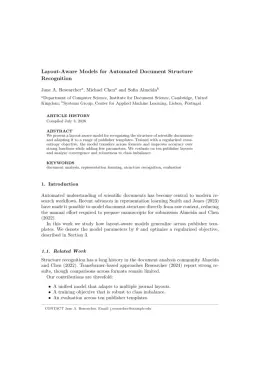
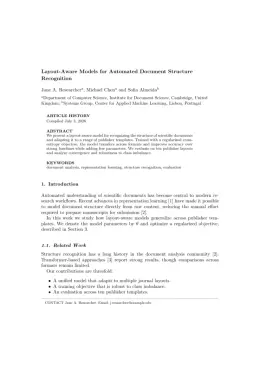
Taylor & Francis

Pharmaceutical Biology Template

Write in a clean editor, then format for Pharmaceutical Biology in one click — DocuGuru applies the official Taylor & Francis template with author–year references and exports a submission-ready PDF plus the editable LaTeX source. Free to start.

About the Pharmaceutical Biology format

Pharmaceutical Biology is a peer-reviewed journal published by Taylor & Francis, covering Phytochemistry and Biological Activities, Essential Oils and Antimicrobial Activity, Natural product bioactivities and synthesis.

PublisherTaylor & Francis
Reference styleAuthor–year (Chicago, T&F)
Author–year — (Smith, 2023) in the text
Smith, Ada, Ben Jones, and Cara Lee. 2023. "A Representative Article Title." Pharmaceutical Biology 12 (3): 45–58.

Formats any DOI in Pharmaceutical Biology style. No sign-up.

Publishes research inPhytochemistry and Biological Activities Essential Oils and Antimicrobial Activity Natural product bioactivities and synthesis Natural Antidiabetic Agents Studies Ethnobotanical and Medicinal Plants Studies
ISSN1388-0209
Citation impact (2-yr)5.73
h-index109
i10-index3,403
Total citations127,405
Article processing charge$2,557
Open accessYes
Top institutions publishing hereNanjing University of Chinese Medicine
Journal websitewww.informapharmascience.com
You getA submission-ready PDF and the editable LaTeX source — ready to submit.

Papers published in Pharmaceutical Biology per year

274
2014
272
2015
328
2016
204
2017
75
2018
111
2019
140
2020
179
2021
218
2022
131
2023
60
2024
63
2025

Citation impact of Pharmaceutical Biology by publication year

9K
2014
9.3K
2015
11.7K
2016
7.4K
2017
2.9K
2018
3.7K
2019
3.4K
2020
3.7K
2021
3.9K
2022
2K
2023
623
2024
217
2025

Citations each year’s papers have accumulated so far — the most recent years are still building up.

Most-cited papers in Pharmaceutical Biology

Cytotoxicity, antiviral and antimicrobial activities of alkaloids, flavonoids, and phenolic acids

Berrın Özçelık, Murat Kartal, İlkay Erdoğan Orhan · 11 Mar 2011

OBJECTIVE: Some natural products consisting of the alkaloids yohimbine and vincamine (indole-type), scopolamine and atropine (tropane-type), colchicine (tropolone-type), allantoin (imidazolidine-type), trigonelline (pyridine-type) as well as octopamine, synephrine, and capsaicin (exocyclic amine-type); the flavonoid derivatives quercetin, apigenin, genistein, naringin, silymarin, and silibinin; and the phenolic acids namely gallic acid, caffeic acid, chlorogenic acid, and quinic acid,…

The Genus<i>Artemisia</i>: A Comprehensive Review

Kundan Singh Bora, Anupam Sharma · 3 Aug 2010

CONTEXT: Medicinal plants are nature's gift to human beings to make disease free healthy life, and play a vital role to preserve our health. They are believed to be much safer and proven elixir in the treatment of various ailments. The genus Artemisia (Astraceae) consists of about 500 species, occurring throughout the world. The present…

A comprehensive review on phytochemistry, pharmacology, and flavonoid biosynthesis of<i>Scutellaria baicalensis</i>

Zilong Wang, Shuang Wang, Yi Kuang et al. · 1 Jan 2018

CONTEXT: Scutellaria baicalensis Georgi (Lamiaceae) is a popular medicinal plant. Its roots are used as the famous traditional Chinese medicine Huang-Qin, which is recorded in Chinese Pharmacopoeia, European Pharmacopoeia, and British Pharmacopoeia. OBJECTIVE: This review comprehensively summarizes research progress in phytochemistry, pharmacology, and flavonoid biosynthesis of S. baicalensis. METHODS: English and Chinese literature from 1973…

Coptidis Rhizoma: a comprehensive review of its traditional uses, botany, phytochemistry, pharmacology and toxicology

Jin Wang, Lin Wang, Guanhua Lou et al. · 1 Jan 2019

CONTEXT: Coptidis rhizome (CR), also known as Huanglian in Chinese, is the rhizome of Coptis chinensis Franch., C. deltoidea C.Y. Cheng et Hsiao, or C. teeta Wall (Ranunculaceae). It has been widely used to treat bacillary dysentery, diabetes, pertussis, sore throat, aphtha, and eczema in China. OBJECTIVES: The present paper reviews the latest advances of…

The anti-inflammatory activity of licorice, a widely used Chinese herb

Rui Yang, Bochuan Yuan, Yongsheng Ma et al. · 21 Sep 2016

CONTEXT: Increasing incidence and impact of inflammatory diseases have encouraged the search of new pharmacological strategies to face them. Licorice has been used to treat inflammatory diseases since ancient times in China. OBJECTIVE: To summarize the current knowledge on anti-inflammatory properties and mechanisms of compounds isolated from licorice, to introduce the traditional use, modern clinical…

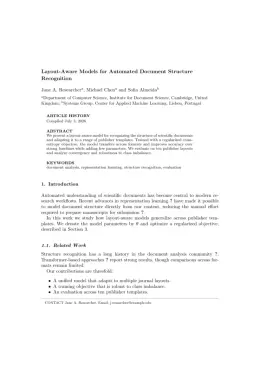
Pharmaceutical Biology template — frequently asked questions

How do I write a paper in the Pharmaceutical Biology format?
In DocuGuru you write your manuscript in a normal editor — no LaTeX setup required — and select the Pharmaceutical Biology template. When you export, DocuGuru compiles the paper into the official Taylor & Francis format and hands you a submission-ready PDF along with the editable LaTeX source.
What reference style does Pharmaceutical Biology use?
Pharmaceutical Biology uses Author–year (Chicago, T&F) references, shown as author–year markers such as (Smith, 2023) in the text. DocuGuru formats every in-text citation and the reference list in this exact style automatically. A reference appears like this: Smith, Ada, Ben Jones, and Cara Lee. 2023. "A Representative Article Title." Pharmaceutical Biology 12 (3): 45–58.
Do I need to know LaTeX to submit to Pharmaceutical Biology?
No. DocuGuru generates the interact LaTeX class and compiles the PDF for you in the background, so you get a Taylor & Francis-ready Pharmaceutical Biology document without writing any LaTeX. If you do want it, the LaTeX source is included in the export.
Can I import an existing draft into the Pharmaceutical Biology template?
Yes. Paste or upload your current manuscript — Word, LaTeX, Markdown, or plain text — and DocuGuru reflows it into the Pharmaceutical Biology format with correct headings, figures, tables, and author–year citations.
Who publishes Pharmaceutical Biology?
Pharmaceutical Biology is a multidisciplinary journal published by Taylor & Francis. DocuGuru's Pharmaceutical Biology template matches Taylor & Francis's official submission format.
Can I export a submission-ready Pharmaceutical Biology PDF?
Yes — DocuGuru produces a PDF built with the official Pharmaceutical Biology template (the interact class) that is ready to submit to Taylor & Francis, together with the matching LaTeX source files.
How much does the Pharmaceutical Biology template cost?
You can start writing in the Pharmaceutical Biology template for free. Exporting the final submission-ready Pharmaceutical Biology PDF and LaTeX source is part of DocuGuru's paid plans — see the app for current pricing.
Use the Pharmaceutical Biology template