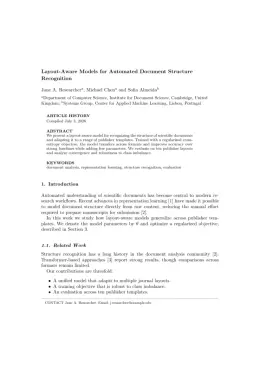
Taylor & Francis

Orbit Template

Write in a clean editor, then format for Orbit in one click — DocuGuru applies the official Taylor & Francis template with author–year references and exports a submission-ready PDF plus the editable LaTeX source. Free to start.

About the Orbit format

Orbit is a peer-reviewed journal published by Taylor & Francis, covering Nasolacrimal Duct Obstruction Treatments, Ophthalmology and Eye Disorders, Facial Rejuvenation and Surgery Techniques.

PublisherTaylor & Francis
Reference styleAuthor–year (Chicago, T&F)
Author–year — (Smith, 2023) in the text
Smith, Ada, Ben Jones, and Cara Lee. 2023. "A Representative Article Title." Orbit 12 (3): 45–58.

Formats any DOI in Orbit style. No sign-up.

Publishes research inNasolacrimal Duct Obstruction Treatments Ophthalmology and Eye Disorders Facial Rejuvenation and Surgery Techniques Facial Trauma and Fracture Management Head and Neck Surgical Oncology
ISSN0167-6830
Citation impact (2-yr)0.63
h-index56
i10-index1,017
Total citations30,438
Top institutions publishing hereL V Prasad Eye Institute
Journal websitewww.informahealthcare.com
You getA submission-ready PDF and the editable LaTeX source — ready to submit.

Papers published in Orbit per year

97
2014
75
2015
75
2016
196
2017
142
2018
109
2019
160
2020
167
2021
149
2022
102
2023
113
2024
146
2025

Citation impact of Orbit by publication year

1.3K
2014
1.1K
2015
828
2016
1.7K
2017
1.5K
2018
848
2019
1.2K
2020
934
2021
595
2022
214
2023
155
2024
59
2025

Citations each year’s papers have accumulated so far — the most recent years are still building up.

Most-cited papers in Orbit

Carotid-cavernous and orbital arteriovenous fistulas: ocular features, diagnostic and hemodynamic considerations in relation to visual impairment and morbidity

R. J. W. De Keizer · 1 Jan 2003

The author investigated 101 cases with direct dural carotid-cavernous and orbital arteriovenous fistulas (CCF). The characteristic clinical findings, such as specific epibulbar arterialized loops, are described and the differential diagnosis of the striking diagnostic triad (exophthalmos, the above-mentioned loops and glaucoma) is discussed, together with the exclusion criteria for other causes of red eyes, episcleral…

Orbital Metastasis: Clinical Features, Management and Outcome

Alejandra A. Valenzuela, Curtis W. Archibald, Ben Fleming et al. · 1 Jan 2009

PURPOSE: To review the clinical features, treatment, outcome and survival of metastatic tumors of the orbit. MATERIALS AND METHODS: Retrospective, non-comparative, chart review of 80 patients with orbital metastasis treated in four tertiary orbital centres in Australia. RESULTS: The study included 80 patients of which, 44 were male with a mean age of 60 years.…

Diplopia and enophthalmos after surgical repair of blowout fracture

Banu M. Hossal, Randall L. Beatty · 1 Jan 2002

PURPOSE: To evaluate the incidence of residual diplopia and enophthalmos and the possible risk factors leading to their occurrence in patients who had orbital blowout fracture repair. METHODS: Forty-two patients with pure orbital blowout fracture who had at least 6 months postoperative follow-up were included in the study group. Nineteen (45.2%) patients had orbital floor,…

Cavernous hemangioma of the orbit: Analysis of 214 cases

Jianhua Yan, Zhongyao Wu · 1 Jan 2004

The records of all patients with orbital cavernous hemangioma managed at Zhongshan Ophthalmic Center, Sun Yat-sen University from Jan. 1, 1986 to Dec. 31, 2000 (n = 214) were reviewed retrospectively. Among them, 126 patients were female and 88 were male. The mean age was 39.4 years, ranging from 5.0 to 68.0 years. The left…

Vascular malformations of the orbit: hemodynamic concepts

Jack Rootman · 1 Jan 2003

Vascular malformations of the orbit can best be understood within the context of their hemodynamics, of which there are three types. Type 1 (no flow) lesions have essentially little connection to the vascular system and include lymphangiomas or combined venous lymphatic malformations. Type 2 (venous flow) lesions appear as either distensible lesions with a direct…

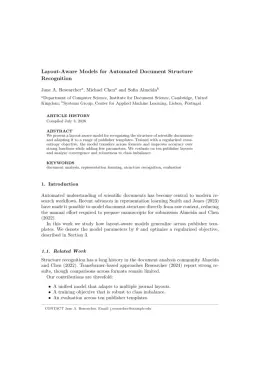
Orbit template — frequently asked questions

How do I write a paper in the Orbit format?
In DocuGuru you write your manuscript in a normal editor — no LaTeX setup required — and select the Orbit template. When you export, DocuGuru compiles the paper into the official Taylor & Francis format and hands you a submission-ready PDF along with the editable LaTeX source.
What reference style does Orbit use?
Orbit uses Author–year (Chicago, T&F) references, shown as author–year markers such as (Smith, 2023) in the text. DocuGuru formats every in-text citation and the reference list in this exact style automatically. A reference appears like this: Smith, Ada, Ben Jones, and Cara Lee. 2023. "A Representative Article Title." Orbit 12 (3): 45–58.
Do I need to know LaTeX to submit to Orbit?
No. DocuGuru generates the interact LaTeX class and compiles the PDF for you in the background, so you get a Taylor & Francis-ready Orbit document without writing any LaTeX. If you do want it, the LaTeX source is included in the export.
Can I import an existing draft into the Orbit template?
Yes. Paste or upload your current manuscript — Word, LaTeX, Markdown, or plain text — and DocuGuru reflows it into the Orbit format with correct headings, figures, tables, and author–year citations.
Who publishes Orbit?
Orbit is a multidisciplinary journal published by Taylor & Francis. DocuGuru's Orbit template matches Taylor & Francis's official submission format.
Can I export a submission-ready Orbit PDF?
Yes — DocuGuru produces a PDF built with the official Orbit template (the interact class) that is ready to submit to Taylor & Francis, together with the matching LaTeX source files.
How much does the Orbit template cost?
You can start writing in the Orbit template for free. Exporting the final submission-ready Orbit PDF and LaTeX source is part of DocuGuru's paid plans — see the app for current pricing.
Use the Orbit template